 AZ Ultra Adventure
On this page
- Across the Years 2026-27 at a glance
- Pick your race: events, start days and limits
- The loop
- The aid station (there's only one, and it's very good)
- Crew, guests and camping
- New Year's Eve on the loop
- Poles? Mostly no
- Where your race is decided
- Records and history
- Gear and packing list
- The van idea for Across the Years
- Across the Years FAQ
- Who wrote this
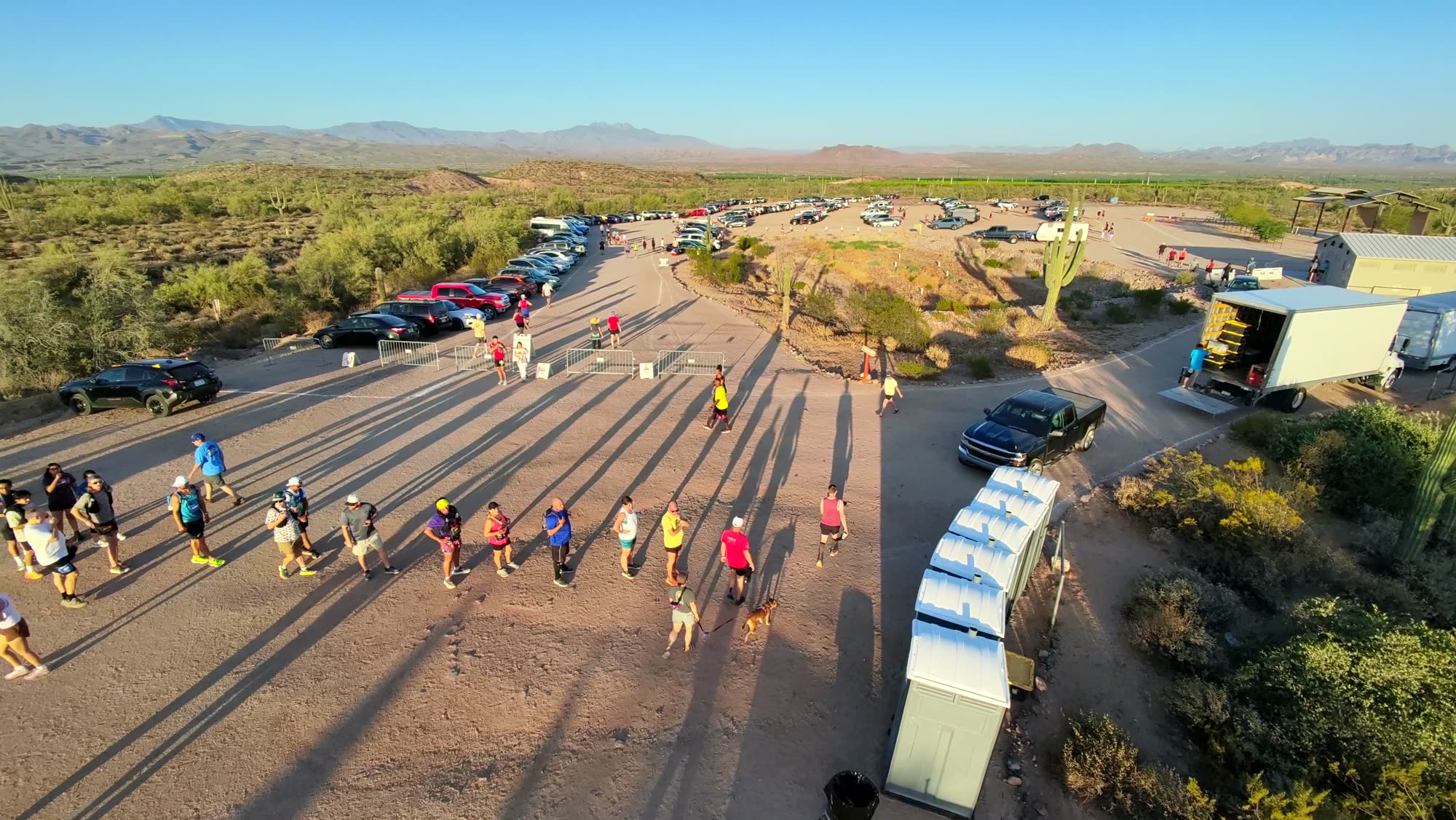
Across the Years is one of the oldest ultras in Arizona and one of the most unusual in the country. Harold Sieglaff started it in Phoenix in 1983 with a small group of runners on a high school track, and the idea was simple: run into the new year, literally across the years. More than four decades later, Aravaipa Running hosts it on a 1.42-mile loop around the Peoria Sports Complex, the spring-training home of the Mariners and Padres. The week has events from 6 hours to 6 days, fixed 100- and 200-mile races, a backyard-style Last Person Standing, and a midnight sparkling cider toast on the course on New Year's Eve.
It's the best place in Arizona to try your first 100 or 200 without mountains, and also a place where American records have fallen. The six-day event drew some of the best multi-day runners alive, and Joe Fejes's 555.361 miles in 2013 is still the course record. The atmosphere sits somewhere between a race, a campground and a family reunion. Many runners come back every year for the lifetime-mileage awards.
This guide covers the 2026-27 edition from Aravaipa's official race page and results, plus runner reports. Details change between editions, so check the official Across the Years page before you go.
Across the Years 2026-27 at a glance
| Dates | Monday, December 28, 2026 to Sunday, January 3, 2027 |
| Venue | Peoria Sports Complex, 16101 N 83rd Ave, Peoria, AZ (since the 2024-25 edition) |
| Loop | About 1.42 miles, USATF certified. About half dirt, half concrete and asphalt, roughly 23 ft of climb per lap. Runs one direction the whole time |
| Timed events | 6 Day, 72 h, 48 h, 24 h, 12 h, 6 h |
| Distance events | 200 Mile, 100 Mile, 100K, Marathon, Marathon 6-Pack |
| Backyard format | Last Person Standing: a 1.42-mile loop every 20 minutes, from noon on Dec 31 until one runner is left |
| Start time | 9:00 AM daily (100K at 9:15 AM; LPS at noon Dec 31) |
| Ends | Multi-day and 24-hour events end at 9:00 AM Jan 3. Awards banquet at 11:00 AM |
| Aid | One main aid tent, open 24 hours, passed once per lap. Three meals a day |
| Pacers | No traditional pacers. Limited guest bibs for single laps |
| Camping | Free to bring your own tent, canopy or RV. Rental tents available |
| Registration | UltraSignup; online entry closes December 20. Race-day entry 7-10 AM daily |
| Live results | live.aravaiparunning.com |
Pick your race: events, start days and limits
The structure confuses first-timers, so here's the full schedule from the official page:
| Start day (9:00 AM) | Events you can start |
|---|---|
| Mon, Dec 28 | 6 Day, 72 h, 48 h, 24 h, 12 h, 6 h, 200 Mile, 100 Mile, 100K (9:15), Marathon |
| Tue, Dec 29 | 72 h, 48 h, 24 h, 12 h, 6 h, 200 Mile, 100 Mile, Marathon |
| Wed, Dec 30 | 72 h, 48 h, 24 h, 12 h, 6 h, 200 Mile, 100 Mile, Marathon |
| Thu, Dec 31 | 72 h, 48 h, 24 h, 12 h, 6 h, 100 Mile, Marathon. Last Person Standing at noon |
| Fri, Jan 1 | 48 h, 24 h, 12 h, 6 h, 100 Mile, Marathon |
| Sat, Jan 2 | 24 h, 12 h, 6 h, Marathon |
| Sun, Jan 3 | Everything ends at 9:00 AM; banquet at 11:00 AM |
12-hour races end at 9:00 PM the same day, and 6-hour races end at 3:00 PM.
Fixed-distance time limits:
- 100 Mile: 72 hours if you start December 28-31, and 48 hours if you start January 1. There's also a special buckle for running 100 miles under 24 hours.
- 200 Mile: start December 28, 29 or 30. The page doesn't list a separate limit, so in practice you have until 9:00 AM on January 3 (about 6, 5 or 4 days depending on your start).
- 100K and Marathon: 24 hours.
The "no DNF" rule. Across the Years treats every runner as a finisher. You can stop at any time by telling the timing tent or the race director, and everyone gets the finisher glass mug. Buckles go to those who reach distance standards (100 and 200 miles), and lifetime awards recognize 1,000, 2,000, 3,000 and 4,000+ career ATY miles.
2026-27 entry fees
| Event | Early (to 5/31) | Regular (to 10/14) | Late (to 12/20) | Race day |
|---|---|---|---|---|
| 6 Day | $675 | $735 | $795 | $815 |
| 72 h | $390 | $430 | $470 | $490 |
| 48 h | $265 | $295 | $325 | $335 |
| 24 h | $190 | $220 | $250 | $260 |
| 12 h | $140 | $155 | $170 | $180 |
| 6 h | $100 | $115 | $130 | $140 |
| Last Person Standing | $140 | $155 | $170 | $180 |
| 200 Mile | $320 | $360 | $400 | $410 |
| 100 Mile | $220 | $240 | $260 | $270 |
| 100K | $150 | $170 | $190 | $200 |
| Marathon | $90 | $105 | $120 | $130 |
| Marathon 6-Pack | $420 | $460 | $500 | $510 |
Prices are before tax and UltraSignup fees. Payment plans are offered.
The loop
The loop passes the practice fields, the main stadium and the parking areas, about half on dirt paths and half on concrete or asphalt. It gains only about 23 feet per lap, from a bridge and a few ramps, but you'll feel those ramps on lap 100. One runner measured it at about 1.41 miles, which makes a marathon 19 laps. Unlike the old Camelback Ranch course, which reversed every four hours, the Peoria loop runs in one direction all week, and runners say the turns become automatic.
Timing: chip tags on your shoe, with a backup timing mat halfway around the loop. A big screen at the start and finish shows each runner's laps, miles and time after every lap. Live splits online can lag, so the timing tent's count is the official one.
The aid station (there's only one, and it's very good)
There's one fully stocked main aid tent, open 24 hours, which you pass once per lap. That means aid every 1.42 miles for as long as your race lasts.
| Feature | Details |
|---|---|
| Main aid tent | Fully stocked, 24 hours, with a daily menu board |
| Meals | Breakfast, lunch and dinner every day, plus snacks between. Vegan and gluten-free options |
| Express water | A quick refill station just outside the aid tent |
| Eating tent | A 20 × 20 tent beside the aid station so you can sit and eat |
| Napping tent | Cots, first come first served, 3-hour max, no personal items |
| Warming area | Inside the Team Shop, behind registration. Chairs only, no sleeping |
| Showers | Clubhouse locker-room showers, closed 5:00-6:00 PM daily |
| Medical | EMTs on site 24/7 |
| Drop bags | Keep your gear at your tent or camp |
Runners mention hot items that appear at set times (egg sandwiches, breakfast burritos, hot dogs, pierogies), so learn the schedule early. Leave a reusable cup at the food tent. And when you're sick of sweet things at 3 AM, grilled cheese and tomato soup are what people remember.
Crew, guests and camping
Across the Years is unusually easy on crews. Your runner passes the same spot every 15-30 minutes, and you can camp right beside the course.
- Camping: a designated area on the southwest side of the course. It's uncovered, and it's free to bring your own tent, canopy or RV. The RV lot (next to general parking) opens December 27 at 2:00 PM. General parking is on the west side off 83rd Avenue via Stadium Way.
- Rental tents: $65 for a 12 × 8 tent, $85 with one cot, $105 with two cots, and $30 for a sleeping bag. Volunteers pitch the rental tents ahead of time, and you claim one with a name sticker.
- Quiet hours: 10:00 PM to 8:00 AM, except around midnight on New Year's Eve.
- Guest bibs: there are no pacers, but the timing tent has 10 guest bibs. A friend or family member can walk or run one lap with a runner, one guest at a time, yielding to racers. Runners who bring guests out for many laps get flagged.
- Record attempts: if you're chasing a record, nobody outside the race can accompany you at all (USATF/IAU rules). Email the RD ahead of time.
- Not allowed: pets on course (leashed dogs only in the parking lot), bikes and scooters on the course. Trekking poles are allowed only for runners 70 or older or with permission.
- Crew logistics: the official page doesn't describe a separate crew zone. In practice, crews work from the runner's tent or RV beside the course and meet the runner as they pass. Runners are responsible for their crew following the rules.
- Hotels: a Comfort Suites sits next to the complex, and several runners use a hotel room for real sleep during multi-day events.
New Year's Eve on the loop
This is why the race exists. On December 31: pizza at the aid station at 6:00 PM, runners gather at the start around 11:45 PM, and a celebration and sparkling cider toast at midnight, followed by a community "Walk Across the Years" lap at 12:10 AM. If you're starting a race on January 1, runners who've done it recommend skipping the party and sleeping.
Poles? Mostly no
Trekking poles are banned on the ATY course unless you're 70 or older or have permission. It's flat, so this isn't a loss. Use the effort you'd normally put into poles into a walk-run rhythm instead.
Where your race is decided
Every Across the Years runner faces a different version of the same problem. The aid is perfect, your tent is right there, and stopping is always one step away. Here's where races usually unravel:
- The first night. For a 100-miler or a multi-day runner, the first night is when the dark, the cold (past years have dropped to about 20°F, and nights below freezing are common) and the repetition combine. Runners who've done well describe treating every lap as a whole race and saving music for late.
- The tent trap. A tent 30 feet from the course is a gift and a danger. A 20-minute nap can become 3 hours. Taking dirty shoes off and putting them back on is slow. Runners who did best describe short planned naps (around 20 minutes) and alarms.
- Feet. The dust gets past gaiters. One runner used four pairs of shoes in a multi-day event, changing about every 12 hours. A shoe change can take 20-25 minutes, so pre-loosen laces, use a shoehorn, and practice re-attaching gaiters. Let the medical team tape blisters early.
- Dehydration in cold, dry air. You don't feel thirsty at 2 AM in December, but the desert air is very dry. One runner blamed poor temperature control on dehydration. Keep drinking.
When you've made it: for a 100-miler, it's the point where the remaining laps fit inside the remaining hours at a walk. ATY's lap screen does the math for you. Then just keep walking.
How not to stop early at Across the Years
- Lap by lap. "One more lap" is the whole strategy.
- Walk the ramps and rocky dirt, run the downhill off the bridge. It's a rhythm runners use from the first lap.
- Schedule sleep. For multi-day events, decide your sleep windows before the start. One 72-hour runner slept about five hours in three days, mostly in short naps.
- Take care of chafing early. Salt crust and repetition are a bad combination. Reapply anti-chafe at fixed intervals.
- Have something to look forward to: the next meal, midnight on New Year's Eve, a friend's guest lap.
- Crews: have the next change of clothes laid out before the runner arrives, and keep the tent warm and dark.
Records and history
The course records span three venues (Nardini Manor, Camelback Ranch and Peoria):
| Event | Women | Men |
|---|---|---|
| 6 Day | 453.516 mi, Amy Mower (2018) | 555.361 mi, Joe Fejes (2013) |
| 72 h | 265.6 mi, Marylou Corino (2013) | 329.640 mi, Joe Fejes (2012) |
| 48 h | 212.706 mi, Rachel Entrekin (2023) | 248.55 mi, John Geesler (2003) |
| 24 h | 130.49 mi, Stephanie Ehret (2003) | 145.401 mi, Joseph Gaebler (2002) |
| 100 Mile | 14:37:09, Ashley Paulson (2023) | 15:23:33, Ryan Kaiser (2019) |
| 200 Mile | Jodi Semonell (2019) | 57:25:41, Remo Spagnol (2023) |
| Last Person Standing | 172.1 mi, Stephanie Rosebaugh (2025-26) | 204.5 mi, Michael Carson (2025-26) |
Fejes's 555 miles in the 2013 six-day beat the great Yiannis Kouros in the same race, and it was widely reported as an American six-day record. Rachel Entrekin's 212.7 miles in the 2023 48-hour, more than 40 miles ahead of the next runner, came a few years before her Cocodona records. The race moved from a Phoenix high school track to Nardini Manor (2003-2010), then Camelback Ranch in Glendale (2011-2023), then Peoria for 2024-25.
Gear and packing list
You're never more than 1.42 miles from your stuff, so pack for comfort and changes rather than self-sufficiency:
- Several pairs of broken-in shoes with roomy toe boxes for the concrete and dust. Cushioned road-to-trail running shoes
- Gaiters to slow the dust. Running gaiters
- A shoehorn for fast shoe changes. Long-handled shoehorn
- Layers for 20°F nights: packable down jacket, running gloves and a warm hat
- A headlamp for the unlit tent area and night laps. Rechargeable running headlamp
- Anti-chafe and spare socks. Squirrel's Nut Butter and Injinji toe socks
- A sleep setup for your tent: cot, warm sleeping bag and earplugs and eye mask
- For the crew: a zero gravity chair and a box of hand warmers for the cold nights
The van idea for Across the Years
A runner who spends six days, three days or one night on a loop needs a quiet, warm, dark place a few steps from the course, and a crew that can sleep in shifts. ATY allows RVs and vans in its lot next to general parking (it opens December 27), which makes a race van an easy fit: a real bed for 20-minute or 90-minute naps, a fridge and stove for something other than aid-tent food, heat for the 3 AM wardrobe change, and a place to store several pairs of shoes. AZ Ultra Vans is collecting reservation interest for Across the Years. The card above isn't a booking or a promise of availability.
Across the Years FAQ
When is Across the Years 2026-27? December 28, 2026 to January 3, 2027, at the Peoria Sports Complex in Peoria, Arizona. Races start at 9:00 AM on various days, and everything ends at 9:00 AM on January 3.
What's the time limit for the 100 Mile at Across the Years? 72 hours for runners starting December 28-31, and 48 hours for the January 1 start. There's a special buckle for finishing in under 24 hours.
How long is the Across the Years loop? About 1.42 miles (USATF certified), about half dirt and half concrete or asphalt, with about 23 feet of climb per lap.
Can I have a pacer or crew? No traditional pacers. A friend can join for a single lap with a guest bib (10 available, one guest at a time). Crews can stay at the runner's tent or RV in the camping area beside the course.
Can I camp at Across the Years? Yes. Bring your own tent, canopy or RV at no extra cost, or rent a tent from $65. The RV lot opens December 27 at 2:00 PM.
Are trekking poles allowed? Only for runners 70 and older or with the race's permission.
Is there a DNF at Across the Years? No. You can stop at any time, and everyone gets the finisher glass mug. Buckles and lifetime-mileage awards are based on distance.
What's the weather like at Across the Years? Late December in Phoenix: past years have ranged from about 20°F at night to the high 70s by day, with occasional long rainy stretches. Pack for freezing nights.
Who wrote this
Johnathon Lawson is a trail runner from Gilbert, Arizona, and the person behind AZ Ultra Adventure. He has finished the Mogollon Monster 100, the San Diego 100 and the Zion 100, and has done Aravaipa night runs around Phoenix. He hasn't run Across the Years. This guide was researched from Aravaipa's official race page, results archives and runner reports. Corrections from ATY veterans are welcome.
Follow along on Strava, YouTube and Instagram.
Some links are Amazon affiliate links. As an Amazon Associate we earn from qualifying purchases, at no extra cost to you.