 AZ Ultra Adventure
On this page
- Arizona Monster 300 at a glance (2027)
- The course map
- The course in the 2027 direction
- Every aid station: mile, crew, drop bags, sleep, cutoffs
- Crew guide
- Where poles help
- The finish line is decided here
- Insider knowledge: the 2025 aid controversy, and what changed
- Gear and packing list
- The van idea for the Monster 300
- Arizona Monster 300 FAQ
- Who wrote this
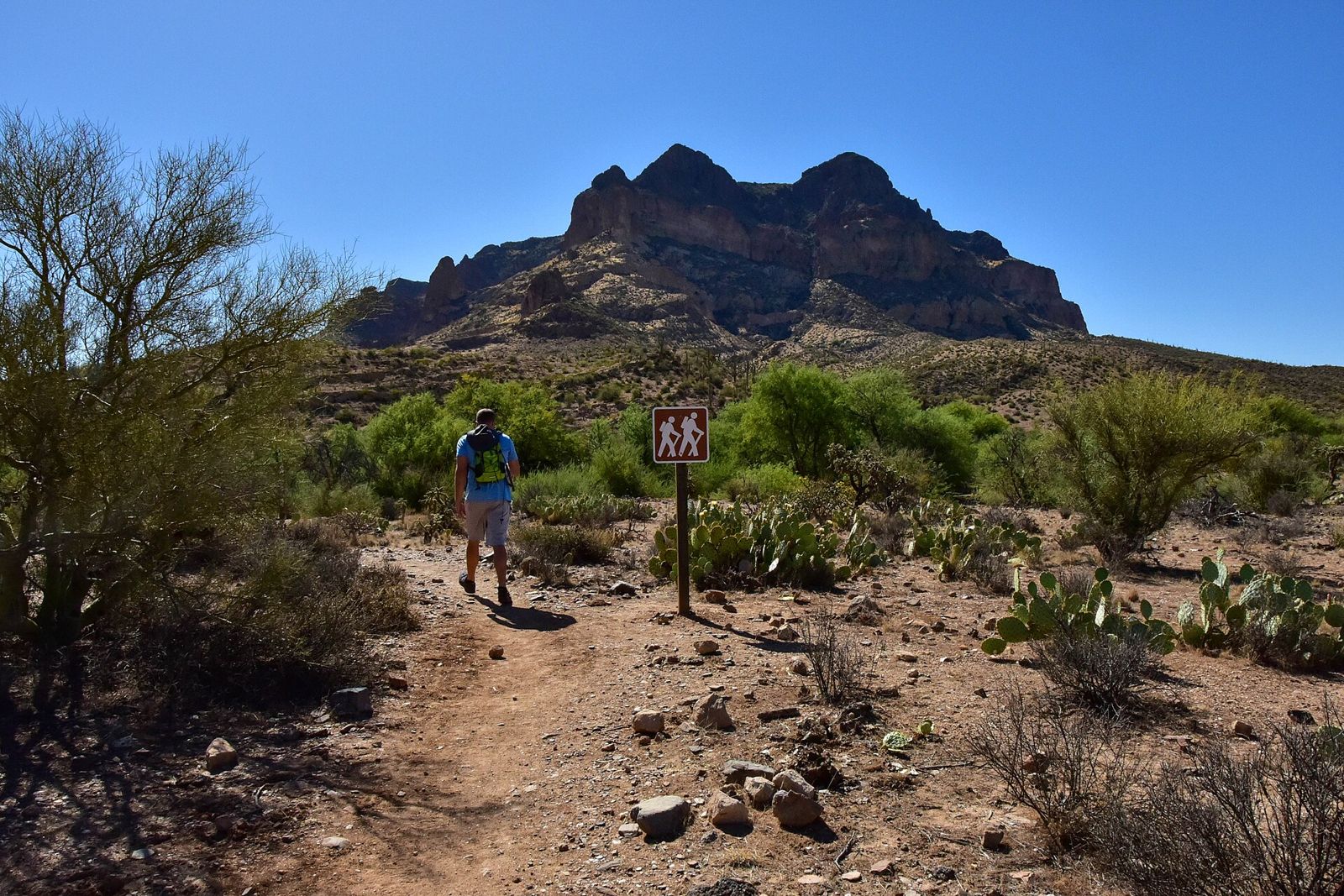
The Arizona Monster 300 is 300 miles of the Arizona Trail across the Sky Islands, Sonoran desert and canyon country of southern Arizona. It crosses grassland hills near the Mexican border, the Santa Rita foothills, the outskirts of Tucson, the Santa Catalina Mountains over Mount Lemmon, the copper country around Oracle and Kearny, and the Gila River canyons before ending in the mining town of Superior. Organizer Destination Trail, which also runs Bigfoot, Tahoe and Moab, calls it an endurance run, not a race. Two editions in, people have come to understand what that means: it's a 300 where self-reliance isn't optional.
For 2027 the race is reversed and faster. After two editions running north to south from Superior to Patagonia, the 2027 race runs Patagonia to Superior, and the time limit drops from 170 hours to 150 hours. The course records (Michael McKnight 82:49:45 and Selene Mallone 99:55:02, both in 2026) were set the other way, so 2027 is effectively a new race. It also changes where the hard parts fall. The Mount Lemmon descent is now a 6,000-foot climb, and the waterless Gila River to Picket Post section now comes at the very end.
This guide is built from Destination Trail's 2027 runner manual and race page, both editions' results, and race reports. The 2027 manual still contains leftover text from 2026 in places, so expect details to change. Check the official race page before you plan.
Arizona Monster 300 at a glance (2027)
| Date | Monday, March 29 (noon start) to Sunday, April 4, 2027 (6:00 PM cutoff) |
| Direction | Patagonia to Superior (reversed from 2025-2026) |
| Start | Patagonia, after a race-morning bus from Superior (loads 6:00 AM, departs 6:30 AM, arrives about 10:00 AM). Tracker pickup and mandatory gear check at the start, 10:00-11:30 AM |
| Finish / HQ | Superior (check-in Sunday, March 28) |
| Distance | 300.5 miles |
| Elevation | The official page and 2027 manual say about +32,400 / −33,800 ft. UltraSignup lists about +41,000. Treat it as unresolved |
| Time limit | 150 hours (down from 170) |
| Aid | 19 aid stations: full, self-serve and sleep stations |
| Crew | 7 aid stations plus start and finish. Optional |
| Pacers | From Rillito (mile 126.3). One leftover line in the manual still says Tiger Mine, so confirm with the RD |
| Sleep stations | 5: Gabe Zimmerman, Catalina, Mt Lemmon, Freeman, Grand Enchantment. 6-hour limit |
| Entry | Lottery (the 2027 draw ran April 10-26, 2026). $1,995, or about $2,309 with fees; payment plan available |
| Refunds | Partial refund before Dec 1 (50%) and Dec 1-Jan 31 (25%), then transfer only to the next year's edition through February |
| Records | McKnight 82:49:45 and Mallone 99:55:02 (2026, north to south) |
| Map / GPX | CalTopo course map (already updated for the 2027 direction) |
Finish rates so far
| Year | Starters | Finishers | DNF rate | Winners |
|---|---|---|---|---|
| 2025 (first edition, waves, 170 h) | about 287 | about 201 | about 30% | Peter Mortimer 86:33:18, Anne Tisdell 105:14:44 |
| 2026 (single start, 170 h) | about 120 | 72 | about 40% | Michael McKnight 82:49:45, Selene Mallone 99:55:02 |
Counts are from UltraSignup and Slowtwitch, which differ by a few runners. One number matters more for 2027: the median 2026 finish was about 142 hours. Under the new 150-hour limit, much of the 2026 field would have had a very small margin. 2027 will be a tougher race to finish.
The course map
Export the GPX and load it on your watch and phone (a device with the course is mandatory). In 2025, runners reported missing or vandalized flagging in Tucson neighborhoods, near Black Hills, and between Charlou Gap and Catalina. Follow the GPX first and the flags second. Destination Trail also publishes a crew driving map, which may still show the 2026 layout.
The course in the 2027 direction
- Patagonia to Oak Tree (miles 0-52): Canelo Hills and the first water test. You start at noon from Patagonia into the grassy hills of the Canelo Hills. The long stretch from Casa Blanca (16.4) to Apache Springs (36.8) is 20.4 miles, and in 2025 many runners ran out of water on it. You need at least a 3-liter capacity, and veterans carry more.
- Oak Tree to Gabe Zimmerman (52-81): Santa Rita foothills. Hot, exposed trail past historic Kentucky Camp (which has a faucet) to the self-serve Santa Rita station and Gabe Zimmerman trailhead, the first crew access at mile 81 and the first sleep station.
- Gabe Zimmerman to Rillito (81-126): around the Rincons into Tucson. Pistol Hill and Valencia, then the Tucson Loop multi-use path. There's about 34 miles of pavement and bike path in total, hot by day and odd at night. Rillito is where pacers can join.
- Catalina to Mount Lemmon (145-171): the big climb. From Catalina State Park and the self-serve Charlou Gap station, +6,175 feet over 19.8 miles up the Santa Catalinas to Mt Lemmon. This was the technical descent in 2025-2026, and in 2027 it's the big climb at mile 151. Expect cold at the top.
- Mount Lemmon to Freeman (171-224): down and across the copper country. About 4,800 feet of descent on exposed jeep road to Oracle, then Tiger Mine, Black Hills and Freeman Road. In 2025 there were navigation errors near Black Hills and Freeman, and a windmill tank between Tiger Mine and Oracle was dry.
- Freeman to Gila River (224-273): dry and low. Little shade between Freeman and Tortilla, then Grand Enchantment (the last sleep station), down into the Gila River canyons, the lowest and hottest part of the course.
- Gila River to Superior (273-300.5): the sting in the tail. 21.7 miles, +3,704 feet and about 22 miles without water to Picket Post, which the manual allows about 15 hours for. In 2025 the Gila River station rationed fills to 1.5 liters. Then it's a short run into Superior.
Every aid station: mile, crew, drop bags, sleep, cutoffs
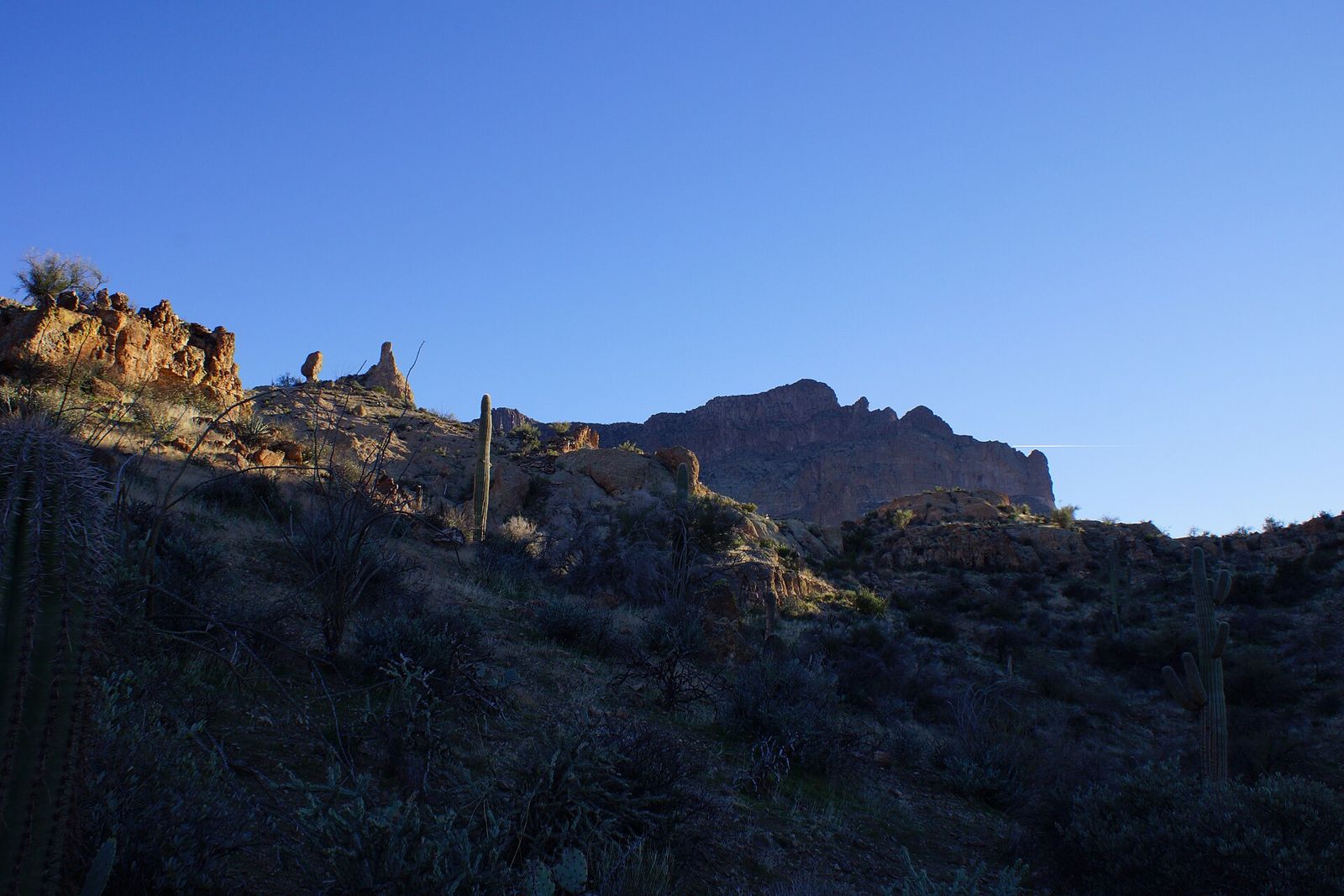
From the 2027 runner manual. Cutoffs are listed as day and time, with hours from the noon Monday start in parentheses. Arriving at a station at its cutoff counts as a DNF. "Self-serve" stations have limited supplies (reports describe ramen and oatmeal), so plan your drop bags around them.
| Mile | Aid station | To next | Type | Drop bag | Crew | Pacer | Cutoff | Notes |
|---|---|---|---|---|---|---|---|---|
| 0 | Start: Patagonia | 16.4 | - | - | Yes | No | Mon 12:00 PM | Gear check at the start |
| 16.4 | Casa Blanca | 20.4 | Full | No | No | No | Mon 7:30 PM (7:30) | Long dry stretch next; 2025 runners ran out of water |
| 36.8 | Apache Springs | 15.7 | Full | Yes | No | No | Tue 5:30 AM (17:30) | |
| 52.5 | Oak Tree | 17.7 | Full | Yes | No | No | Tue 1:30 PM (25:30) | Kentucky Camp faucet en route |
| 70.2 | Santa Rita | 10.8 | Self-serve | No | No | No | Tue 9:30 PM (33:30) | |
| 81.0 | Gabe Zimmerman | 10.3 | Sleep | Yes | Yes (first) | No | Wed 2:30 AM (38:30) | |
| 91.3 | Pistol Hill | 13.1 | Self-serve | Yes | No | No | Wed 7:30 AM (43:30) | |
| 104.4 | Valencia | 21.9 | Full | No | No | No | Wed 1:30 PM (49:30) | Tucson bike path; hot |
| 126.3 | Rillito | 18.2 | Full | Yes | Yes | Yes (pacing starts) | Wed 11:00 PM (59:00) | Urban Tucson stop |
| 144.5 | Catalina | 6.9 | Sleep | Yes | Yes | Yes | Thu 7:00 AM (67:00) | Catalina State Park |
| 151.4 | Charlou Gap | 19.8 | Self-serve | Yes | No | No | Thu 10:00 AM (70:00) | +6,175 ft climb to Mt Lemmon |
| 171.2 | Mt Lemmon | 14.2 | Sleep | Yes | Yes | Yes | Thu 10:00 PM (82:00) | Cold. −4,835 ft to Oracle next |
| 185.4 | Oracle | 9.3 | Full | No | No | No | Fri 5:00 AM (89:00) | |
| 194.7 | Tiger Mine | 14.1 | Full | Yes | No (crew in 2026, not 2027) | No | Fri 9:30 AM (93:30) | |
| 208.8 | Black Hills | 15.6 | Full | No | No | No | Fri 4:30 PM (100:30) | Navigation errors reported in 2025 |
| 224.4 | Freeman | 17.8 | Sleep | Yes | Yes | Yes | Sat 12:30 AM (108:30) | Little shade to Tortilla |
| 242.2 | Tortilla | 14.7 | Self-serve | No | No | No | Sat 8:30 AM (116:30) | |
| 256.9 | Grand Enchantment | 16.3 | Sleep | Yes | Yes | Yes | Sat 3:30 PM (123:30) | Last sleep station |
| 273.2 | Gila River | 21.7 | Full | Yes | Yes (new in 2027; access details TBA) | Yes | Sun 12:00 AM (132:00) | About 22 mi without water, +3,704 ft |
| 294.9 | Picket Post | 5.6 | Full | No | No | No | Sun 3:00 PM (147:00) | |
| 300.5 | Finish: Superior | - | Full | Yes | Yes | Yes | Sun 6:00 PM (150:00) |
What the table tells you:
- The first crew stop is at mile 81. Leaders will get there in the middle of the first night, and back-of-pack runners near the 38.5-hour cutoff. Everything from Patagonia to Gabe Zimmerman runs on your vest and drop bags.
- Three gaps are 20 miles or longer: Casa Blanca to Apache Springs (20.4), Valencia to Rillito (21.9) and Gila River to Picket Post (21.7, the driest). Charlou Gap to Mt Lemmon (19.8) is nearly as long and is the biggest climb.
- Sleep stations have a 6-hour limit, with tents and cots or pads. In 2025 the first sleep stations were cold and crowded. Put a real sleeping bag or quilt, a puffy and earplugs in those drop bags. Runners may also sleep in their crew's vehicle at an aid station, but may not ride in it.
- Drop bags: at 12 stations plus the finish. Maximum 16 × 24 × 10 inches, labeled with your full name, bib and station. No coolers or bins. They aren't mailed back, so anything unclaimed at the finish is donated or thrown away.
- "Unofficial finish." If you leave the last aid station on time but finish after 150 hours, you get a result but not a buckle.
Mandatory gear (carried at all times, random checks)
A waterproof jacket with a hood, gloves, a hat or buff, full-length pants or tights, a long-sleeve insulating layer, the SPOT tracker (provided), a device with the course GPX, a cell phone, an emergency bivy (provided to runners), a headlamp or waist light, extra batteries, a whistle, and 500 emergency calories. The manual cites temperatures from 7°F to over 100°F. Recommended items include gaiters, a sun hat, a hooded puffy, a spare headlamp, a battery pack, 3 liters of water capacity, a water filter, and wag bags or toilet paper (you pack out everything). An IV, EMS or search and rescue means a DQ.
Crew guide
Crewing the Monster is a week-long road trip around southern Arizona with long waits, long drives, and remote stops where cell service is unreliable. Crew is optional, and some runners go without one, relying on drop bags. If you do bring a crew, the rules are strict.
The crew rules
- Crew contact only at the 7 crew-access stations (Gabe Zimmerman, Rillito, Catalina, Mt Lemmon, Freeman, Grand Enchantment and Gila River), plus the start and finish. Contact anywhere else is a DQ, and crew contact after a station's cutoff counts as a DNF. Reports say most DQs come from crew-rule violations, so read this twice.
- One vehicle per runner, with a parking pass. The pass is issued at check-in, and only if the crew form (sent about a month before the race) is complete. Vehicles must be no longer than 20 feet and no wider than 8.5 feet. No RVs or trailers.
- Arrive no more than 30 minutes before your runner (use live tracking) and leave when they leave. No crew camping at aid stations. Never park on vegetation.
- The manual says you won't need 4x4, but it recommends a spare tire or repair kit and a vehicle small enough to turn around on a one-lane road.
- Crew bring their own food. Aid station food is for runners and active pacers only.
- Pacers must carry the same mandatory gear, bring their own bivy, and never carry the runner's gear, food or water. If a pacer shares food or water, even in an emergency, the runner is disqualified. Pacers can join or leave only at crew stations, one at a time, on foot.
Crew stops in order
These drive times are our estimates from the manual's coordinates, its drive times from the Superior HQ, and the road routes. They aren't published by the race, so check them against the crew map.
| Crew leg | Runner miles | Approx. drive | Notes |
|---|---|---|---|
| Patagonia start → Gabe Zimmerman (mi 81) | 81 | About 1 hr | Long wait for crew (often 15-38 hours). Sleep in Sonoita, Benson or Tucson |
| Gabe Zimmerman → Rillito (126.3) | 45 | About 40-50 min | I-10 into Tucson. Urban stop with good cell service and stores |
| Rillito → Catalina (144.5) | 18 | About 25-35 min | Oracle Rd (AZ-77) to Catalina State Park (park fee likely) |
| Catalina → Mt Lemmon (171.2) | 27 | About 1.5-2 hr | Back through Tucson and up the paved, winding Catalina Highway. Don't take the Oracle Control Road (dirt) |
| Mt Lemmon → Freeman (224.4) | 53 | About 2.5-3 hr, the longest crew drive | Down the mountain, through Tucson, north on AZ-77 past Oracle, then likely graded dirt on Freeman Road. Long runner gap, so rest in Oracle or Tucson |
| Freeman → Grand Enchantment (256.9) | 32.5 | About 1 hr | Kearny / Kelvin area near the Florence-Kelvin Highway, which is partly dirt |
| Grand Enchantment → Gila River (273.2) | 16.3 | Unclear | New crew stop for 2027. The 2026 crew map showed a 4x4 shuttle point for Gila River, so ask the RD how crews reach it |
| Gila River → Finish, Superior | 27.3 | About 1-1.5 hr | Picket Post (5.6 mi from the finish) has no crew |
Cell signal: the volunteer ham radio group that supports the race says much of the course has no cell service. Expect coverage in Patagonia, Sonoita, Tucson (Rillito, Catalina), Oracle and Superior, and expect it to be spotty or absent at the remote stations. Download offline maps, both CalTopo layers and the tracker page ahead of time. SPOT positions update every several minutes and can lag.
Base camps: plan crew sleep around the two long waits: Patagonia to Gabe Zimmerman (81 runner miles) and Mt Lemmon to Freeman (53 runner miles). Tucson hotels near Rillito and Catalina, and a room in Oracle or San Manuel for the back half, make a week of crewing manageable.
Where poles help
- Charlou Gap to Mount Lemmon (miles 151-171): the +6,175-foot climb is the clearest pole section on the course.
- Mount Lemmon to Oracle (171-185): 4,800 feet down on rough jeep road. Poles save your knees, and reports mention using them to push back thorny brush on the ridge.
- Gila River to Picket Post (273-295): 3,700 feet of rocky, exposed climbing at the end of the week.
- Stow them for the paved Tucson miles and the crowded start. Many runners put poles in a drop bag or hand them to crew at Catalina, then pick them up again at Grand Enchantment or Gila River.
The finish line is decided here
The first 100 miles. Both editions lost most of their runners early. In 2026 about 44 of 124 runners were out by Tuesday morning. Unseasonable heat and wind sent two runners to the hospital with advanced heat stroke near the start, and nausea and heat drove other early drops. One finisher's strategy write-up summed it up: the race can be lost in the first 100 miles. In the 2027 direction, those miles include the Canelo Hills water gaps, the Santa Rita heat and the bike path, all before your first sleep.
Mount Lemmon in 2027. With the big climb now at mile 151, a runner arriving at Charlou Gap tired and close to cutoffs faces 19.8 miles and over 6,000 feet of climbing into the cold. Leave Catalina rested, fed and carrying warm layers.
The final 27 miles. Gila River to Picket Post comes on day five or six for most of the field: about 22 miles without water, rocky climbing and Gila canyon heat. With a 150-hour limit, a slow push here can turn a finish into an "unofficial finish." Arrive at Gila River with time in hand.
After Picket Post, it's 5.6 miles to the finish in Superior. Get there before the 3:00 PM Sunday cutoff and you've effectively finished.
How not to DNF the Monster
- Be self-sufficient by design. Carry 3-4 liters on most sections and 4-5 on the long dry ones, carry a filter, and check the AZT water report and FarOut the week before. Don't use thru-hikers' water caches.
- Pack real food in every drop bag. Self-serve stations are basic, and in 2025 some full stations ran short. Bring your own spoon.
- Make your sleep stations comfortable. A real bag, a puffy, earplugs and an eye mask in each sleep-station drop bag. Or sleep in your crew's vehicle where the rules allow.
- Navigate on purpose: GPX on your watch, a power bank for your phone, and extra care in Tucson and around Black Hills.
- Protect your feet: pre-taped hot spots, gaiters, a sock change in most drop bags, and tweezers for cholla. Consider road or hybrid shoes for the Tucson pavement.
- Pace for 150 hours, not 170. Bank time where the going is easy and cool, like the bike path at night and the roads past Oracle, not in the first afternoon's heat.
- Crews: never meet your runner off-station. It's a DQ, and it's the most common way people get pulled.
- Just get to the next sleep station. Gabe Zimmerman, Catalina, Mt Lemmon, Freeman, Grand Enchantment. Five checkpoints, then the Gila.
Insider knowledge: the 2025 aid controversy, and what changed
It would be dishonest to write a Monster 300 guide without this. After the first edition in 2025, a Reddit thread started by a volunteer aid-station captain, later compiled by Marathon Handbook, described stripped food tables, rationed water, no hot food at some stations, missing course markings and short-staffed, unpaid volunteers. Reports named Gila River, Grand Enchantment, Oracle, Mt Lemmon and Charlou Gap. A second report covered volunteer conditions. Finisher blogs from 2025 described cold, crowded early sleep stations under the wave start.
For 2026 the race switched to a single start, and Slowtwitch's race-day feature described a field that had taken the self-reliance message to heart. For 2027 the race has fewer sleep stations (5, down from 8), a shorter limit and a new direction. We can't predict how aid stations will run in 2027. The sensible approach is the one veterans recommend: plan as if every station might be short on supplies, and be pleasantly surprised if it isn't.
More race-specific advice from 2025-2026 reports, paraphrased:
- Start with full bottles. Water at the 2025 start area was minimal.
- Watch your phone battery. Running the GPX on a phone drains it quickly, so carry a power bank and use the watch as your primary navigation.
- Vegan and special-diet runners should bring all of their own food.
- Tucson is a mixed blessing. Stores and restaurants near the course are tempting, but the 2027 manual no longer spells out the 2026 rules about store stops and a hotel exception at Rillito. Ask the RD before you count on either.
- Heat is the main threat in late March. McKnight called 2026 the hottest race he'd run.
Good reading: Andy Glaze's race strategy write-up and 2025 reports from Fox Runner and Sole Pursuit Running.
Gear and packing list
These picks are for a hot, dry, self-reliant 300 with cold mountain nights:
- Water capacity and a filter: a vest with a bladder plus a filter for the long gaps. Trail running vest 12L with bladder and squeeze water filter
- Trekking poles for Mt Lemmon and the Gila climb. Folding carbon trail running poles
- Sun protection: sun hoodie and sun gloves for southern Arizona in spring. UPF sun hoodie
- Cooling: an ice bandana for afternoons on the bike path and in the Gila. Ice bandana
- Light, waterproof hooded jacket (mandatory). Lightweight hooded running rain jacket
- A warm sleep setup for drop bags: ultralight sleeping quilt and earplugs and eye mask
- Power for navigation: slim 10,000 mAh power bank
- Feet and cactus: trail gaiters, Injinji toe socks, fine-point tweezers
- Electrolytes, with a plan for the heat. Electrolyte capsules
The van idea for the Monster 300
The Arizona Monster lasts a week, and crews spend it shuttling between Patagonia, Tucson, the top of Mount Lemmon, the copper towns and Superior, with long waits between stops. A crew van can be your runner's best sleep station: the rules allow runners to sleep in a crew vehicle at an aid station. A quiet bed, shade, a fridge with real food, a stove for hot meals at Freeman at midnight, and power for headlamps and phones all help. The race's vehicle limit is 20 feet long and 8.5 feet wide, so check any rental against that. AZ Ultra Vans is collecting reservation interest. The card above isn't a booking or a promise of availability.
Arizona Monster 300 FAQ
When is the 2027 Arizona Monster 300? It starts at noon on Monday, March 29, 2027 in Patagonia and closes at 6:00 PM on Sunday, April 4, 2027 in Superior, a 150-hour limit.
Which direction is the 2027 race? Patagonia to Superior, the reverse of the 2025 and 2026 editions. A race-morning bus takes runners from Superior to the Patagonia start.
How do you get into the Arizona Monster 300? Through a lottery on UltraSignup, held in April for the following year's race. The fee is $1,995 (about $2,309 with fees), with a payment plan option.
Where can crews meet runners? At the start, Gabe Zimmerman (81), Rillito (126.3), Catalina (144.5), Mt Lemmon (171.2), Freeman (224.4), Grand Enchantment (256.9), Gila River (273.2) and the finish. Contact anywhere else is a DQ.
When can pacers join? From Rillito at mile 126.3 in the 2027 manual's aid chart (one leftover line still says Tiger Mine, so confirm with the race). Pacers can't carry anything for the runner.
What's the finish rate at the Arizona Monster 300? About 70% in 2025 and about 60% in 2026. With the 2027 limit cut from 170 to 150 hours, expect it to be harder.
Do crews need 4x4? The manual says no, but recommends a spare tire, a repair kit and a vehicle short enough to turn around on one-lane roads (maximum 20 feet long). Ask the race how crews will reach the new Gila River crew stop.
Is it hot? It can be. The manual cites a range from 7°F to over 100°F, and the 2026 race was unusually hot, with heat-stroke evacuations near the start. Expect desert heat by day and freezing nights in the mountains.
Who wrote this
Johnathon Lawson is a trail runner from Gilbert, Arizona, and the person behind AZ Ultra Adventure. He has finished the Mogollon Monster 100, the San Diego 100 and the Zion 100. He hasn't run the Arizona Monster 300. This guide was researched from Destination Trail's 2027 runner manual and race page, results data, news coverage and finisher reports. Corrections from Monster finishers, crews and volunteers are welcome.
Follow along on Strava, YouTube and Instagram.
Some links are Amazon affiliate links. As an Amazon Associate we earn from qualifying purchases, at no extra cost to you.