 AZ Ultra Adventure
On this page
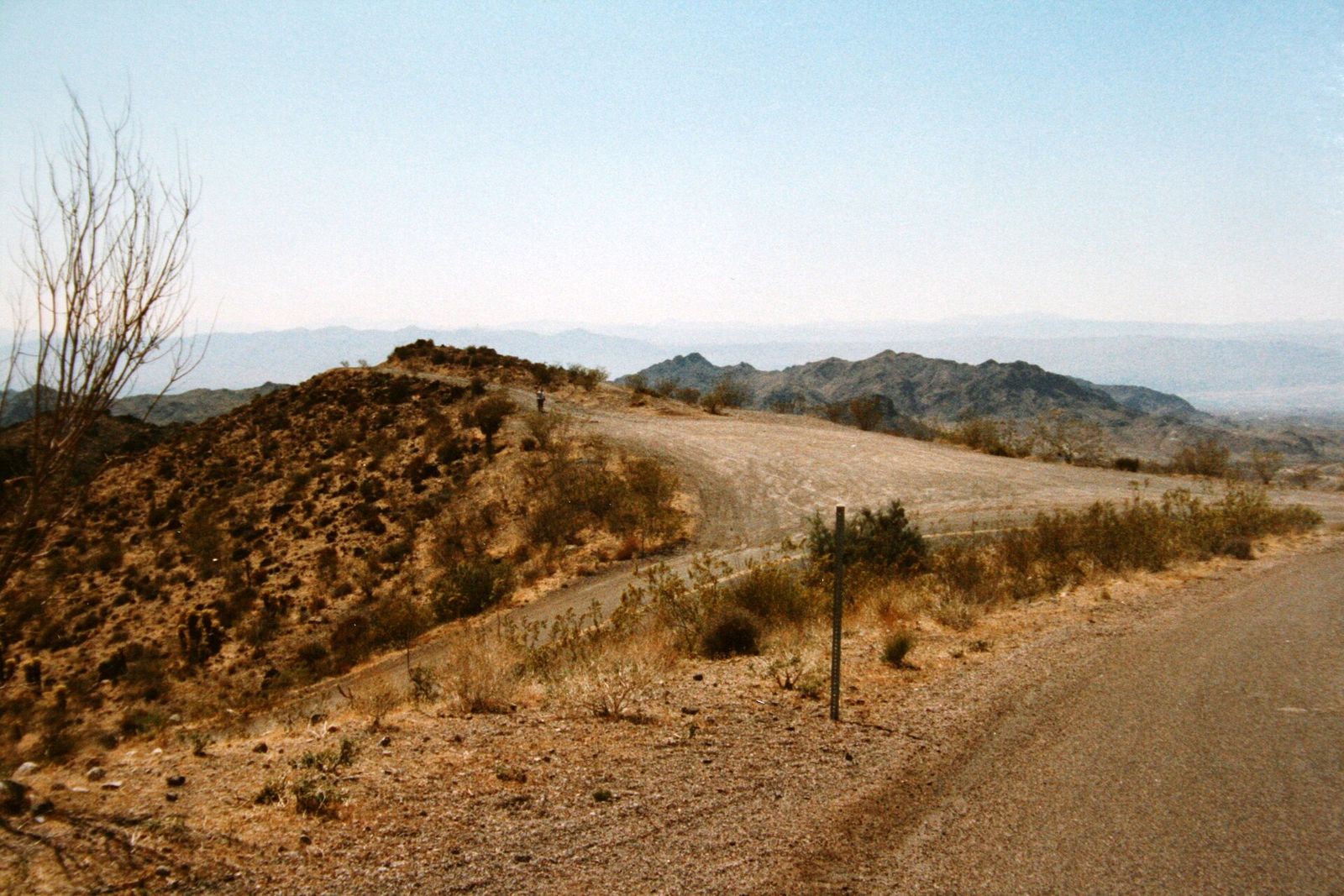
In 1928, a field of runners left Los Angeles on the "Bunion Derby," a footrace across America that followed much of the new Route 66. The Route 66 UltraRun brings back a small piece of that idea in Arizona: 140 miles on the longest surviving stretch of the Mother Road, from the little town of Seligman, past Peach Springs, Truxton, Hackberry and Kingman, over the switchbacks of Sitgreaves Pass, through the burro town of Oatman, and down to the Colorado River at Topock. The fastest crewed runner each year receives the Andy Payne Cup, named after the Oklahoma runner who won the 1928 race.
It's run by Marshall Ulrich, one of the best-known names in American endurance running, and Heather Ulrich, and it raises money for the Alzheimer's Association and the Historic Route 66 Association of Arizona. It's very different from every other race on this site. It's a road ultra, almost entirely on pavement or shoulder, with traffic, and for crewed runners there are no aid stations at all. Your crew follows you in a vehicle for the whole race, leapfrogging ahead every few miles, and they're responsible for your water, food, lights and safety. That makes it the most crew-dependent race in Arizona, and one where the crew vehicle matters most.
The 2026 race (the fifth, and a certified Route 66 Centennial event) ran November 14-16 and added a new 100-mile option. This guide is built from the race's September 2026 rules and route documents and its results pages. The race says it starts on the second Saturday of November, which would make the next one November 13, 2027, but that hadn't been announced when we checked. Watch route66ultrarun.com.
Route 66 UltraRun at a glance
| When | Second Saturday of November (2026: Nov 14-16). 2027 not yet announced |
| 140-mile start | 7:00 AM Saturday, Seligman, across from Angel and Vilma Delgadillo's Original Route 66 Gift Shop. The first mile is a neutral rolling start behind the fire truck and classic pace cars |
| 100-mile "CenturyRun" start | 10:00 AM Saturday, Hualapai Lodge, Peach Springs (actually about 103 miles) |
| Finish | Topock66 on the Colorado River, Topock |
| Direction | East to west. Mileposts count down from about 140 to 1 |
| Elevation | Start about 5,250 ft, high point about 5,560 ft (mile 24), finish about 475 ft. Roughly +4,000 / −9,000 ft |
| Time limit | 140: 60 hours (7:00 PM Monday). 100: 48 hours (10:00 AM Monday). No intermediate cutoffs. Runners over 70 get an extra hour per year |
| Divisions | Crewed Runner (140 or 100), Journey Runner (unsupported, 140 only), relays of 3-6 (140) or 3-5 (100) |
| Crew | Required for crewed runners: at least 2 people in the vehicle at all times (up to 4 for the 140) |
| Aid | None for crewed runners and relays. Journey Runners get limited aid at time stations, 4 drop bags and 4 water caches |
| Sanction | USATF sanctioned |
| Tracking | SPOT tracker |
| Records | Grant Maughan 28:36:44 and Nancy Levene 31:49:07 (both 2022); Journey Runner Amy Adams 36:40 (2025); relay R.A.D. Reds 18:25 (2024) |
The 2026 fees weren't published anywhere we could read. Crewed entries include two crew, and a third or fourth crew member costs $66 (or $75 cash at check-in). All crew and volunteers register on UltraSignup. Veterans and first responders get discounts. Check the race site when 2027 registration opens.
The route and time stations
Race documents use "race miles" (RM) from Seligman. The CenturyRun's race miles start at Peach Springs. Here's the route in order, from the September 2026 route description:
| Point | 140 RM | 100 RM | What's there |
|---|---|---|---|
| Start, Seligman | 0 | - | Fuel up Friday night. No services until Peach Springs |
| Grand Canyon Caverns | ~25 | - | Crew parking. The course's high point (about 5,560 ft) is just before here |
| TS1 Peach Springs (Hualapai Lodge) | 37 | 0 | CenturyRun start. Walapai Market (the only gas, 24-hour pumps). Hualapai Reservation: no alcohol sales, filming restricted |
| Truxton | ~46 | ~9 | Truxton Gas and Grub: gas, small store |
| Valentine | ~56 | ~19 | |
| Hackberry General Store | 60 | 23 | No fuel or restaurant |
| Antares | ~65 | ~28 | |
| Four-lane section into Kingman | 78.5-83 | 41.5-46 | No crew access for about 4.5 miles. The runner carries supplies or runs with a pacer |
| TS2 Kingman Visitor Center | 87 | 50 | Many 24-hour gas stations. About 4 miles of sidewalk running in town |
| I-40 frontage road and overpass | ~88-93 | ~51-56 | Semis on the frontage road. Crazy Fred's Truck Stop is the last fuel and food before the finish area |
| TS3 SOS Donkey Haven (Golden Valley) | 100 | 63 | 140 runners who reach 100 miles here earned a 100-mile buckle too in 2026 |
| Cool Springs | 107 | 70 | Store open 9-5, restrooms. Climb starts in earnest |
| Sitgreaves Pass summit | 111.5 | 74.5 | About 3,600 ft |
| TS4 Oatman (NW parking lot) | 115 | 78 | No fuel. General store and Oatman Hotel restaurant (daytime). Wild burros |
| Boundary Cone fork | ~117.5 | ~80.5 | Runners go straight, crews go left |
| Golden Shores | ~128 | ~91 | Fuel |
| Finish, Topock66 | 140 | 103 | Colorado River |
The race documents contain a few inconsistencies (Peach Springs is listed as both RM 37 and mile 46 in different places), so use the current route description on race weekend.
There's no route map embed published, but the official route description PDF describes every turn, crossing and crew restriction. Your crew should read it twice.
The course in four stages
Seligman to Peach Springs (RM 0-37): high, cold and empty. You start at about 5,250 feet in November. Seligman averages lows in the 30s or colder, the start can be around 40°F, and snow is possible in the first 37 miles. The road gently climbs to the high point near Grand Canyon Caverns, then rolls down toward Peach Springs. There are no services for 37 miles, so crews need full tanks and full coolers before the start.
Peach Springs to Kingman (RM 37-87): the long middle. Truxton, Valentine, Hackberry and Antares, then a four-lane divided highway into Kingman where crews can't reach their runner for about 4.5 miles. Fast runners reach Kingman around 8:30-10:00 PM on day one, and slower runners on the afternoon of day two. Kingman has the only real services of the middle section. It's the recommended place for crew swaps on a long race, and the only stretch where runners use the right-side sidewalk as pedestrians.
Kingman to Oatman (RM 87-115): the frontage road, the pass and the burros. From Kingman the route takes the I-40 frontage road (with semi traffic), goes under the overpass onto the Oatman Highway, and drops through Golden Valley toward the base of the Black Mountains. Then comes the signature section: from Cool Springs, a climb to about 3,600 feet at Sitgreaves Pass (RM 111.5), gaining about 900 feet in under 4.5 miles. It's narrow and switchbacked, crews can stop only in full pullouts, and the route descends about 900 feet into Oatman. The race notes that fast runners usually reach Oatman after dark. A bright mine security light before Oatman is blinding, and the wild burros are everywhere (don't feed them).
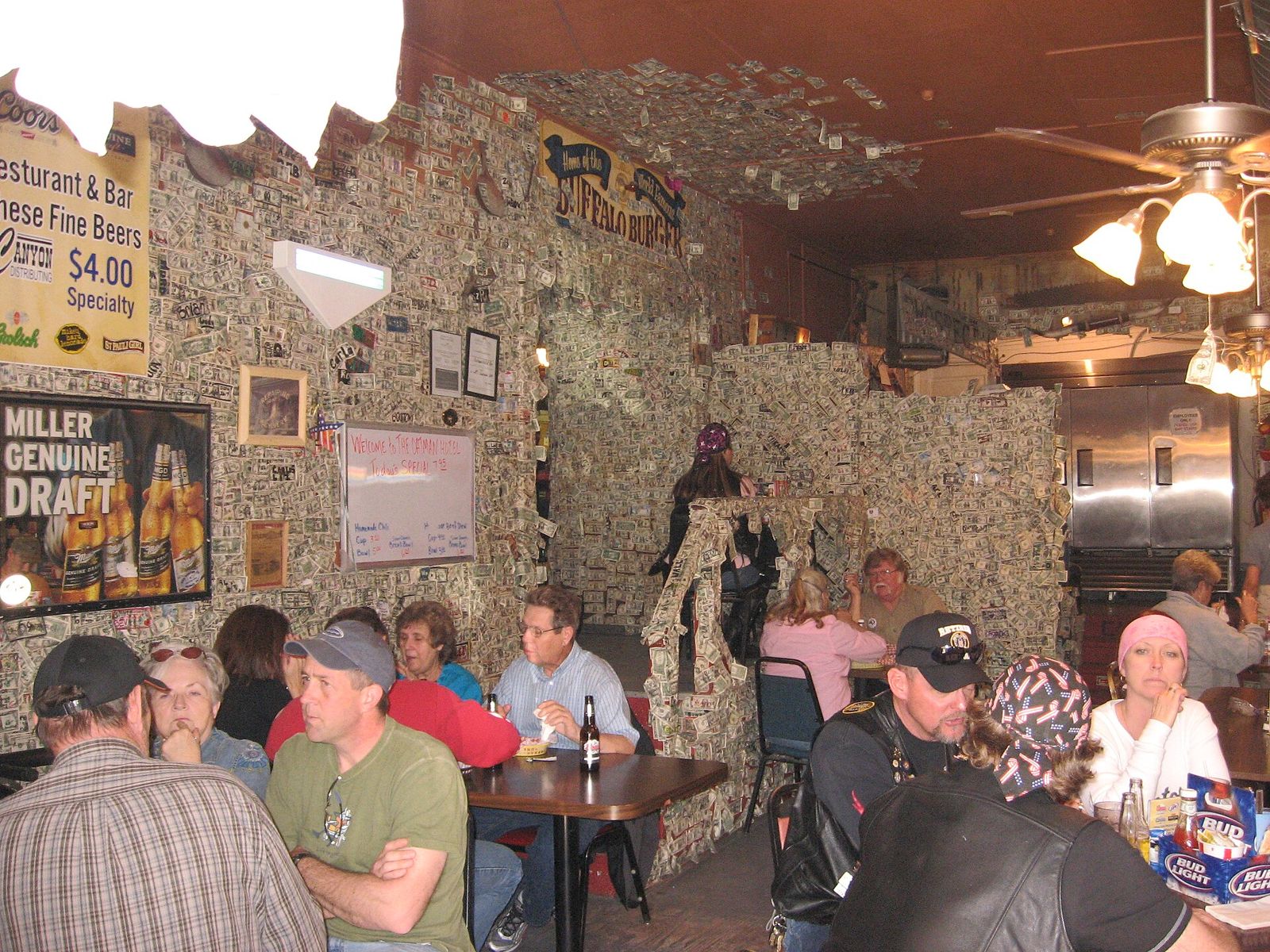
Oatman to Topock (RM 115-140): down to the river. The final 25 miles drop from about 2,700 feet to 475 feet on a mostly gravel shoulder that turns sandy, with off-highway vehicles legal on the road. It's warmer by the Colorado River, with days that can reach the high 70s and nights from the high 30s to the 50s depending on which race document you read. At RM 140 runners cross the road to the right (no signal) to the finish at Topock66.
The crew guide: the rules that keep everyone safe
On the Route 66 UltraRun, the crew isn't support. The crew is the aid station, and crew mistakes can cost the runner penalties or a disqualification. The rules are strict because the course is open road. Here's what crews need to know, from the September 2026 rules:
People and vehicles
- At least two people in the crew vehicle at all times. The 140 allows up to four crew. The UltraSignup listing says a maximum of two for the 100, while the rules document says two to four for both, so confirm with the race directors.
- One main crew vehicle on the route most of the time, plus an optional shuttle vehicle for errands and crew swaps.
- Vehicle types: cars, SUVs, minivans, full-size vans, Class B/B+ campers and pickups with standard tires. No trailers. The rules allow up to 25 feet total length including any rear basket, while the race's Details page recommends a minivan and about 20 feet maximum because of Sitgreaves Pass. Smaller is easier on the pass.
- Arizona minimum liability insurance and licensed drivers.
Signage (installed before check-in, with photo proof)
- Two reflective bib numbers at least 5 inches tall on the back (lower left rear window and rear driver-side window).
- Runner or team name and bib number at least 5 inches tall on all four sides.
- The race's "CAUTION RUNNERS ON ROAD" signs front and back, not on windows.
- No red or blue lights. Know how to turn off the headlights (rental cars especially).
Driving and parking
- Leapfrog 2-4 miles at a time. No shadowing at running speed, no caravans, no handing anything from a moving vehicle, and drive at the speed of traffic.
- Park with all four tires off the road. Headlights on while driving, and headlights off with hazards on when parked. Exit on the passenger side. Never block driveways or private property.
- Crossing to the runner: normally one crew member crosses, from the rear of the vehicle, and never in a way that makes traffic slow or stop (zero tolerance). Escort the runner across when they come to the vehicle.
- Sitgreaves Pass: stop only in full pullouts on the 8.5-mile pass.
- The Kingman four-lane (RM 78.5-83): no crew access for about 4.5 miles. Send the runner in with bottles and food, or with a pacer.
Night rules (5:30 PM to 7:00 AM)
- Everyone (runner, pacer and all crew, even if they stay in the vehicle) wears a reflective vest front and back, red blinking LEDs front and rear (two each; Journey Runners three), and a headlamp or flashlight. Crew violations can get the runner pulled.
Running rules
- Run on the left, facing traffic, left of the white line (on the line if there's no shoulder). The only exception is about 4 miles of right-side sidewalk in Kingman. Nobody ever goes right of the white line. Obey traffic lights.
- Pacers must be crew members. They're allowed after mile 1 in the 140 and anytime in the 100. Run two abreast only where there's room left of the white line, otherwise single file behind.
- Runners move under their own power. Crew can walk alongside but can't push or pull.
- IVs or supplemental oxygen = automatic DQ. Other infractions: up to one hour each, or DQ, with no appeals.
- Staking out: if the runner leaves the course (for example to sleep), the crew drives the numbered stake in at the exact spot and calls the RD when leaving and returning.
- No photos or video of anyone in the traffic lane on social media; the permitting agencies watch.
Fuel and food plan for crews
- Fill up Friday night in Seligman: nothing until Peach Springs (RM 37).
- Peach Springs (Walapai Market, 24-hour pumps), Truxton (Gas and Grub), Kingman (many 24-hour stations), Crazy Fred's Truck Stop on the I-40 frontage road (last real stop), and Golden Shores. No fuel at Hackberry or Oatman.
Where poles help
They don't. This is a road race, and poles aren't part of the culture or the rules discussion. Your legs need cushioned road shoes, not poles. The one climb, Sitgreaves Pass, is a steady road grade.
The finish line is decided here
There are no intermediate cutoffs, so this race is decided by attrition rather than the clock. The DUV statistics show 47 finishers over the first four editions (2022-2025), so fields have been small. Starter counts aren't published, so we can't give a clean finish rate. From the route and reports:
- The first night, between Peach Springs and Kingman. It's long, dark and cold, with more than 50 miles of repetitive road. The crew's job here is rhythm: short leapfrogs, hot food, layers on before the runner gets cold.
- The concrete and the descent. The course loses about 9,000 feet, much of it in long gentle grades. Quads and feet that felt fine at mile 40 are often wrecked by mile 100. Shoe changes and cushioning matter more here than on any trail race.
- Sitgreaves Pass, usually at night. After 107 miles, a climb of about 900 feet on narrow switchbacks, often in the dark, with burros and glare. Then the descent to Oatman.
When it's almost certain: Oatman (RM 115). From there it's 25 miles, mostly downhill, to a river, a hotel and a banquet. With no intermediate cutoffs and a 60-hour limit, a runner leaving Oatman under their own power usually finishes.
How not to DNF Route 66
- Treat the crew plan like a race plan. Agree on leapfrog distances, the night kit, who drives and who sleeps, and crew swaps in Kingman or Peach Springs.
- Cushioned road shoes, and several pairs. Plan changes around Peach Springs, Kingman and Oatman.
- Dress for both ends. Freezing at the start, possibly near 80°F at the river. Crews should hand over layers before the runner gets cold, especially overnight on the high desert.
- Eat real food. With no aid stations, the crew vehicle is your kitchen. Soup, burritos and potatoes beat gels at hour 20.
- Sleep on purpose if you need to. Use the staking-out rules, and keep naps short.
- Respect traffic. The rules exist because the road is open. One careless crossing can end the race.
- Just get to the next time station. Peach Springs, Kingman, Donkey Haven, Oatman, river.
Insider knowledge
The Route 66 UltraRun is small and young. We found no Reddit discussion of it to verify, and no race-specific video. What we could confirm:
- It's a "history" race as much as a running race. Finishers' accounts in UltraRunning, such as Jodi Weiss's 2022 report (via Route 66 News), describe the small towns, the old gift shops and the people of Route 66 as the heart of the race.
- Winning times run about 28-33 hours. Grant Maughan's 2022 record is 28:36:44, and recent winners have run around 31-33 hours. The race said a 140 solo runner broke 24 hours and course records fell in 2026, but official 2026 results weren't posted when we checked.
- Older runners do well. Recent finishers include runners in their late 60s and early 70s, helped by the age allowance (one extra hour per year over 70).
- Unsupported is possible. The Journey Runner division (140 only) has its own record, 36:40 by Amy Adams in 2025, with only time-station aid, 4 drop bags and 4 water caches.
- Book Kingman early. The race recommends the Best Western Plus Kings Inn and says it no longer recommends the Ramada. Runners and crews often use a Kingman room for a crew swap on day two.
Lodging: Seligman (Route 66 Canyon Lodge Motel is the race hotel; also Route 66 Historic Motel, Aztec Motel, Supai Motel, Deluxe Inn), Peach Springs (Hualapai Lodge), Kingman, and near the finish Topock66 (mostly for volunteers), an RV resort, Airbnbs in Topock and Golden Shores, or Needles, Lake Havasu City and Laughlin. The closest major airports are Phoenix and Las Vegas, each about 175 miles from Seligman. The awards banquet (with 1950s-80s attire encouraged) is Monday evening at Topock66.
Gear and packing list
For the runner and the crew vehicle:
- Cushioned road shoes, several pairs. Max cushion road running shoes
- Reflective vests and red blinking LEDs for every person (required at night). Reflective running vest with lights and red clip-on LED safety lights
- A bright headlamp for each person. Rechargeable running headlamp
- Vehicle signage supplies: large reflective numbers and magnetic sign sheets. Reflective vinyl numbers and blank magnetic sign sheets
- Warm layers for a sub-freezing start and high-desert nights. Packable down jacket
- A big cooler and a camp stove for the rolling aid station. Rolling cooler and portable camp stove
- A chair for the roadside stops. Folding camp chair
- Anti-chafe and blister care. Squirrel's Nut Butter and a blister care kit
The van idea for Route 66
No other race in Arizona makes a stronger case for a crew van. The vehicle is the aid station for 140 miles and up to 60 hours: kitchen, pantry, wardrobe, bed and medical tent all in one, with two to four people living in it from Seligman to the river. A van gives the runner a real bed for a staked-out nap, gives the off-duty crew member a place to sleep while the other drives, and gives you a fridge, a stove and room for six pairs of shoes. Before you choose any vehicle, check it against the race's rules: no trailers, length limits (the race suggests staying around 20 feet for Sitgreaves Pass), and the required signage on all four sides. AZ Ultra Vans is collecting reservation interest. The card above isn't a booking or a promise of availability.
Route 66 UltraRun FAQ
When is the next Route 66 UltraRun? The race says it starts on the second Saturday of November, which would be November 13, 2027. The 2027 date hadn't been officially announced when we checked.
How long is the Route 66 UltraRun? 140 miles from Seligman to Topock on historic Route 66. Since 2026 there's also a 100-mile "CenturyRun" (about 103 miles) from Peach Springs.
Are there aid stations? Not for crewed runners or relays. The crew vehicle provides all support. Journey Runners (unsupported) get limited aid at time stations, four drop bags and four water caches.
What's the time limit? 60 hours for the 140 and 48 hours for the 100, with no intermediate cutoffs. Runners over 70 get one extra hour for each year over 70.
Does the race run on I-40? No. It crosses I-40 near Seligman, passes under it in Kingman, uses the I-40 frontage road after Kingman, and goes under the I-40 overpass near RM 92.5 to the Oatman Highway.
What does the crew vehicle need? At least two people in it at all times, Arizona liability insurance, reflective bib numbers and name signs on all four sides, the race's caution signs, no trailers, and no red or blue lights. Smaller vehicles are easier on Sitgreaves Pass.
Which side of the road do runners use? The left, facing traffic, left of the white line, except about 4 miles of right-side sidewalk in Kingman.
Who wrote this
Johnathon Lawson is a trail runner from Gilbert, Arizona, and the person behind AZ Ultra Adventure. He has finished the Mogollon Monster 100, the San Diego 100 and the Zion 100. He hasn't run the Route 66 UltraRun. This guide was researched from the race's 2026 rules and route documents, its results page, and published finisher accounts. Corrections from Route 66 finishers and crews are welcome.
Follow along on Strava, YouTube and Instagram.
Some links are Amazon affiliate links. As an Amazon Associate we earn from qualifying purchases, at no extra cost to you.