 AZ Ultra Adventure
On this page
Next Saturday two groups of people will run 50 miles.
One group lines up at 7:00 AM Central in Vienna, Illinois, on a flat rails-to-trails path. The fastest of them will be finished, showered and probably eating lunch before I reach the halfway point of my own race.
The other group, me included, lines up at 6:00 AM in Usery Mountain Regional Park in Mesa for Pass Mountain 50. We'll get up to 16 hours.
Same distance. Same day. Very different races.
Race one: Tunnel Hill, the fast one
The Tunnel Hill 50 is the 2026 USATF 50 Mile Road Championships, according to USA Track & Field's event page. A few details from the official listings:
- Start: Saturday, November 14, 7:00 AM, Vienna, Illinois.
- Prize money: $1,500, $750 and $500 to the top three men and women, plus free entry for 2027.
- Who can win it: You need a USATF membership and US citizenship to place in the championship.
- Record bonus: A new 50-mile world record, men's or women's, earns $5,000.
- Course: a flat rail trail, run as a double out-and-back.
That flat path is where Charlie Lawrence set the 50-mile world record in November 2023: 4:48:21, about 5:46 per mile for fifty straight miles. Registration closed at the end of October. I haven't seen a published elite field, so I won't guess who'll win.
Race two: Pass Mountain, the one I'm running
Aravaipa's official page lists the Pass Mountain 50 at 49.7 miles with about 5,527 feet of climbing. The time limit is 16 hours, which means a 10:00 PM finish. There are two cutoffs at the Usery aid station: mile 27.4 by 2:30 PM and mile 43.7 by 7:00 PM.
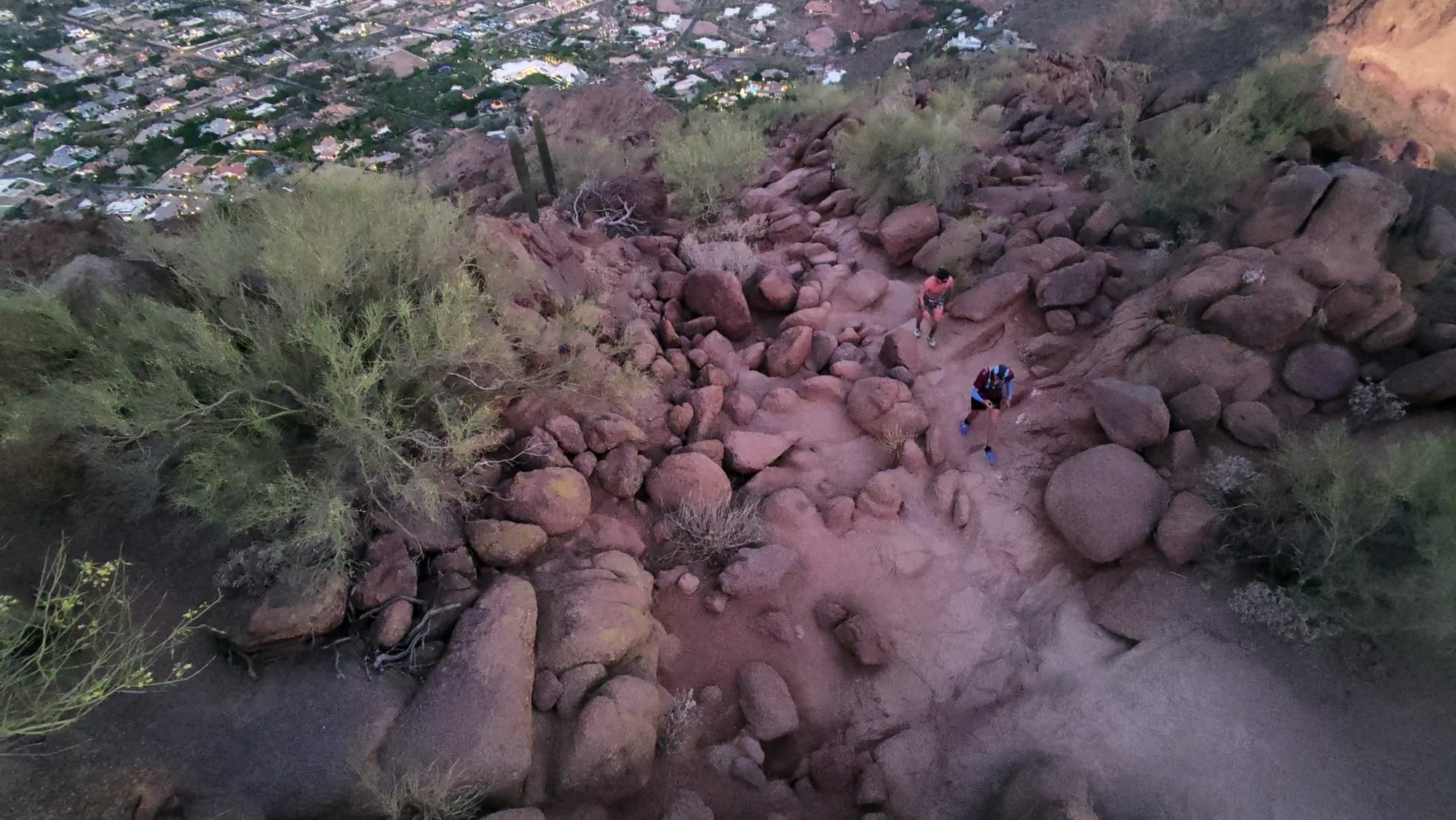
Nobody is earning a world-record bonus at Usery. What you get is a buckle, a sunset somewhere on the back half, and a lot of rocky singletrack between the saguaros.
The math nobody tells road runners
If you come from road marathons, fifty miles sounds like the hard part. It isn't.
Run the numbers. Spread 5,500 feet of climbing over 50 miles and you get about 110 feet per mile. That's not a mountain race. On paper it's rolling.
Here's what that number hides:
- The climbing comes in chunks. You get flat-ish wash miles, then a long grind where 110 feet a mile turns into 400 or 500. Your road pace means nothing on that stretch.
- The descents cost more than the climbs. Every drop pounds your quads, and by mile 35 the downhills feel worse than the ups. The flat-course runners never pay that bill.
- Rocks slow you down even on the flats. Even the "flat" desert trail at Usery has loose rock, so you can't settle into a rhythm and switch off your brain the way you can on a paved rail trail.
That's why the champion in Illinois might average under 6:00 a mile, and plenty of strong runners at Pass Mountain will average 15 or 16. They're not worse athletes. The course charges a different price.
You don't need more miles. You need more vert.
This is the lesson I'd hand any road runner thinking about a first desert 50. You already know how to run long. Your weekly mileage is probably fine. What usually breaks people is the climbing, and the descending that comes after it.
What I've done in the build-up for this one:
- Repeats on one hill. Camelback and the Usery trails are my hills. On repeats you climb the same hill again and again, so you get the work without needing a huge mountain. One climb doesn't train you. Going back up on tired legs does.
- Power-hiking on purpose. Over 50 miles, a strong walk up a steep grade beats a shuffle-jog every time, and it saves your legs. Practice it on purpose, with your hands on your thighs, or use collapsible trekking poles if the race allows them.
- Real downhill running. Run your descents at an honest effort a few times a week so your quads learn what mile 40 feels like. A trail shoe with grip and a rock plate makes the loose Usery descents less scary.
- Treadmill incline when life gets in the way. I have three kids, a business and a team to coach. Some weeks the hill is a treadmill at 10 to 12 percent at 4:30 AM. It counts. If you're building vert at home, a treadmill with a steep incline does more for a desert ultra than another flat 10-miler.
And one small thing that fixes a big problem on rocky desert trails: trail gaiters. Little rocks in your shoe at mile 12 become blisters at mile 30.
Why I like that both races exist
I'm not knocking the fast race. Five-hour fifty-milers are incredible. Charlie Lawrence's record works out to back-to-back sub-3:00 marathons with a few extra miles on top, and that blows my mind.
But most of us aren't lining up for $1,500. We're lining up to see if we can keep moving for twelve, fourteen or sixteen hours through rock and heat and the dark. The champion's race and my race test different things. Neither is the "real" 50.
So next Saturday, while the national champion is crossing the line in Illinois, I'll probably be around mile 20, hiking a rocky climb with a soft flask in each hand.
Pick the race that fits your goal, then train for its terrain, not its distance.
Tunnel Hill championship details are from USA Track & Field's 2026 USATF 50 Mile Road Championships page and UltraSignup. Charlie Lawrence's 4:48:21 world record (Tunnel Hill, Nov 2023) is from iRunFar. Pass Mountain distance, climbing, time limit and cutoffs are from Aravaipa Running's race page; other listings show a lower climbing figure, so check the official page before race day.
Some links are Amazon affiliate links. As an Amazon Associate we earn from qualifying purchases, at no extra cost to you.