 AZ Ultra Adventure
On this page
- The short version
- The race, leg by leg
- Aid stations and cutoffs
- Mandatory gear (UTMB North America rules)
- Poles: yes, and carry them all day
- Altitude: the part training can't fake
- The finish line is decided here: Mineral Basin to Hidden Peak 2
- Crew and spectators: the tram
- Getting there and where to stay
- Gear for this course
- The van idea
- How fast is fast here?
- Speedgoat 50K FAQ
- More guides
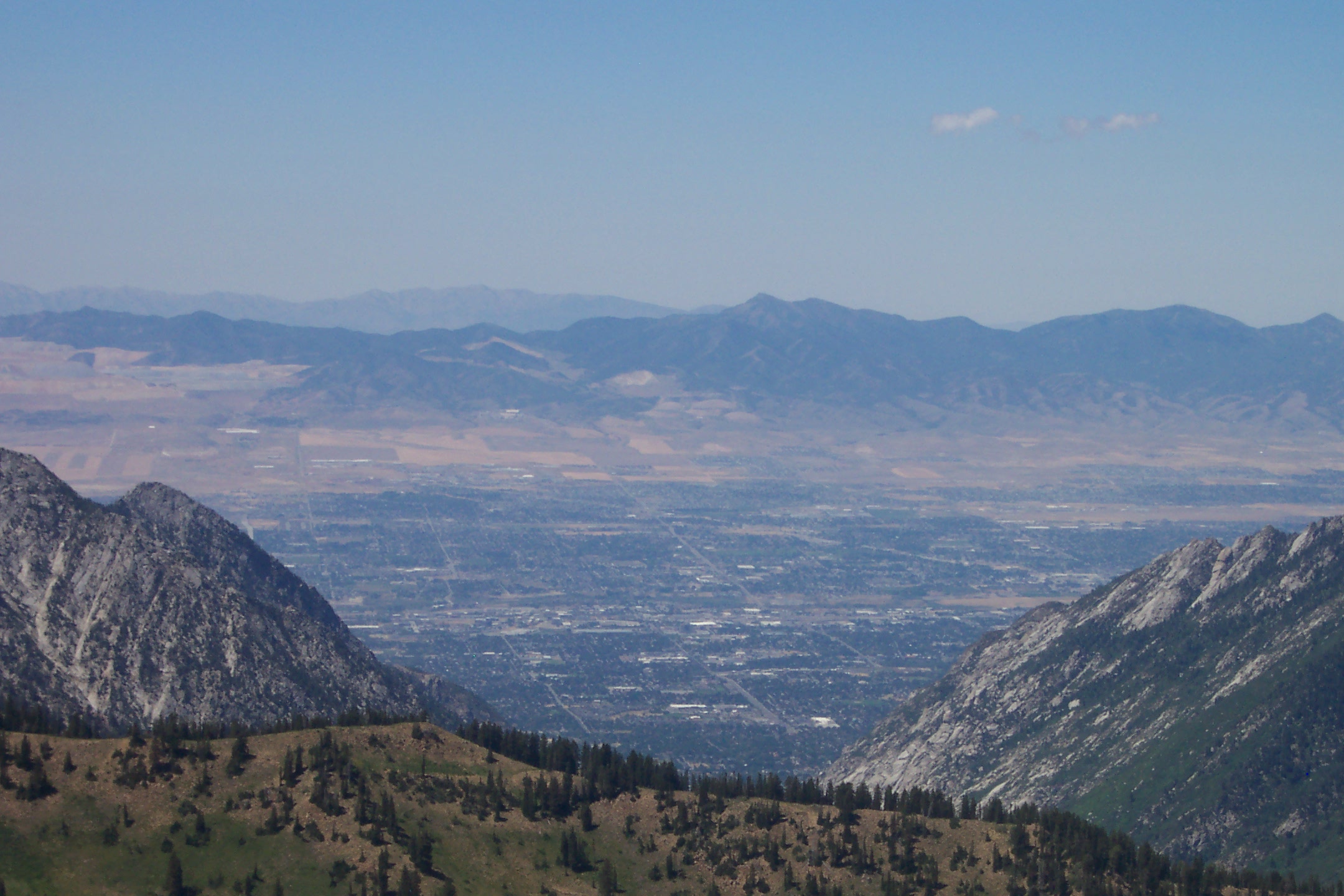
Karl Meltzer, who founded the race, has a line about Speedgoat that runners keep repeating: don't make it your first 50K. That's good advice. The numbers explain why. The race's chart says 32.5 miles with about 11,300 feet of climbing and 12,400 feet of descent. All of it is between about 7,600 and 11,000 feet, on ski runs, mine roads, loose talus and singletrack that switches between them. Most mountain 50Ks have about 6,000 to 8,000 feet of climbing. Speedgoat has nearly twice the climbing of most "hard" 50Ks, plus the altitude.
It's also one of the best-attended mountain races in North America. Kilian Jornet, Anna Frost, Sage Canaday, Jim Walmsley and Ruth Croft have all won it. Today it's part of the UTMB World Series, and the top three men and women earn a spot at OCC in Chamonix. Behind them, a few hundred regular trail runners spend most of the day hiking ski slopes with their hands on their knees, then shuffle down rocky descents above timberline.
This guide covers the July 24, 2027 race, as of November 22, 2026. Most of the detail comes from the 2026 runner guide, spectator guide and aid station chart. The race says those may change for 2027, and new guides will be posted closer to the event. It also draws on the race's mandatory gear list and regulations, its CalTopo map and GPX, iRunFar results, and runner reports. We haven't run Speedgoat. This is a researcher's guide, not a race report.
The short version
| Date | Saturday, July 24, 2027 (the race weekend is July 22-24; the 30K and 10K are Friday, July 23) |
| Start | 6:30 AM, Snowbird Center Plaza, Snowbird, Utah |
| Finish | The Plaza Deck, same place |
| Distance | 32.5 miles on the race's chart (the race says your watch may be off by about a mile; our GPX reading is about 31.4) |
| Climbing | About 11,315 ft up and 12,387 ft down (race chart). The 50K page says "11,400 feet" |
| High point | Mt. Baldy, about 11,060 ft, around mile 21 (our reading of the race GPX). Hidden Peak, at about 10,970 ft, is passed twice |
| Low point | About 7,600 ft, in the American Fork / Dutch Flat area |
| Time limit | 13 hours (7:30 PM) |
| Cutoffs | Hidden Peak 1, Mineral Basin, Tunnel and Hidden Peak 2 (table below). Leave before the cutoff. You can't leave behind the sweeps |
| Fee | $157 plus $28.56 processing ($185.56). Charity bibs through UTMB Community cost $534.24. Prices can go up |
| Entry | First come, first served on the UTMB registration page until sold out. No race-day entry |
| Refunds | Non-refundable and non-transferable. One deferral for any reason, requested by June 18, 2027 |
| UTMB | 2 Running Stones. The top 3 men and women get a paid OCC entry at the UTMB World Series Finals |
| Prize money | $2,000 / $1,000 / $500 for the top three men and women |
| Pacers | None (the UTMB North America rules allow pacers only at 100-mile races) |
| Poles | Allowed. If you start with them, you carry them to the finish |
| Drop bags | None on course. You can leave a bag at Basecamp |
| Cups | None. A collapsible cup of at least 150 ml is mandatory |
| Other distances | 30K (31 km, 2,000 m), 10K, and The Summit (5.6 km, 921 m uphill) |
Official pages: Speedgoat home, the 50K, registration, crew and spectators, lodging, the 2026 runner guide, the 2026 spectator guide, the 50K aid station chart, the UTMB North America mandatory gear list and the race regulations.
The race, leg by leg
The best way to understand Speedgoat is the race's own aid station chart. It lists the climbing and descent to the next station for every leg. Here it is, with notes from the race's course description and runner reports.
| Leg | Miles | Up | Down | What it is |
|---|---|---|---|---|
| Start to Water Only 1 (mi 4.3) | 4.3 | 1,466 ft | 921 ft | Starts with a gently downhill service road, then a 600 ft climb to singletrack. Expect a bottleneck where the road narrows |
| Water Only 1 to Hidden Peak 1 (mi 9.6) | 5.3 | 2,826 ft | 523 ft | The first big climb, including the steep Chips Switchbacks, then three more ups and downs to the top of the tram |
| Hidden Peak 1 to AF Canyon (mi 15.3) | 5.7 | 223 ft | 3,589 ft | About 4 miles of rocky singletrack and ATV track down to Dutch Flat, the course's low point. Runners say the rocks get bigger near the bottom |
| AF Canyon to Water Pipe (mi 18.6) | 3.3 | 2,183 ft | 0 | About 3 miles of climbing out of American Fork Canyon. AF Canyon is a hydration-only stop |
| Water Pipe to Mineral Basin (mi 20.1) | 1.5 | 543 ft | 794 ft | Water only. You can't drop at Water Pipe because it's too remote |
| Mineral Basin to Tunnel (mi 22.9) | 2.8 | 1,976 ft | 991 ft | About 2,000 ft up to Mt. Baldy, the high point, then along Baldy Ridge to the tunnel |
| Tunnel to Hidden Peak 2 (mi 25.6) | 2.7 | 1,535 ft | 1,087 ft | A fast service-road descent, then the climb up the Cirque ridge to Hidden Peak again |
| Hidden Peak 2 to Water Only 2 (mi 30.9) | 5.3 | 534 ft | 2,838 ft | Mostly downhill toward the Plaza |
| Water Only 2 to Finish (mi 32.5) | 1.6 | 29 ft | 599 ft | Down to the Plaza Deck |
Notice how the climbing comes in big chunks. Miles 4-9.6 have about 2,800 feet of climbing, and so do miles 15-20. Then from Mineral Basin to Hidden Peak 2, about 3,500 feet of climbing in 5.5 miles, crossing the high point, with three cutoffs in a row. That last stretch is where this race really happens. More on that below.
Older race reports mention aid stations at Larry's Hole and Pacific Mine. Those were on older versions of the course and aren't on the current chart.
Aid stations and cutoffs
From the 2026 chart and runner guide. The pace numbers are our own math from the race's mileages and the 6:30 AM start.
| Station | Mile | To next | Crew | Cutoff (leave by) | Average pace needed from start | Pace for that segment | Notes |
|---|---|---|---|---|---|---|---|
| Start, Plaza Deck | 0 | 4.3 | Yes | 6:30 AM start | - | - | |
| Water Only 1 | 4.3 | 5.3 | No | - | - | - | Water only |
| Hidden Peak 1 | 9.6 | 5.7 | Yes (by tram) | 10:10 AM | 22:55 /mi | 22:55 /mi | Top of the tram |
| AF Canyon | 15.3 | 3.3 | No | - | - | - | Hydration station |
| Water Pipe | 18.6 | 1.5 | No | - | - | - | Water only. Can't drop here |
| Mineral Basin | 20.1 | 2.8 | No | 1:45 PM | 21:39 /mi | 20:29 /mi | The cutoff that catches the most people |
| Tunnel | 22.9 | 2.7 | Yes (tram up, then walk down) | 3:20 PM | 23:09 /mi | 33:56 /mi | The 50K's only extra crew point |
| Hidden Peak 2 | 25.6 | 5.3 | Yes (by tram) | 5:15 PM | 25:12 /mi | 42:36 /mi | Last climb done |
| Water Only 2 | 30.9 | 1.6 | No | - | - | - | Water only |
| Finish | 32.5 | - | Yes | 7:30 PM | 24:00 /mi | 19:34 /mi |
The 50K web page lists slightly different mileages (Mineral Basin about 19, Tunnel about 22.5). These are the chart's numbers.
Read the "segment pace" column. The tightest cutoff isn't on the high point. It's the 10.5 miles from Hidden Peak to Mineral Basin, at about 20:29 per mile. That's 3,600 feet of rocky descent down to Dutch Flat, then about 2,700 feet of climbing back up. A runner who's slow on technical downhills and slow on long climbs can lose 30 minutes there without noticing. After Mineral Basin the cutoffs relax a lot. The pace for Tunnel and Hidden Peak 2 looks slow, but those legs are steep climbs at over 10,000 feet.
A rough target for a midpack finish: leave Hidden Peak 1 by about 9:30 AM and Mineral Basin by about 1:00 PM. That leaves plenty of time for the last climbs.
What's at the aid stations: Naak drink and gels, fruit, soda, PB&J, sweets and salty snacks, plus first aid, sunscreen, bug spray and lube. Not every station has the full Naak range, and the water-only stations have water only. With no drop bags anywhere on course, everything you need beyond what's at the aid stations has to be in your pack from the start, or handed to you by your one crew person at Hidden Peak or Tunnel.
Mandatory gear (UTMB North America rules)
The 50K requires all of this, and gear checks are part of UTMB races:
- A phone with service that works in North America (roaming on), with the race command number saved. In 2026 that was 813-422-2094.
- A collapsible cup, at least 150 ml.
- 1 liter of water capacity.
- An 800-calorie food reserve.
- A survival blanket.
- A whistle.
- The race may add a hot-weather or cold-weather kit a few days before. Watch your email.
Recommended: a pack, a hooded jacket, a hat, gloves, a headlamp, ID and poles. In the Wasatch in late July, a jacket isn't overkill. The spectator guide warns that conditions can go from hot to snowy on the summits, and afternoon storms are common in the Wasatch in summer.
Poles: yes, and carry them all day
Poles are allowed, with one UTMB rule: if you start with poles, you carry them from start to finish. You can't hand them off or leave them in a bag. So the poles decision is made at the start line.
Should you bring them? For most people, yes. There are two climbs of about 2,800 feet each on ski-run grades, then Baldy (about 2,000 feet in under two miles) and the Cirque ridge. Those are exactly the grades where poles save your legs. The cost is on the descents. Several reports describe folding poles at Hidden Peak and carrying them for the long drop to Dutch Flat. Collapsible poles with a quiver or vest holder make that much easier than fixed-length poles. Train with your exact setup before race day.
Altitude: the part training can't fake
The whole course is above about 7,600 feet, and much of it is over 10,000. Coming from Phoenix, Sacramento or Southern California, you'll feel it on the first climb. You'll feel it more on Baldy, after 20 miles of work.
What runners recommend:
- Arrive early if you can. One 2024 race report credited about 10 days at altitude (in Leadville) before the race. Most people can't do that. Even two or three nights in the Salt Lake area or at Snowbird is better than flying in Friday night.
- Hike sooner than you think you need to. At 10,000+ feet, pushing a climb hard costs far more than you gain. Power hiking with poles on the big climbs almost always pays off.
- Eat on the climbs. Your stomach slows down at altitude. Small bites while hiking are easier than big meals at aid stations.
- Respect the sun. At high altitude and above treeline, the sun is fierce. Runners in 2026 described a warm day. Sunscreen, a hat and sunglasses.
The finish line is decided here: Mineral Basin to Hidden Peak 2
Between mile 20.1 and 25.6 you go from Mineral Basin up to the top of Mt. Baldy, the high point, along Baldy Ridge to the tunnel, down a service road and back up the Cirque ridge to Hidden Peak. That's about 3,500 feet of climbing in 5.5 miles, at the highest altitude of the day, with cutoffs at each end. In 2026 the men's podium had sorted itself out by Mineral Basin, and the midpack faces a similar test there.
The race is decided here because:
- It's after the big descent. Runners arrive at Mineral Basin having just dropped 3,600 feet and climbed 2,700, and their legs are trashed.
- It's in the afternoon. That's when Wasatch thunderstorms build. Lightning on an exposed ridge at 11,000 feet is not something to push through. Follow the race's instructions if a storm comes.
- Baldy is steep, and it comes right after the aid station. Runners who sit too long at Mineral Basin go straight up a very steep hill with cold legs.
How to get through it:
- Reach Mineral Basin with time to spare. The 1:45 PM cutoff is the tightest. If you leave Hidden Peak 1 by 9:30 AM and don't wreck your legs on the descent to Dutch Flat, you're fine.
- Eat at Mineral Basin, then leave walking. Have a gel or some fruit, refill, and start hiking. Eat more on the way up Baldy.
- Climb Baldy in small steps. Use the poles. Expect it to take much longer than its 2.8 miles suggest. Even fast runners take a long time.
- Get to Tunnel. It's a crew point. Seeing a familiar face is worth a lot, and from there it's one more climb.
- Once you're at Hidden Peak 2, you've made it. From mile 25.6 there's no more serious climbing, just a long, rocky 6.9 miles down to the Plaza. That segment's cutoff pace is the easiest of the day (19:34 per mile). Take the descent carefully, because it's where tired legs roll ankles.
Crew and spectators: the tram
Speedgoat is unusual: the best place to watch is the top of a mountain, and you get there by tram.
- Crew points: Hidden Peak (both passes, for 30K and 50K runners) and Tunnel (50K only). Crews ride the tram up to Hidden Peak and walk down to Tunnel. The start and finish also count as crew points.
- One crew person per runner. The crew zone runs from 500 meters before an aid station to 500 meters after it. No helping between aid stations, and no carrying gear for the runner.
- The tram (2026 rules): Free spectator rides start at 6:30 AM on race day, about every 15 to 20 minutes, first come, first served. The last free ride up is at 10:30 AM. After 11 AM, going up needs a paid ticket. Coming down is free all day. You register with a QR code and sign a waiver, then print your ticket at a kiosk on the Plaza.
- Plan the timing: most runners reach Hidden Peak 1 between about 8:00 and 10:10 AM. A crew that wants to catch Hidden Peak 1, then Tunnel and Hidden Peak 2 in the afternoon, should ride up early and spend most of the day near the summit. Bring layers, water, sunscreen and food. At almost 11,000 feet, the summit is colder and more exposed than the Plaza.
- Tracking: LiveTrail chip timing only, no GPS. The race warns that updates can come up to two hours late because of poor connectivity. Agree on times with your runner instead of watching your phone.
- Rules: no dogs anywhere in Little Cottonwood Canyon (a $750 fine). No overnight parking or camping in Snowbird's lots.
Getting there and where to stay
Snowbird is about 29 miles from Salt Lake City International Airport, up Little Cottonwood Canyon. The race recommends staying at Snowbird itself (1-800-453-3000, option 2). It saves you driving up the canyon at 5 AM, and it puts you at altitude a few nights before the race. Below the canyon, Sandy, Cottonwood Heights and Salt Lake City have plenty of hotels, about 30 to 45 minutes away.
The parking page in the 2026 spectator guide is only an image. Check the 2027 guide for lots, any canyon road restrictions, and whether there's a shuttle. Speedgoat weekend is a busy Saturday in a small canyon, so get there early.
Gear for this course
The mandatory list covers the basics. These are the extras that matter at Speedgoat.
- Collapsible poles with a quiver. You carry them all day, so being able to stow them for the descents matters. Collapsible carbon trail running poles and a pole quiver.
- A vest that holds 1.5-2 L plus all the mandatory gear. Water stops can be 5+ miles apart, with long climbs. Trail running vest 10-12L.
- A collapsible cup (150 ml or more). Mandatory. Collapsible running cup.
- A lightweight waterproof hooded jacket. For Baldy and the Cirque in an afternoon storm. Lightweight running rain jacket with hood.
- Shoes with grip and some protection. Talus, scree and ATV roads with loose rock. Trail running shoes with rock plate.
- Gaiters. Loose rock and scree get into your shoes. Trail running gaiters.
- Sun protection. A hat, sunscreen and sunglasses for the high sun. Sport sunscreen SPF 50.
- A survival blanket and a whistle. Both mandatory and both cheap. Emergency mylar blanket and safety whistle.
- Electrolytes. Long, hot, high climbs. Electrolyte capsules.
The van idea
With no overnight parking or camping at Snowbird, a crew van at Speedgoat is a valley base camp, not a trailhead camp. It's useful anyway. A van gives you a cool, quiet place to sleep below the canyon for a few nights of acclimatization, a fridge for real food instead of resort prices, and a shaded place to recover after the race with compression boots and a cold drink before the drive home. If that's how you'd like to do Speedgoat, or any mountain race, join the AZ Ultra Van waitlist on the reservation card above. It's a waitlist, not a booking, so availability isn't guaranteed.
How fast is fast here?
- Course records: David Sinclair, 4:57:35 (2024). Jennifer Lichter, 5:54:45 (2025), the first woman under six hours.
- 2026 winners: Mason Coppi, about 5:15, and Lauren Gregory, about 5:56 (iRunFar).
- Field size: around 540 ranked runners in 2025, according to UltraRunning Magazine's listing. That doesn't tell you how many finish.
For most people a good Speedgoat takes somewhere between 8 and 12 hours. That's more like a mountain 50-miler than a 50K.
Speedgoat 50K FAQ
Can the Speedgoat be my first 50K? The founder says no, and we agree. It has 11,000+ feet of climbing at high altitude, technical descents and real cutoffs. Run a couple of mountain 50Ks with 6,000-8,000 feet of climbing first.
How hard are the cutoffs? The tightest is Mineral Basin (mile 20.1, 1:45 PM), which needs about 20:29 per mile from Hidden Peak 1. That's 10.5 miles of big descent and big climb. The others are easier.
Are trekking poles allowed? Yes. If you start with them, you have to carry them to the finish. Collapsible poles are best.
Are there drop bags? No, not on the course. You can leave a bag at Basecamp. Bags not picked up by 7 PM are donated.
Can I have a pacer? No. UTMB North America rules allow pacers only at 100-mile races.
Where can spectators watch? At the start and finish, and at Hidden Peak and Tunnel by tram. The tram is free for spectators until 10:30 AM on race day (2026 rules). After that, it's free coming down and needs a paid ticket going up.
Is it a UTMB race? Yes. It's part of the UTMB World Series, worth 2 Running Stones, and the top three men and women earn OCC entries.
When should I register? Registration is first come, first served on the UTMB site until the race sells out. The 2027 page still showed 2026 dates when we checked, so watch the official site.
More guides
- Snow Peaks 50, another Wasatch mountain race, in Provo Canyon
- Wasatch Front 100, which runs past Snowbird's neighbor Brighton
- The Bear 100, northern Utah's classic 100
- Flagstaff Sky Peaks, Arizona's nearest thing to Speedgoat, on Snowbowl
- The trekking poles guide
- Bryce Canyon 100
Who wrote this
Johnathon Lawson is a Gilbert, Arizona ultrarunner and a three-time 100-mile finisher: Zion 100 (2025), Mogollon Monster 100 (2025) and San Diego 100 (2026). He hasn't run Speedgoat. This guide is researched from the race's official website and 2026 runner and spectator guides, the UTMB North America rules and gear list, the race's CalTopo map and GPX, iRunFar results and runner reports. Follow his training on Strava and the AZ Ultra training page, his results on UltraSignup, and AZ Ultra Adventure on YouTube and Instagram.
Sources: speedgoat.utmb.world and its 50K, registration, crew and lodging pages; the 2026 runner guide, spectator guide and 50K aid station chart; the UTMB North America gear list and regulations; the CalTopo map; Wikipedia; iRunFar on 2024, 2025 and 2026; UltraRunning Magazine; KUTV; and runner reports from Engineered, Maddie Flaig-More and a 2026 recap. Cutoff pace math and the GPX high and low points are our own. The 2027 guides may change details, so check them before you travel.
Some links are Amazon affiliate links. As an Amazon Associate we earn from qualifying purchases, at no extra cost to you.