 AZ Ultra Adventure
On this page
Six of sixteen.
That's how many runners finished in a small study at the Western States 100, the one Stanford sports doctor Emily Kraus pointed to this week when Business Insider asked what she has learned from treating ultrarunners. Researchers logged everything those 16 runners ate and drank during the race. The six who made it to Auburn averaged about 0.98 grams of carbohydrate per kilogram of body weight per hour. The ten who didn't averaged about 0.56.
That is close to double. The gap showed up early too: in the first 48 km (about 30 miles), the finishers were already taking in more calories, fluid and sodium than the runners who later dropped.
It's a small study, and the authors say so themselves. The finishers' intake varied a lot, so food wasn't the only thing that decided who finished. Still, it's one of the clearest pictures we have of something every 100-mile runner learns the hard way: you can't make up in hour 20 for what you skipped in hour 2.
Tomorrow is Thanksgiving, so let's make that number real with the biggest meal of the year.
The math, using your own plate
Take a 165 lb runner. That's about 75 kg.
- Finisher pace: 0.98 × 75 ≈ 74 g of carbs every hour
- Dropout pace: 0.56 × 75 ≈ 42 g every hour
Now look at tomorrow's plate. These are rough numbers from typical nutrition labels, and your family's recipes will vary:
| On the plate | Carbs (approx.) |
|---|---|
| 1 cup mashed potatoes | ~35 g |
| 1 cup stuffing | ~40 g |
| 1 dinner roll | ~15 g |
| ¼ cup cranberry sauce | ~25 g |
| 1 slice pumpkin pie | ~40 g |
| Turkey | ~0 g |
That's roughly 155 grams. A big, happy, nap-on-the-couch plate.
At finisher pace, that whole plate covers about two hours of a 100-miler. A finish in the 27-hour range, about what the finishers in that study averaged, means eating something like thirteen of those plates' worth of carbs, spread out in small bites from the first mile to the last.
That's the part people miss. Ultra fueling isn't one big meal. It's a small Thanksgiving every 20 to 30 minutes, for a day and a night, while you're running uphill.
Why you can't just eat more at the aid station
If the answer were "eat more," everyone would finish. The problem is the gut.
When you run for hours, blood goes to your legs and your stomach slows down. Eat too much at once and it just sits there. Nausea is one of the most common reasons people drop out of 100s. So the job is to eat a little, all the time, and to practice it before race day. That's what people mean by "training the gut."
A few rules I follow:
Start in the first hour. The study's biggest gap was in the first 30 miles. If you wait until you're hungry, you're already behind.
Set a timer, not a feeling. Something every 20 to 30 minutes. A running watch with interval alerts or a simple repeating timer does the job. At 3 AM, "I'm not hungry" is not information.
Carry it where your hands can reach it. If the food is buried in the back of your pack, you won't eat it. Front pockets on a running vest are where fueling actually happens.
Mix it up. Gels are about 20–25 g each, a banana about 25 g, a cup of soda about 25 g. A box of energy chews gives you something that isn't another gel. Late in the race, salty real food usually wins: potatoes with salt, broth, quesadillas. Finishers in the study also took in about twice the sodium of the dropouts, so electrolyte capsules belong in the plan too.
Drink some of your calories. I fuel a lot of my long efforts with whole chocolate milk. Liquid calories count, and they're easier on a tired stomach than another chewy bar.
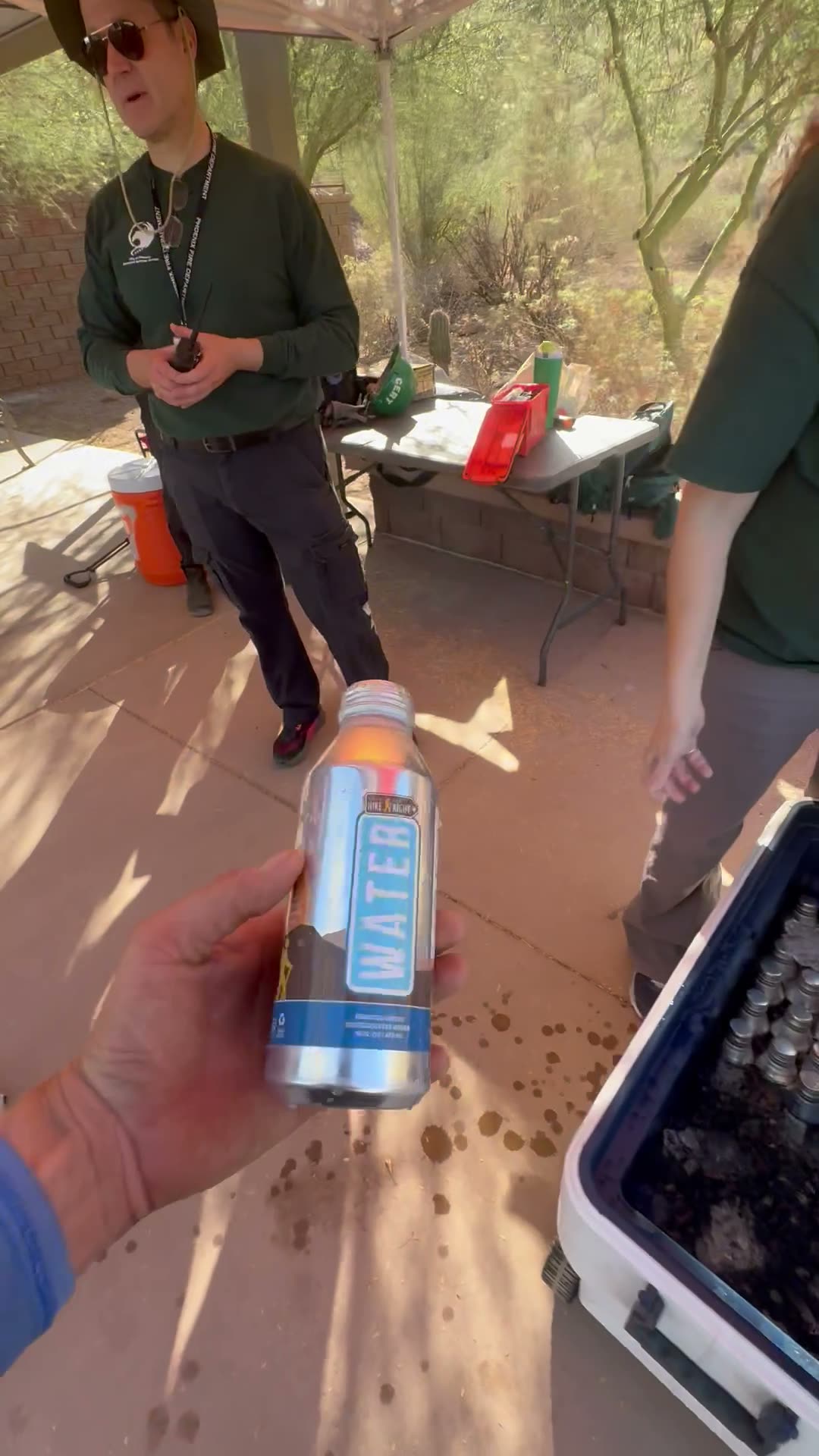
Thanksgiving is a good gut-training day
Here's my honest take: the holiday plate isn't the problem. Skipping the morning run because you're "saving room" is, and so is trying to fix a whole week of under-eating in one sitting.
If you're running tomorrow, try this:
- Run before the meal, and eat on the run the way you would in a race. Two or three small hits an hour, on a timer.
- Write down what you ate and how your stomach felt. That's real data for your next ultra.
- Then enjoy the plate. All of it. Recovery is also part of training.
What this means for our next one
Our own next long day is the Saguaro Showdown Backyard Ultra at Usery on January 23. A backyard ultra makes fueling almost too simple: every lap starts on the hour, so every hour you get a few minutes in the chair to eat. The trap is the opposite of a point-to-point 100. The aid table is right there, so it's easy to sit, chat and not actually eat enough. The plan is the same as everywhere else: a number of grams an hour, written down, and a timer.
If you're local and looking for a long day sooner, Aravaipa's McDowell Mountain Frenzy runs Saturday, December 5, and registration closes Monday, November 30 at 11:59 PM MT. You can follow our weekly miles on the training page.
The finishers didn't have better legs. They kept eating.
Sources: Stuempfle KJ, Hoffman MD et al., "Race diet of finishers and non-finishers in a 100 mile (161 km) mountain footrace," Journal of the American College of Nutrition, 2011 (Western States, 16 runners, 6 finishers). Dr. Emily Kraus via Business Insider, November 24, 2026. Plate carb counts are approximate. This is not medical advice; talk to a sports dietitian about your own numbers.
Some links are Amazon affiliate links. As an Amazon Associate we earn from qualifying purchases, at no extra cost to you.