 AZ Ultra Adventure
On this page
Position: Pacer (volunteer) Location: Usery Mountain and the trails around it, Mesa, AZ Shift: Late afternoon until your runner finishes, which could be after dark Pay: none. A sweaty hug and a story you'll tell for years.
Somebody you know just asked you to pace them. Maybe you said yes over tacos before you asked what it meant. That's fine. Most first-time pacers do.
Tonight, while I write this, hundreds of pacers are out at Javelina Jundred in McDowell Mountain Regional Park, walking runners through the rain on the 100-mile course. In two weeks it's our turn at Pass Mountain 50. So here's the job, written like the job posting nobody ever hands you.
The job, in one sentence
You run beside a tired person and think for them.
You aren't there to carry them, push them or win anything. A pacer is company plus a second brain. Late in an ultra your runner's judgment wears down a lot faster than their legs do. Your job is to keep yours.
What the race actually allows
Every race writes its own pacer rules, and they aren't all the same. Here's what Aravaipa's page says for Pass Mountain on Saturday, Nov 14, 2026:
- Pacers are only allowed in the 50 mile. The 50K, 25K, 10K and 5K don't allow pacers at all.
- Pacers can join at Hawes Aid and Usery Aid II.
- One pacer at a time, and no muling. Muling means carrying your runner's gear, food or water for them. Don't do it. Your runner carries their own stuff, even when they look at you like you're a monster.
- Crews can meet 50-mile runners at Hawes Aid and at Usery Aid, which runners pass through twice.
Rules change. Read the official race page and the runner email the week of the race, and if they say something different from me, go with them.
The clock you're working against
The 50 mile starts at 6:00 AM. Aravaipa lists three cutoffs:
- Usery Aid I, mile 27.4: by 2:30 PM (8.5 hours)
- Usery Aid II, mile 43.7: by 7:00 PM (13 hours)
- Finish: by 10:00 PM (16 hours)
Learn these. If you pick your runner up at Usery Aid II close to the cutoff, there are about 6 miles left and three hours to cover them, and the last stretch is the climb to the Pass Mountain saddle and back down (I wrote about that in the Pass Mountain race guide). The sun sets around 5:30 PM in mid-November, so a lot of runners will hit that climb in the dark. You should know the math before they ask, because by then they can't do it.
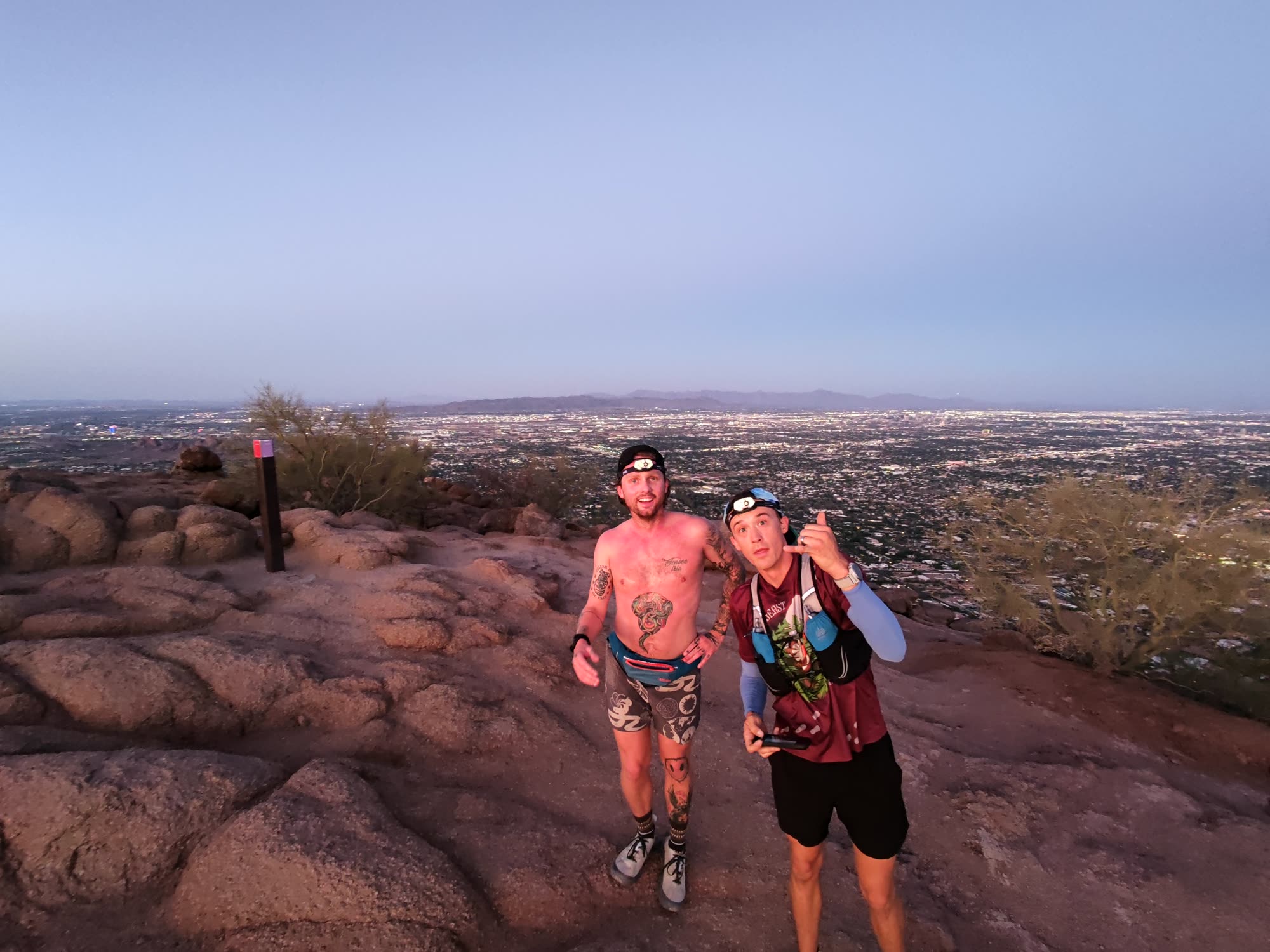
Responsibilities
1. Be the clock. Set a timer on your watch for every 30 to 45 minutes and say "eat something" when it goes off. Your runner will tell you they aren't hungry. Keep asking anyway, because a lot of late-race lows start with one skipped snack.
2. Be the eyes. Watch for the course markings, the turns and the rocks. A runner at mile 45 can walk right past a turn they'd never miss fresh. Run a step behind or beside them on wide trail, and go in front on technical downhill with your light pointed at the ground.
3. Be the weather report. It's November in the desert, so it can be warm at 4 PM and cold by 8 PM. Tell your runner to put on the layer before they're shivering, not after.
4. Be boring in a good way. Talk if they want to talk. Go quiet if they don't. Tell your worst dating story. Count saguaros. You're the radio station they can turn down.
5. Never ask "do you want to drop?" Ask questions they can answer: "How's your stomach?" "When did you last pee?" "Want water or food first?" If something is truly wrong, like confusion, a fall, or no sweat and no pee for hours, get them to the next aid station and tell the medical folks. Otherwise, the answer to "I'm done" is "let's walk to the next aid station and decide there."
Requirements
- You can cover the miles you're pacing at a slow, broken-up pace, often walking, without needing help yourself. On a late section, running 6 miles can take 2 hours or more. That's normal.
- You're fully self-supported. Carry your own water, food, light and layer, because the aid stations are for runners first.
- You've read the race rules and can be nice to volunteers at 9 PM.
What to carry (for you, not them)
- A bright headlamp plus a backup. Your light is the one lighting the rocks. A rechargeable running headlamp and a tiny backup clip light are what I'd bring.
- Your own water. A running vest with soft flasks works, or a handheld bottle for a short pacing leg.
- A light layer in a pocket, because the desert drops fast after sunset.
- A watch with the cutoffs written on your hand or in a phone note.
Perks
You get the best seat in the race. You'll see the part of an ultra that nobody films: the person you know, at the end of everything they have, deciding to keep going anyway.
How to apply
You already did when you said yes. Now ask your runner three questions this week: where you're joining, what they want to hear when it gets hard, and what they don't want to hear. Write the answers down, because they won't remember telling you.
If you're racing or pacing at Pass Mountain on Nov 14, come say hi. And if you've paced before, I'd love to hear the one thing you wish someone had told you first.
Some links are Amazon affiliate links. As an Amazon Associate we earn from qualifying purchases, at no extra cost to you.