 AZ Ultra Adventure
On this page
- First: you are a guest here
- Quick facts
- Getting in: the stew pot
- The time zone trap
- The weekend, hour by hour
- The course in four pieces
- Aid stations and cutoffs
- Crew and spectators: what you can and can't do
- Where poles help (and where they don't)
- What runners say
- The finish line is decided here
- Gear for this course
- The van idea
- More guides nearby
- Canyon de Chelly Ultra FAQ
The start line faces east, up-canyon. About 150 runners stand in the sand at the mouth of Canyon de Chelly in the cold, a traditional Navajo prayer is said over them, and at first light they go. People who have run it say the next thing that happens is noise: runners are encouraged to yell as they enter the canyon, and other runners yell back.
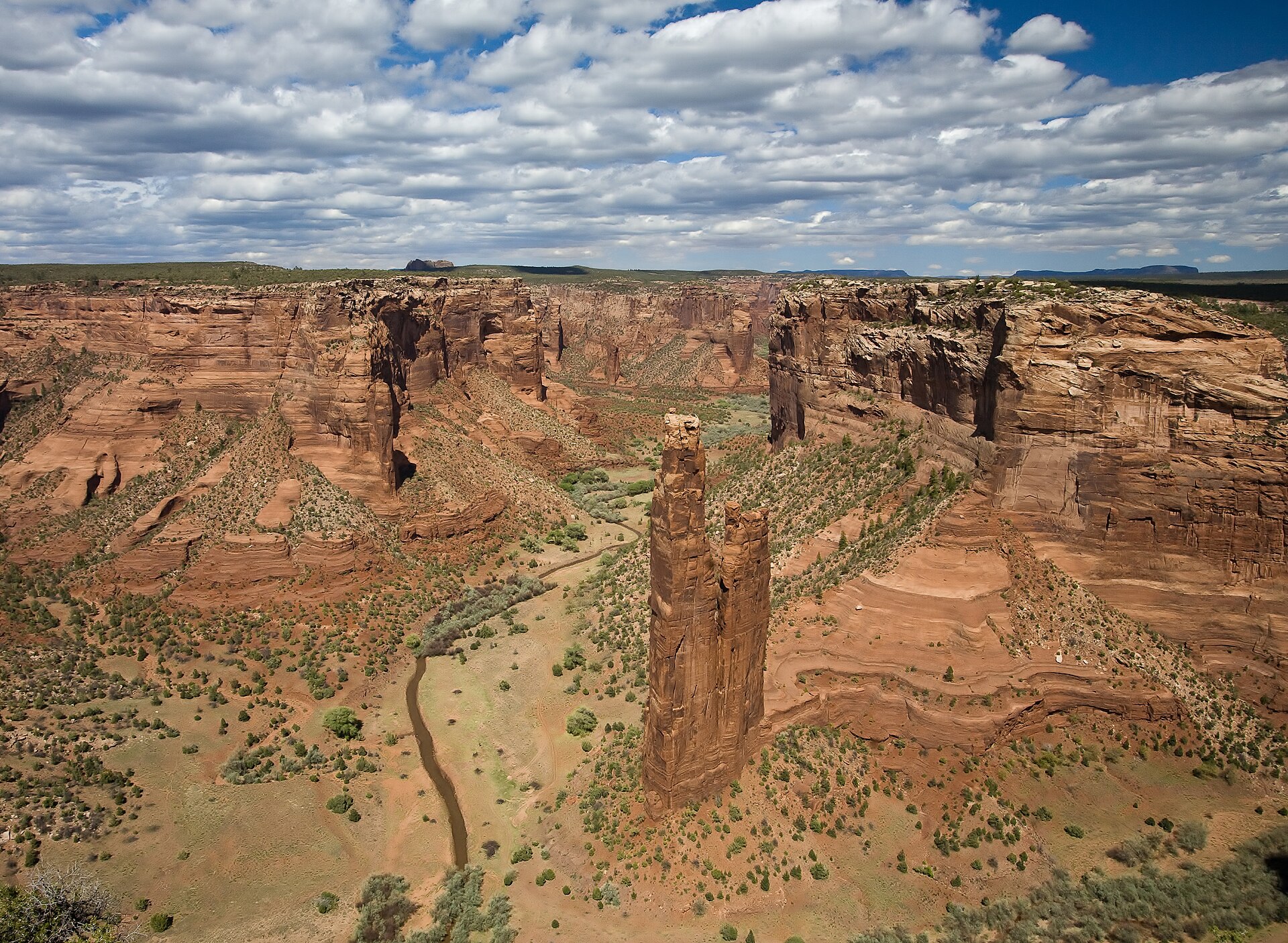
That's the Canyon de Chelly Ultra. It isn't the hardest 55K in Arizona on paper (about 34 miles, one real climb). It may be the hardest to get into, and it's probably the one finishers talk about longest. The race describes itself as the only Navajo owned and operated ultramarathon on Navajo land, and it runs the floor of a canyon that is normally closed to visitors without an authorized guide.
I haven't run Canyon de Chelly. This is a researcher's guide built from the official race site, UltraSignup, National Park Service and Navajo Nation Parks pages, and runner reports. The official site's schedule page still shows the 2024 weekend, so treat times and cutoffs as the pattern, and confirm against the race's Facebook group before you travel.
First: you are a guest here
- People live in the canyon. The race founder's own page points out that Canyon de Chelly National Monument has full-time residents inside its boundaries, and the Park Service says families still live and farm on the canyon floor. The Diné name, Tséyi', is usually translated as inside the rock.
- The canyon is normally closed to you. Per the National Park Service, going into the canyon requires a backcountry permit and an authorized guide. The one exception for the public is the White House Trail (more on that in the crew section). The race is a once-a-year permission, not a right.
- Why it exists. Founder and race director Shaun Martin, a Diné runner, writes that the idea came on a long Sunday run in the canyon in June 2012, in a soft rain, with wild horses running beside him. He worked with the Park Service to get approval, and the first race was held on October 12, 2013. The home page frames the day as "running as a celebration of life, running as a form of prayer."
- Where the money goes. The race says all profits go to Native American youth running programs and local Native runners.
- Visitor basics. Stay on the marked course. Don't enter ruins, touch rock art or pick anything up; Navajo Nation Parks rules prohibit disturbing or removing plants, rocks or artifacts. Ask before you photograph people or their homes. Possessing or drinking alcohol is prohibited on the Navajo Nation, and the Park Service doesn't permit drones in the park.
- What we're leaving out on purpose. Spider Rock and the canyon carry meaning in Diné tradition that a race blog shouldn't paraphrase. The Friday runner's meeting includes a park ranger's history talk and Shaun Martin's own talk on Navajo culture and running. Hear it from them.
Quick facts
- Next edition: not posted yet as of mid-November 2026. UltraSignup shows the race on the second Saturday of October in nearly every year since 2013 (October 12, 2024; October 11, 2025; October 10, 2026), which would make it Saturday, October 9, 2027. Treat that as expected, not confirmed: the 2023 race is listed on a Friday (October 13), and there are no results for 2020 or 2021.
- Distance: 55K, about 34 miles, out and back.
- Elevation: the race publishes one number: Bat Canyon climbs 1,200 feet from the canyon floor to the rim. With the gentle rise of the canyon floor, a runner's report puts the day's total around 1,600 feet. Nearly all of it comes in about one mile.
- Start/finish: the entrance to the canyon in Chinle, near the park Welcome Center and Cottonwood Campground. UltraSignup's directions pin marks the spot.
- Start time: 7:00 AM Navajo Nation time.
- Field: about 150 runners. UltraSignup's 2026 results show 150 starters: 141 finishers and 9 DNFs.
- Entry: lottery, February 1 to 7. Details below.
- Organizer: Shaun Martin and family. Official site, course page, UltraSignup, race Facebook group.
- Fastest times (UltraSignup): Matias Saari, 4:10:00 (2014); Andrea McArdle, 5:00:38 (2019). The 2026 winner was Santiago Hardy of Chinle in 4:26:15.
- Cupless: no cups at aid stations. Carry a bottle or a pack.
- Pacers and crew: the official site publishes no pacer or crew rules. Given the access rules above, plan on no pacers and no crew inside the canyon, and check the race's current runner information.
- Poles: no rule published. See the poles section.
Getting in: the stew pot
The race used to sell out in minutes on a first-come basis. Now it's a lottery, and the official registration page says it opens February 1 every year. The details below are from the race's UltraSignup listing.
- Enter: on UltraSignup from 12:00 AM February 1 until midnight February 7, local time. Order of entry doesn't matter, so there's no reason to set an alarm.
- Drawing: live on the race Facebook group on February 8 at noon. Names are pulled from the director's mother's stew pot.
- Odds: the race doesn't publish them. A 2019 race report put the waitlist at about 650 names for roughly 150 bibs, which works out to something like one entry in five that year. Demand may have changed since.
- Waitlist: runners who aren't drawn go on a waitlist, which UltraSignup displays.
- Fee: not shown on UltraSignup outside the lottery window. Check the listing when the lottery opens.
There's no qualifier and no points system that we could find.
The time zone trap
The Navajo Nation observes daylight saving time. The rest of Arizona doesn't. The Park Service says the Nation is on Mountain Daylight Time from March through November. In early October that puts Chinle one hour ahead of Phoenix.
A 7:00 AM start is 6:00 AM on a Phoenix clock. The 5:00 AM race-site opening is 4:00 AM Phoenix time. Phones usually switch on their own once they find a local tower, but the Park Service calls cell and GPS service unreliable across the Navajo Nation, so set a watch by hand when you reach Chinle.
The weekend, hour by hour
This is the 2024 schedule from the official site, in Navajo Nation time.
Friday
- 3:00 PM: packet pickup opens at the Cottonwood Campground Amphitheater. Runners brush off their shoes at pickup (anyone who doesn't is asked to do it at check-in), so bring the pair you're racing in, clean.
- 5:00 PM: runner's meeting at the amphitheater. Final race details, a park ranger's talk on the canyon's history, and Shaun Martin's talk. Runners in 2013 and 2019 reports both singled this meeting out as a highlight. Don't skip it for dinner.
Saturday
- 5:00 AM: race site opens. Everyone checks in at the timer's table by the start line.
- 6:30 AM: drop bags due on the tarp by the start line. A traditional Navajo prayer and blessing of the runners.
- 7:00 AM: start. Sunrise in Chinle that week is around 7:20, so you start in first light.
- 12:00 PM: cutoff at the turnaround.
- 3:00 PM: cutoff at the middle aid station, inbound.
- 4:00 PM: awards at the finish line. Navajo food for runners after the race.
- 6:00 PM: cutoff at White House, inbound. Runners still out after that are picked up by the aid station crews as they leave the canyon.
The course in four pieces
It's an out-and-back, so you run each piece twice. The official course page has an overview map, an elevation profile and four section maps; open them there rather than hunting for copies.
1. The sand (start to about mile 2.5). You start in the wash at the canyon mouth. The race says the first and last 2.5 miles of sand cost as much as a big climb. How bad depends on the year: a dry 2019 left it loose and deep for closer to three or four miles each way, while a wet 2013 added clumped mud to the wash.
2. The canyon floor (to about mile 16). Jeep track and singletrack between sandstone walls, close to flat, past cliff dwellings, petroglyphs and pictographs, with cottonwoods for shade. In a wet year expect frequent creek crossings and wet feet for hours; a 2013 runner blamed waterlogged shoes for most of a painful second half. In a dry year the crossings are dust and the hardpack beats up your legs instead.
3. Bat Canyon (about mile 16 to 17). Just past Spider Rock, the route leaves the floor and goes up the Bat Canyon trail: about 1,200 feet in about a mile. A 2019 report describes working over and around boulders from basketball size to car size, a smoother stretch, then a last sandstone ledge where hands help. The turnaround aid station and your drop bag are on the rim at the Spider Rock overlook.
4. All of it again, backwards. Down Bat Canyon on used legs, about 14 miles of floor with the light on the opposite walls, and the sand last.
Aid stations and cutoffs
The official site lists three stations, each visited coming and going except the turnaround. Names differ by page: the course page calls the middle station Sliding House and the turnaround Spider Rock Overlook; the schedule page and race reports use Bubble Man and Bat. They appear to be the same two stops.
| Aid station | Mile (official) | To next | Crew | Drop bag | Pacer pickup | Cutoff | Notes |
|---|---|---|---|---|---|---|---|
| Start, canyon mouth | 0 | ~5 | Yes | Hand in by 6:30 AM | No | 7:00 AM start | First 2.5 miles are sand |
| White House (out) | 5 | ~5 | On foot only, if the trail is open; see crew section | No | No | None listed | First aid, on the canyon floor below White House Overlook |
| Sliding House / Bubble Man (out) | 10 | ~7 | No | No | No | None listed | Fill everything. Longest leg, and it ends with the Bat Canyon climb |
| Spider Rock Overlook / Bat (turnaround) | 17 | ~7 | Ask the race | Yes, the only one | No | 12:00 PM | On the rim. Eat, swap layers, start down |
| Sliding House / Bubble Man (in) | listed as 21 | ~5 | No | No | No | 3:00 PM | An even out-and-back puts this nearer 24 |
| White House (in) | listed as 26 | ~5 | On foot only, if the trail is open | No | No | 6:00 PM | Nearer 29 by the same math. Sand still to come |
| Finish | ~34 | — | Yes | — | — | Not published | Last finishers: 11:29 in 2026, 12:10 in 2023. Navajo food at the finish |
Notes on the table:
- Spacing is every 5 to 7 miles per the race. Stations carry standard aid food, gels, water and drink. A 2019 report listed chips, pretzels, fruit, PB&J, candy, pickles and Tailwind; the menu can change.
- Check in with the volunteers at every station with your bib visible. It's required.
- The official inbound mileages (21 and 26) don't add up for a 34-mile out-and-back. Plan by the clock times, not the mile numbers. Runners' GPS tracks also disagree with each other in the canyon: a 2015 report put the first two stations nearer miles 6 and 11.
- Stations are driven in, and mud can move them. In wet 2013, a runner's report describes an aid vehicle stuck at a muddy crossing, which left the second station only about two miles past the first, with roughly nine miles to the turnaround. In a wet year, carry enough for a longer gap than the table shows.
- No pacer or crew provisions are published, so the No entries in those columns are the safe assumption, not a stated rule. Check the race's current runner information.
Crew and spectators: what you can and can't do
This isn't a crewed race in the usual sense. Your crew can't drive into the canyon, which is off limits without a permit and an authorized guide. Here's what's realistic.
- Start/finish (canyon mouth). From US 191 in Chinle, take Indian Route 7 east about 3 miles to the park entrance and Welcome Center. Paved the whole way. The Park Service lists the Welcome Center lot gates as open 8:00 AM to 5:00 PM, so ask at Friday pickup where to park for a 5:00 AM check-in. After the start, crew has a long wait: in 2026 the winner finished in 4:26, the middle half of the field came in between about 7:20 and 9:30, and the last finishers took just under 11:30. A 2019 runner reported limited cell reception at the start and essentially none in the canyon, so agree on a finish window before the gun.
- White House. The White House Overlook is about 6 miles up the paved South Rim Drive. From there the White House Trail drops about 600 feet to the canyon floor, 2.5 miles round trip (the Park Service says to allow two hours), and it's the only trail the public can hike without a permit or guide. Race reports from 2013 and 2019 name the White House aid station as the one place spectators can see runners mid-race. Check before you count on it. The trail was closed for several years in the early 2020s, and one older Park Service page still lists it as closed. The pages updated in late October 2026 list it as open with no fee, and say Navajo Nation Parks and Recreation may take over daily operations with seasonal opening and a fee. Call Navajo Parks at 928-674-2106 or ask at the Friday meeting whether it's open on race day and whether spectators are welcome at the aid station.
- Spider Rock Overlook. The last overlook on the paved South Rim Drive. It's a public overlook and the turnaround is on the rim nearby, but the race doesn't publish whether crews may meet runners there. Ask first.
- Rim drives. Both the South and North Rim drives are paved, free and open year round, with no 4WD needed. The Park Service's advice is to stay off the dirt roads, which residents use to reach their homes.
- Getting to Chinle. The Park Service puts Chinle about 5 hours from Phoenix and 4 from Albuquerque. From I-40, exit at Chambers and take US 191 north through Ganado, about 75 miles. One route to avoid: coming from Window Rock or Gallup, a GPS may send you up Indian Route 7 from the east through Sawmill. The Park Service says not to, because that stretch is unpaved and unmaintained. Take AZ 264 west to US 191 north instead.
- Sleeping. The race lists the Holiday Inn Canyon de Chelly, Sacred Canyon Lodge and the Best Western in Chinle, plus Cottonwood Campground near the start, where packet pickup is held. Navajo Nation Parks lists it at $30 a night for up to seven people, first-come, with restrooms but no showers and no RV hookups (the race's own lodging page still shows an older price). Hotels fill early for race weekend.
- Eating. Options in Chinle are limited, and a 2019 report describes the Holiday Inn restaurant being swamped the night before. Bashas' Diné Market in town is the grocery store. Bring your race-morning food from home.
Where poles help (and where they don't)
For 32 of the 34 miles, poles are dead weight. The canyon floor is flat.
The exception is Bat Canyon: a mile up and a mile down at better than a 20 percent average grade. Poles help on the smoother middle part of the climb and help more on the descent, when your quads have 17 miles in them. They get in the way on the boulder section and the final ledge, where you want your hands.
The catch is logistics. The only drop bag is at the top of the climb, and there's no crew point before it. You can't pick poles up at the bottom. If you want them, carry folding poles in your vest from the start. Most mid-pack runners will be fine without. The official site doesn't state a pole rule either way, so confirm at the runner's meeting.
What runners say
Pulled from race reports on running blogs and a club site, paraphrased:
- The start can be very cold. A 2019 runner reported mid-20s at the start and mid-60s by afternoon; a 2015 runner reported mid-40s. You'll stand around from check-in until 7:00.
- Don't count on a place to shed layers before mile 17. A 2013 report mentions a bin at White House for dropping warm clothes, but nothing current confirms it. Wear layers you can carry.
- You can dehydrate without noticing. Cool, dry air at 5,500 feet and up hides sweat loss. Drink on a schedule.
- Sand gets into everything. A 2019 runner wearing standard gaiters still had shoes full of fine sand.
- Animals share the canyon floor. Residents keep livestock here, and the founder's own story of the race starts with wild horses. Give animals room.
- Look up on the way back. The race itself says the return trip shows you things you missed on the way out. Runners agree.
- It feels like family. The director's family runs the start, the finish and the food. Finisher awards are handmade by local Native artisans and change each year; past reports describe beaded and turquoise necklaces, with fry bread and mutton or vegetarian stew at the finish.
We didn't find a useful Reddit thread specific to this race. The race Facebook group is where past runners and staff answer questions.
The finish line is decided here
The turnaround, by noon. Five hours for 17 miles sounds generous: about 17:40 per mile. But those 17 miles include up to four miles of sand, any creek crossings, and a boulder climb that can easily take half an hour or more by itself. Run the numbers for the other cutoffs and they're softer: 3:00 PM at the middle station is about 20 minutes per mile for the day, and 6:00 PM at White House is closer to 23. The first cutoff is the tight one.
Leave the rim before noon and you'll very likely finish. You have three hours to cover about seven mostly downhill and flat miles to the next cutoff, and three more for the five after that. UltraSignup's results show 9 DNFs among 150 starters in 2026, with the last runners in at around 11 and a half hours. Some years are rougher: 2024 had 21 DNFs among 147 starters.
How not to DNF at Canyon de Chelly
- Don't race the sand. Shorten your stride, keep your effort easy and accept the pace. You'll run the same sand at mile 31.
- Bank time on the floor, not on the climb. Aim to reach the middle aid station (about mile 10) in under 2:45. That leaves more than two hours for the next seven miles.
- Leave the middle station full. It's the longest leg and the only climb.
- Hike Bat Canyon with purpose and don't stop. Hands on knees, steady.
- Pack the drop bag for a three-minute stop: dry socks, a second set of calories, sunscreen, somewhere to dump your gloves and jacket. Don't sit down on the rim.
- Descend like the race is still long. A turned ankle in the boulders is the realistic way to lose this finish.
- For the last 2.5 miles, pick a line and keep moving. Everyone walks some of the sand.
Gear for this course
- Trail gaiters. Five-plus miles of sand in total. They keep out the rocks, not all of the fine sand.
- Trail shoes with a tight-woven upper. Open mesh fills with fine sand. Deep lugs matter less here than keeping grit out.
- A handheld bottle or a hydration vest with soft flasks. The race is cupless and the longest leg is about seven miles with the climb.
- A collapsible cup for anything you don't want in your bottle.
- Lightweight running gloves and a packable wind jacket for a start that can be below freezing. Stash them in the drop bag at mile 17.
- Merino trail socks, with a spare pair in the drop bag for wet-year creek crossings.
- Anti-chafe balm. Sand plus wet socks is the blister recipe.
- Electrolyte drink mix so you drink on schedule in cool air.
- A small headlamp for the 5:00 AM check-in, more than two hours before sunrise.
- Folding trail poles, only if you want them for Bat Canyon and will carry them all day.
- For the crew: a warm blanket and a folding chair for a cold dawn and a long finish-line wait.
The van idea
Chinle is about five hours from the Valley, with three hotels that fill early and a first-come campground with no showers or hookups. Check-in opens at 5:00 AM local time in temperatures that can sit in the 20s, and your crew then waits most of a day with little cell coverage.
That's a good fit for AZ Ultra Vans: a crew van as base camp near the start, with a warm bed the night before, a fridge for the food you brought from home, shade and a chair for the wait, and compression boots after 34 miles of sand. It's a reservation-interest waitlist for now while we learn which races people want it for; availability isn't guaranteed. Camping here means a paid site at Cottonwood Campground: the Park Service says there's no camping along roads or at overlooks, and campground sites don't take vehicles over 40 feet. Add your name on the card above or at van.azsvinternal.com.
More guides nearby
- Monument Valley Ultra 50K, another race run on Navajo land.
- Antelope Canyon Ultras, for more northern Arizona sand.
Canyon de Chelly Ultra FAQ
When is the Canyon de Chelly Ultra in 2027? The date isn't posted yet. The race has been on the second Saturday of October in each of the last three years, which points to October 9, 2027. Watch the race's UltraSignup page and Facebook group before you book anything.
How do I enter? Through a lottery on UltraSignup that opens February 1 and closes at midnight on February 7. The drawing is live on the race Facebook group on February 8 at noon.
What are the odds in the lottery? The race doesn't publish them. The field is about 150, and a 2019 race report described a waitlist of about 650, roughly one entry in five that year.
How hard is the course? About 34 miles with roughly 1,600 feet of gain. Most of it is flat. The difficulty is the sand in the first and last 2.5 miles and the 1,200-foot Bat Canyon climb at the halfway point.
What are the cutoffs? On the most recent schedule the race has posted: noon at the turnaround, 3:00 PM at the middle aid station on the way back, and 6:00 PM at White House. The start is 7:00 AM. No final finish cutoff is published.
What time zone is the race in? Navajo Nation time, which is Mountain Daylight Time in October. That's one hour ahead of Phoenix, Flagstaff and the rest of Arizona.
Can my crew or a pacer come into the canyon? Plan on no. Entering the canyon requires a permit and an authorized guide, and the race publishes no crew or pacer provisions. Crew can be at the start and finish. Ask the race about the White House Trail and the Spider Rock overlook.
Can I preview the course? Not on your own. You can book a tour with an authorized guide, drive the paved rim roads for free, and hike the White House Trail when it's open.
Who wrote this
Johnathon Lawson is a Gilbert, Arizona ultrarunner, track and cross-country coach and father of three, and a three-time 100-mile finisher: Zion 100 (2025), Mogollon Monster 100 (2025) and San Diego 100 (2026). He hasn't raced Canyon de Chelly; this guide is researched from the official race materials, the Park Service, Navajo Nation Parks and runner reports. Follow his training on Strava, his results on UltraSignup, and AZ Ultra Adventure on YouTube and Instagram.
Sources, checked November 15, 2026: Canyon de Chelly Ultra official site (home, race information, registration, course, schedule, awards and lodging pages); UltraSignup event page and results, 2013 to 2026; National Park Service basic information, operating hours, directions, fees, camping and safety pages; Navajo Nation Parks Cottonwood Campground and rules pages; runner reports from 2019 on TeamRunRun, 2013 and 2015. Photo: Spider Rock by Cacophony, CC BY-SA 3.0. Check the race's current information before race week.
Some links are Amazon affiliate links. As an Amazon Associate we earn from qualifying purchases, at no extra cost to you.