 AZ Ultra Adventure
On this page
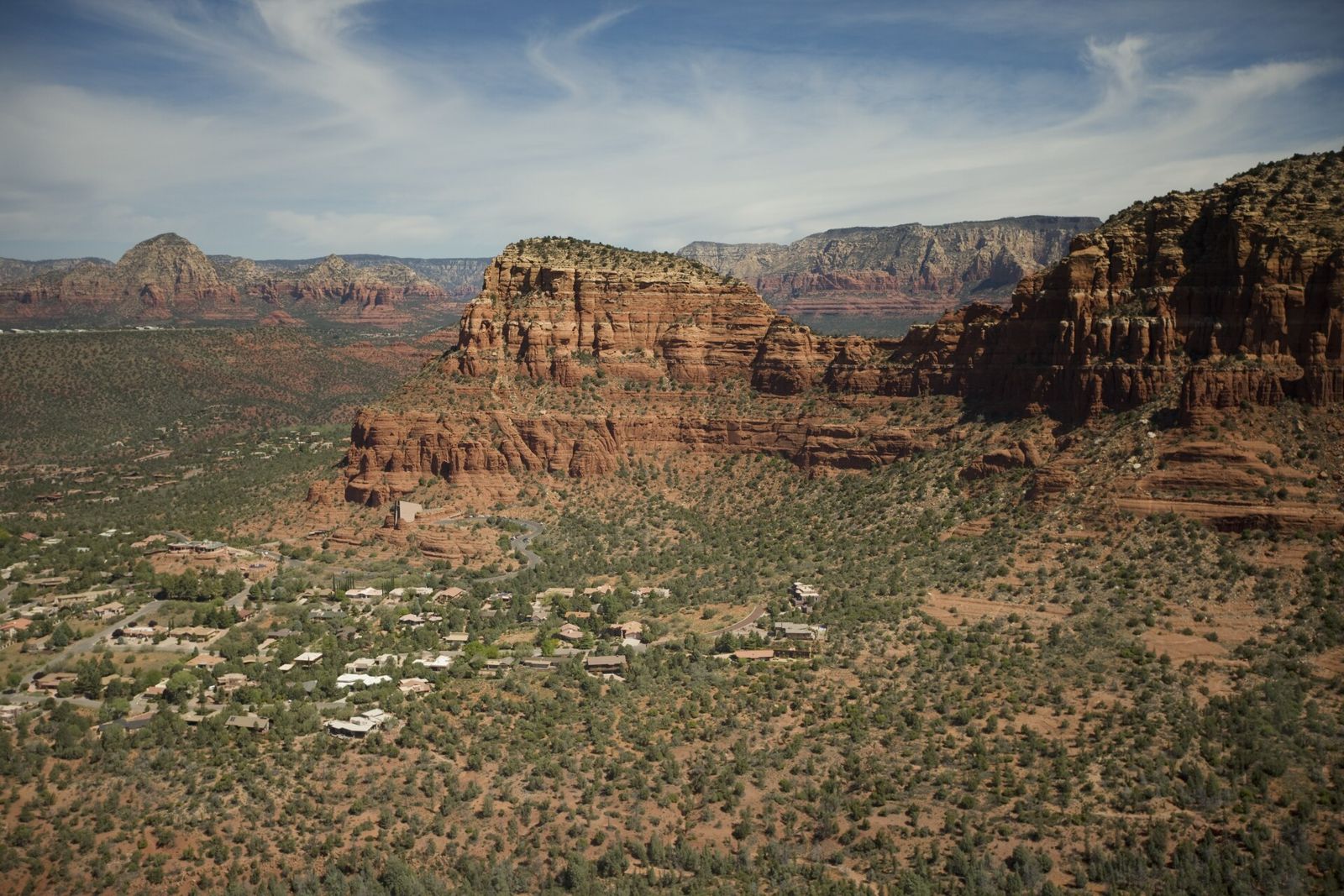
If the Cocodona 250 is the whole movie, the Sedona Canyons 125 is the part people rewind. It starts at a ghost town above Jerome, wades the Verde River in the first ten miles, and runs what Aravaipa calls a 35-mile stretch of near-continuous high-quality singletrack through the Sedona red rocks. It climbs Schnebly Hill onto the Mogollon Rim, crosses the pine Plateau through the night, and finishes on Flagstaff's Mars Hill trails and in downtown Heritage Square, alongside the 250 runners. Aravaipa's own course description calls the Sedona sections its staff favorites, and twice in a row it changes its mind about which one is the best.
It's also a very different race from the 250. It runs three days instead of five, there's no Mount Elden, and with a 75-hour limit and good crew access after mile 40 it's a realistic first step past 100 miles. One number shapes how fast people try to run it: finish inside 52 hours and it counts as a Western States qualifier.
This guide uses Aravaipa's 2027 Runner Guide, Crew + Pacer Guide, race page and section-by-section course description. Rules and cutoffs change from year to year, so check the official Cocodona page before race week. For the full course, see the Cocodona 250 guide.
Sedona Canyons 125 at a glance (2027)
| Date | Tuesday, May 4 to Friday, May 7, 2027. 7:00 AM mass start |
| Start | Gold King Mine Ghost Town, 1000 Jerome-Perkinsville Rd, Jerome |
| Finish | Heritage Square, downtown Flagstaff (shared with the 250) |
| Distance | About 125.7-125.9 miles (the aid table and the key stats differ slightly) |
| Elevation | About +14,200 ft / −12,670 ft |
| Time limit | 75 hours (10:00 AM Friday) |
| Surface | About 62% singletrack, 29% doubletrack, 9% pavement |
| Fee | $695 to Aug 31, 2026; $735 to Feb 28, 2027; $775 to Apr 25, 2027 (plus 6.35% tax and UltraSignup fees) |
| Entry | UltraSignup. The 2027 race was reported sold out with a waitlist, so check the current status |
| Crew | From Sedona Ranger Station (mile 40.3) on. None at Dead Horse, Deer Pass or Kelly Canyon |
| Pacers | From Munds Park (mile 73.5) on |
| Qualifier | Western States qualifier if you finish within 52 hours. ITRA and UTMB points for any official finish |
| Tracking | SPOT tracker on TrackLeaders |
| Buckle | Handmade Arizona copper buckle |
The course map
Export the GPX (not the default GeoJSON) and test it in airplane mode on your phone or watch. A GPS device with the course loaded is required. The 125 splits from and rejoins the 250 several times, with distance-specific arrow signs at each split. In Sedona and Kelly Canyon, the course description repeatedly tells you to keep your phone out for navigation. The 125 section-by-section description (PDF) includes elevation profiles for each leg.
The course, section by section
Jerome to Dead Horse (miles 0-10.2): downhill, gates and a river. You leave the ghost town, wind through Jerome (the 125 skips the 250's Jerome aid station), and drop about 1,000 feet in a mile on a steep, loose, rough dirt road. Then come Clarkdale's main street, an old railroad grade along the Verde River, a scramble under the Tuzigoot bridge, and a knee-deep wade across the Verde. Your feet will get wet, and the race recommends merino socks. Mind the gates, and close every one of them.
Dead Horse to Deer Pass (10.2-24.2): no passing, fine dust. Out of Dead Horse Ranch State Park you hit the Lower Raptor trail, a roughly 4-mile no-passing zone through endangered-plant habitat. It's chunky singletrack with plenty of baby-head rocks. Then Thumper and the Lime Kiln Trail take you toward Sedona. The dust here is very fine, so give your feet time to dry after the river and change socks when you can. Deer Pass has drop bags but no crew.
Deer Pass to Sedona Ranger Station (24.2-40.3): the "staff pick." This is world-class singletrack with Cathedral Rock views from the Ridge Trail. You'll find many junctions, a much-needed water station near Red Rock High School (mile 30.9), and then the 125's own route around the Airport Loop. Aravaipa calls those views some of the most incredible of any running race. The trail is also chunky, so look up only when you're standing still. It drops off Airport Mesa on the Brewer Trail to the aid station. This section can be brutally hot by day.
Sedona Ranger Station to Schnebly Hill (40.3-54.7): the crown jewel and the big climb. Under SR 179 at the Tlaquepaque underpass, along Oak Creek, onto Huckaby and Munds Wagon, then the Hangover Trail. This exposed slickrock line among red rock spires is the course description's "crown jewel of Sedona single-track." Then comes the long climb up Schnebly Hill Road onto the Mogollon Rim, about +3,566 feet in this section. You leave Sedona after a mandatory gear check and arrive on the Plateau as the temperature falls.
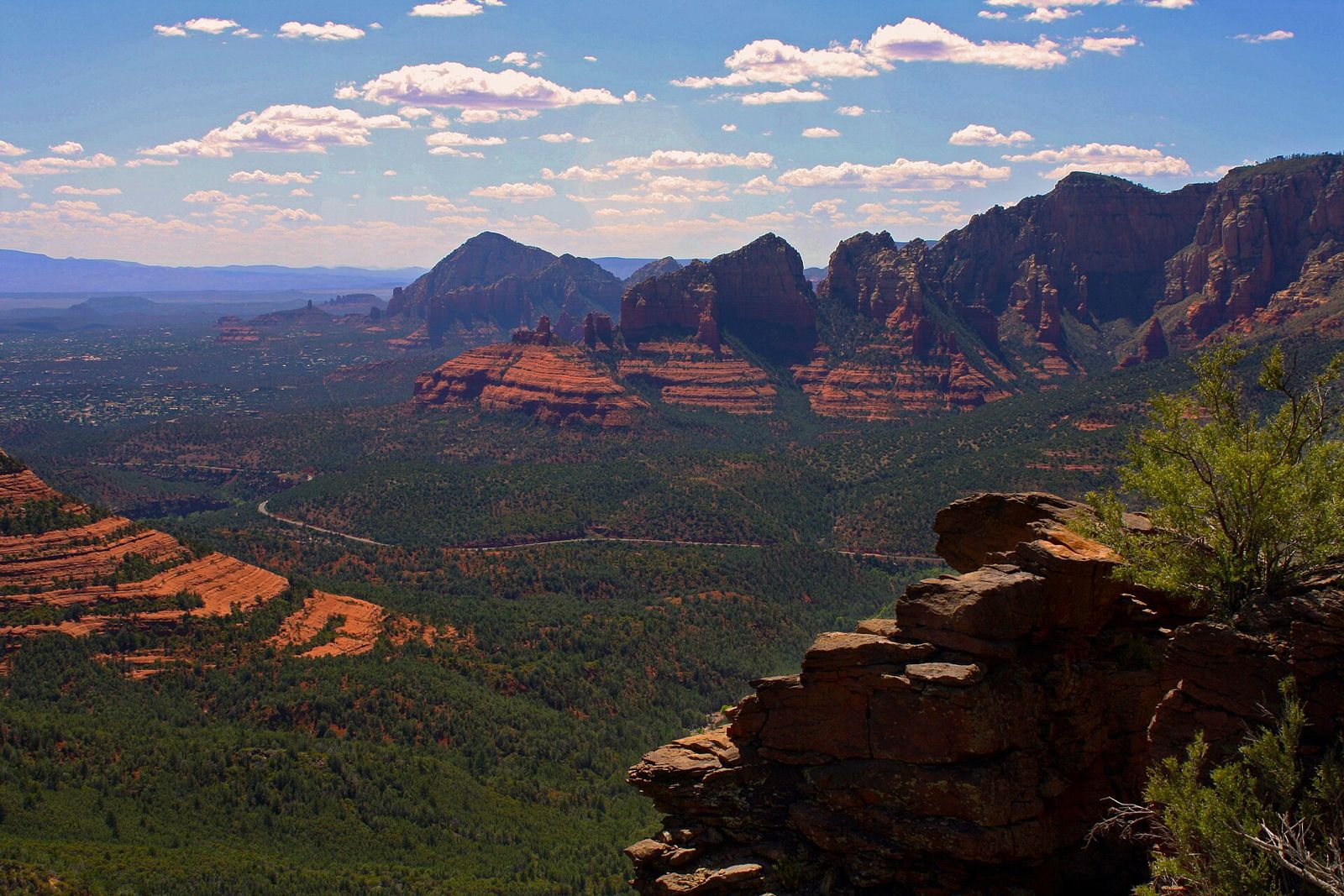
Schnebly Hill to Munds Park (54.7-73.5): owls, roads and no pacers. You enter one of the largest ponderosa pine forests in the world on long, well-graded dirt roads, so make time here. Mexican spotted owl habitat means no pacers on this stretch: headlamps down, noise down. Watch for vehicles and ATVs, which won't stop for you. Munds Park is a big stop with crew, your first pacer, drop bags, outdoor tent cots and a gear check.
Munds Park to Fort Tuthill (73.5-99.4): the sleepy part. Kelly Canyon trails alternate between soft pine needles and chunky volcanic rock, and the 125 and 250 routes split and rejoin four times. The course description warns that some runners on the long straight roads have dozed off and woken up in a ditch. Kelly Canyon (91.1) is bare-bones: no crew, no pacer swap, no drop bags. Then FR700, Old Munds Highway, the Highland Trail, and a crossing of Highway 89A where traffic doesn't stop. Fort Tuthill has a heated cot room, crew, pacers, and a mandatory gear check plus mental-status evaluation.
Fort Tuthill to the finish (99.4-125.7): Flagstaff's backyard. This is the 125's own route, different from the 250's Walnut Canyon and Elden finish. It follows the Soldier Trail, the Rogers Lake Connector, Woody Mountain Road and the DeMiguel Connector to the FAC (Flagstaff Athletic Club) aid station. From there you cross Route 66, take the Tunnel Hill FUTS trail, and climb about 8 miles of singletrack up and over Mars Hill (Observatory Mesa) with views of the San Francisco Peaks. The Rio de Flag trail brings you into downtown, then "Left on Birch," and Cocodona Alley to the finish.
Every aid station: mile, crew, pacers, drop bags, cutoffs
From the official 2027 table. Cutoffs are time of day, with hours elapsed from the 7:00 AM Tuesday start in parentheses.
| Aid station | Mile | To next | Crew | Pacer | Drop bag | Sleep | Cutoff | Notes |
|---|---|---|---|---|---|---|---|---|
| Start: Gold King Mine | 0.0 | 10.2 | Yes (limited parking) | - | Yes (race morning only) | - | Tue 7:00 AM | 1,000 ft drop out of Jerome, Verde River wade |
| Dead Horse Ranch | 10.2 | 14.0 | No | No | No | Outdoor tents | Tue 12:30 PM (5:30) | No-passing zone, Lower Raptor, Lime Kiln. Fine dust |
| Deer Pass | 24.2 | 6.7 | No | No | Yes | - | Tue 7:00 PM (12:00) | Lime Kiln, Schuerman Mountain |
| Water stop | 30.9 | 9.4 | - | - | - | - | - | Near Red Rock HS. Ridge Trail, Airport Loop |
| Sedona Ranger Station | 40.3 | 9.3 | Yes (first) | No | Yes | - | Wed 2:45 AM (19:45) | Gear check. Hangover Trail, Schnebly climb. Poles |
| Water stop | 49.6 | 5.1 | - | - | - | - | - | Top of the Rim, then long dirt road |
| Schnebly Hill | 54.7 | 18.8 | Yes | No (owl zone next) | Yes | - | Wed 12:30 PM (29:30) | Plateau roads, no pacers to Munds Park |
| Munds Park | 73.5 | 17.6 | Yes | Yes (first) | Yes | Outdoor tents | Wed 10:15 PM (39:15) | Gear check. Kelly Canyon trails, 250/125 splits |
| Kelly Canyon | 91.1 | 8.3 | No | No | No | - | Thu 8:00 AM (49:00) | Bare-bones. Hwy 89A crossing without traffic control |
| Fort Tuthill | 99.4 | 14.8 | Yes (drive into the quad) | Yes | Yes | Indoor heated cots | Thu 12:45 PM (53:45) | Gear check + mental-status evaluation. Rogers Lake Connector |
| FAC (Flagstaff Athletic Club) | 114.2 | 11.5 | Yes | Yes | Yes | - | Thu 10:00 PM (63:00) | Route 66, Tunnel Hill, Mars Hill, Rio de Flag |
| Finish: Heritage Square | 125.7 | - | Yes | Yes | All bags | - | Fri 10:00 AM (75:00) |
What it means:
- Your crew can't see you until mile 40.3. Dead Horse and Deer Pass have no crew for the 125, and Dead Horse has no drop bags either. Plan the river crossing, the heat and the red-rock singletrack from your vest and one Deer Pass drop bag.
- Drop bags go in on race morning at the start, plus one "direct to finish" bag. Put fresh socks and foot care in the Deer Pass bag, since your feet will still be damp and dusty from the Verde.
- Gear checks at Sedona Ranger Station, Munds Park and Fort Tuthill. You won't be allowed to leave without the required gear plus cold-weather gear (gloves, warm hat, long sleeve, insulating layer). A waterproof jacket is required when rain or snow is forecast. Plateau nights average in the upper 30s.
- The 52-hour line. Fort Tuthill's cutoff is 53:45 elapsed, so anyone chasing the Western States qualifier needs to be far ahead of the cutoffs, roughly a day ahead of the final ones.
Crew guide
Crewing the 125 is much easier than crewing the 250: six crew stops over about 85 miles, all on pavement or graded roads, and all within an hour of each other. The tricky parts are the start, where parking is limited, and the long gap before the first crew stop.
Race morning: the shuttle rule
There's very little parking at Gold King Mine. Vehicles with fewer than three people must park in Jerome at the large lot at 1350 Jerome-Perkinsville Rd and take the free shuttle to the start (it runs from 5:00 AM until the race starts, and brings crew back afterward). Cars with three or more people can drive to the start. There's no long-term parking at the start, though the Jerome lot offers free long-term parking. Camping at the start is allowed only on Monday night, May 3, with arrival between 2:00 and 8:00 PM.
Packet pickup and the race briefing are on Monday, May 3 (4:00-7:00 PM, briefing at 7:00 PM, location announced later). The official hotel is the SpringHill Suites in Cottonwood. If you're leaving a car in Flagstaff, Aravaipa sells a $75 shuttle from Flagstaff on Monday at 4:30 PM, including a race-morning ride to the start.
Crew stops, in order
The approximate drive times are our own estimates from the map. Allow extra time.
| Crew stop | Drive from previous | Parking and notes |
|---|---|---|
| Start, Gold King Mine | - | Shuttle from Jerome unless your car has 3+ people |
| Sedona Ranger Station (mi 40.3) | About 45-60 min from Jerome via Cottonwood and SR 89A | 250 Brewer Rd. Park at the LDS church, 160 Mormon Hill Rd, and walk. The 250's Sedona station is a different place (Posse Grounds) |
| Schnebly Hill (mi 54.7) | About 45-60 min | Don't drive up Schnebly Hill Road from Sedona. Take SR 179 to I-17 north, exit 320, go 0.6 mi west on FR153, turn left, and park on the right; the road loops back out |
| Munds Park (mi 73.5) | About 10 min | I-17 exit 322, temporary storage lot on Munds Ranch Rd. Not the church. Pacers park at the dirt lot next to the gas station |
| Fort Tuthill (mi 99.4) | About 20 min | Follow the Adventure X signs and drive into the quad. You can't crew from the parking lot |
| FAC (mi 114.2) | About 10-15 min | 1151 S Woodlands Village Blvd. No pacer parking: pacers park at the nearby Home Depot |
| Finish, Heritage Square | About 10 min | Free parking at the LDS church, 625 E Cherry Ave, with a free hourly shuttle (0.6 mi walk) |
Crew rules are the same as for the 250: one crew vehicle per runner at each station (25 ft max, no trailers), crew only within a quarter mile of crew stations, no parking along the course, no aid-station food for crew, and only one crew member in the medical tent. An IV means an automatic DNF. A runner can leave the course to sleep in a hotel or a crew vehicle from a crew-access station after checking out with the station captain, but they must restart from the same station before its cutoff. A crew vehicle parked within a quarter mile of the station counts as on course.
The crew's long wait
With a 7:00 AM start and no crew for 40 miles, most crews won't see their runner until Tuesday evening or later. The cutoff at Sedona Ranger Station isn't until 2:45 AM Wednesday. Use that time: shop in Cottonwood, sleep, prepare the night kit, and watch the tracker. The next real crew break is after Munds Park. Kelly Canyon is runner-only, and Munds Park to Fort Tuthill is 25.9 miles.
Where poles help
- Sedona Ranger Station to Schnebly Hill. The race itself says poles are a great idea for the big climb up Schnebly Hill. Use them on the Schnebly Hill Road grind, and collapse them on the Hangover slickrock if you need your hands.
- The Mars Hill climb after FAC. About 8 miles of singletrack over Observatory Mesa on legs that have done 115 miles.
- Optional early. The steep, loose 1,000-foot drop out of Jerome in the first miles is the one technical descent in the first half, and poles give tired-later knees some insurance.
Crew stops at Sedona, Schnebly Hill, Munds Park, Fort Tuthill and FAC make poles easy to manage. Pick them up at Sedona Ranger Station and hand them back at Schnebly Hill or Munds Park for the long graded Plateau roads. Collect them again at FAC for Mars Hill.
The finish line is decided here
Two places make or break the 125:
- Deer Pass to Sedona Ranger Station (miles 24-40), in the heat. It's beautiful, hot and full of junctions, and your crew isn't there. Runners who drink too little on the Ridge Trail and the Airport Loop arrive at Sedona overheated, as the sun goes down and the big climb begins. Both 250 race reports and the course description stress that Sedona can be brutally hot. In past 250s, Dead Horse to Sedona was one of the main places runners dropped.
- The first Plateau night (Schnebly Hill to Kelly Canyon, miles 55-91). The temperature drops sharply from Sedona to the Rim, and from Schnebly Hill there's no pacer until Munds Park. Long straight roads, the upper 30s at night, and the bare-bones Kelly Canyon station make this the low point. Munds Park, with its unheated tent cots, is where many runners debate stopping.
Get to Fort Tuthill and pass the mental-status check, and the finish is very likely. From there it's 26 miles of Flagstaff trails with crew and pacer access at FAC, and the hardest climbing is behind you. Mars Hill is the only real climb left, and it ends with the best entry to downtown Flagstaff there is.
How not to DNF the 125
- Treat miles 0-40 as self-supported. Carry enough water and electrolytes for hot Sedona singletrack. Refill at the 30.9 water stop even if you think you don't need it.
- Dry your feet after the Verde. Dead Horse has no drop bags, so put a spare pair of socks in a zip bag in your vest, and use the Deer Pass drop bag for proper foot care.
- Leave Sedona dressed for the Rim. Have gloves, a warm hat and your puffy with you on the Schnebly climb. You'll sweat on the way up and get cold on top.
- Plan one real sleep. The 125 usually takes one or two nights. A 20-90 minute sleep at Munds Park, at Fort Tuthill's heated room, or in your crew's vehicle at Fort Tuthill can rescue the second day.
- Pick your pacer for the Plateau. Munds Park to Fort Tuthill at night is the best place to have someone talkative with you.
- Chair rule. Crew stops should be 10 minutes unless it's a planned sleep. "What do you need, here it is, go."
- Navigation discipline. Check the GPX after every junction in Sedona and Kelly Canyon, and follow the 125-specific signs where the routes split.
- Respect the 89A crossing. Traffic doesn't stop at the Highland Trail crossing. Tired brains make bad road decisions.
Insider knowledge
The 125 shares most of its terrain with the 250, so the best insider notes come from 250 reports covering the same miles. We found no 125-specific threads on r/ultrarunning or r/trailrunning that we could verify. The notes below are paraphrased from race reports, crew reports and the official course notes:
- Sedona is the highlight and the trap. 250 runners repeatedly call the red-rock miles the best of the race, and the heat there is behind several drops and collapses described in coach and crew reports.
- Sleep in the vehicle, not the loud tent. A 2026 Cocodona crew report and a coach's race report both found the crew vehicle far better for naps than busy aid-station sleep areas.
- Hallucinations and dozing on the Plateau are well documented. Several runners reported waking up off course on the long straight roads. That's why the race puts a mental-status check at Fort Tuthill.
- Owl zones mean you're solo when you're most tired (Schnebly Hill to Munds Park). Have music or a podcast downloaded.
- Leaving the course with your SPOT. Runners do forget their tracker after a pack swap, and the rule is you go back for it.
Gear and packing list
- Trekking poles for Schnebly Hill and Mars Hill. Folding carbon trail running poles
- A vest with real water capacity for the 40 miles before you see your crew. Trail running vest with bladder
- Merino socks, which the race recommends after the Verde wade. Merino trail running socks
- Toe socks and anti-chafe for wet feet and fine dust. Injinji trail toe socks and Squirrel's Nut Butter
- Gaiters to keep the Lower Raptor and Lime Kiln dust out. Trail running gaiters
- A sun hoodie for Sedona in the afternoon. UPF sun hoodie
- Electrolytes. Electrolyte capsules
- A bright rechargeable headlamp for the Plateau nights. Rechargeable running headlamp
- A packable puffy and gloves for the gear checks and the upper-30s nights. Packable down jacket
- For the crew: a zero-gravity chair and an earplugs-and-mask set for the runner's sleep. Zero gravity camp chair and sleep mask and earplugs
The van idea for the 125
The 125 is close to ideal for a crew van. The six crew stops are all within about an hour of each other on pavement, the Plateau nights are cold, and the rules let a runner sleep in a crew vehicle parked near a crew-access station. A van turns Munds Park or Fort Tuthill into a quiet, warm 90-minute sleep in a real bed instead of a cot in a tent. Add shade and a fridge for the hot Sedona evening, plus compression boots and a hot meal at the finish. Start-line camping is only allowed Monday night, so a van also solves where to sleep before the 7:00 AM start. AZ Ultra Vans is collecting reservation interest. The card above isn't a booking or a promise of availability.
Sedona Canyons 125 FAQ
When is the 2027 Sedona Canyons 125? It starts Tuesday, May 4, 2027, at 7:00 AM from Gold King Mine Ghost Town near Jerome and finishes at Heritage Square in Flagstaff, with a 75-hour limit (10:00 AM Friday).
Is the Sedona Canyons 125 a Western States qualifier? Yes, if you finish within 52 hours, according to the 2027 runner guide. Any official finish within 75 hours earns ITRA and UTMB points and the buckle.
Where can crew meet runners in the 125? At the start, Sedona Ranger Station (40.3), Schnebly Hill (54.7), Munds Park (73.5), Fort Tuthill (99.4), FAC (114.2) and the finish. Dead Horse, Deer Pass and Kelly Canyon have no crew access for the 125.
When can pacers join? From Munds Park (mile 73.5). There are no pacers between Schnebly Hill and Munds Park because of owl habitat, and none before Munds Park.
How much does the Sedona Canyons 125 cost? $695 through August 31, 2026, $735 through February 28, 2027, and $775 through April 25, 2027, plus 6.35% tax and UltraSignup fees.
Does the 125 climb Mount Elden like the 250? No. After Fort Tuthill the 125 takes its own route via the Rogers Lake Connector, the FAC aid station and Mars Hill (Observatory Mesa) into downtown Flagstaff.
Where do I park for the start? Unless your car has three or more people, park at the Jerome lot at 1350 Jerome-Perkinsville Rd and take the free race-morning shuttle. There's no long-term parking at the start.
Who wrote this
Johnathon Lawson is a trail runner from Gilbert, Arizona, and the person behind AZ Ultra Adventure. He has finished the Mogollon Monster 100, the San Diego 100 and the Zion 100. He hasn't run the Sedona Canyons 125. This guide was researched from Aravaipa's 2027 runner, crew and course documents and from Cocodona race and crew reports for the same terrain. Corrections from 125 finishers are welcome.
Follow along on Strava, YouTube and Instagram.
Some links are Amazon affiliate links. As an Amazon Associate we earn from qualifying purchases, at no extra cost to you.