 AZ Ultra Adventure
On this page
- The race on one page
- Getting in
- The clock: three waves, five deadlines
- The route: four roads, three climbs
- Time stations and resupply: the table that replaces aid stations
- The vehicle
- The crew
- Driving it: a section-by-section crew guide
- Pacers
- Poles: not here
- What veterans say that the rules don't
- The finish line is decided here
- Gear for this course
- The van idea, honestly
- Badwater 135 FAQ
Most hundred-milers give you an aid station every five to eight miles, a drop bag or two, and a tent full of volunteers who will hand you a quesadilla. Badwater gives you a highway.
There are no aid stations on the Badwater 135. Not one. From the salt pan at Badwater Basin, 282 feet below sea level, to the finish at Whitney Portal, 8,360 feet up the side of Mt. Whitney, everything a runner eats, drinks, wears or gets sprayed with comes out of a single support vehicle driven by two to four people in reflective shirts. The rules say every runner must be accompanied by that crew and that vehicle at all times, and a crew's mistakes are charged to the runner. A vehicle stuck in roadside sand (the race says it happens many times every year) or a crew that falls apart at mile 80 can end a race as surely as a blown quad.
So this guide is written for two readers at once: the runner, and the person who will be driving a rented minivan through Death Valley in July with twenty bags of ice in the back.
I haven't run Badwater, and I can't even apply yet. The minimum is four official 100-mile finishes; I have three (Zion, Mogollon Monster and San Diego). This is a researcher's guide built from the official race page and rules, the 2026 route sheet, the race's own results and time splits, and the Badwater University articles written by veterans and crew. Rules and times change every year, so check the official page before you plan anything.
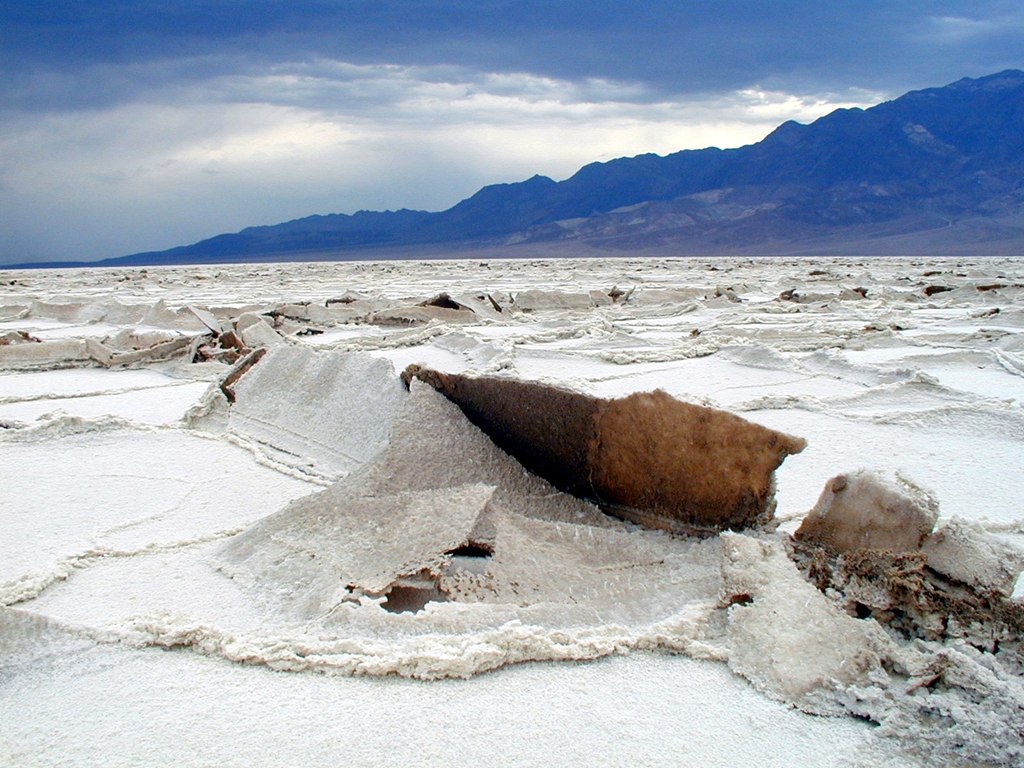
The race on one page
- Next edition: Monday to Wednesday, July 19-21, 2027. The official site calls it the 40th anniversary.
- Organizer: AdventureCORPS, race director Chris Kostman. Official race page (schedule, entry, route and rules are tabs on that one page). Applications go through RunReg. The race is not on UltraSignup.
- Start: Badwater Basin, Death Valley National Park. Three waves at 8:00 PM, 9:00 PM and 10:00 PM on Monday, with check-in at the start line 30 minutes before your wave.
- Finish: Whitney Portal, at the end of Whitney Portal Road above Lone Pine. The race does not go up the Mt. Whitney Trail.
- Distance and climbing: 135 miles (217 km) of paved road, with 14,600 ft of cumulative ascent and 6,100 ft of descent.
- Time limit: 45 hours from your own wave start. It was 48 hours from 2011 through 2025 and was cut to 45 for 2026, so most race reports you'll read were run against a looser clock. For the 40th anniversary the race also promises an extra award to anyone under 40 hours.
- Field: invitational, up to 100 starters.
- Entry fee: $1,695, charged to your card the day you're accepted. Refunds, less $500, are available by written request until May 1, 2027.
- Crew: mandatory. One four-wheeled vehicle and two to four crew members.
- Pacers: from Stovepipe Wells (mile 42). Runners 65 and older may have one from mile 3.5.
- Drop bags: none. Your vehicle is the drop bag.
- Poles: prohibited.
- Course records: Max Jolliffe, 20:53:41, and Carmen Maria Perez, 21:05:32, both set in 2026.
- 2026 finish rate: 88 official finishers from 95 starters, per the race's results page. The last of them finished in 44:25:53.
Getting in
Badwater is an invitation, not a lottery. You apply, a committee reads the application, and about 100 people are invited. The official page says roughly two-thirds of each field are first-timers.
2027 timeline (from the official schedule):
- January 2, 9:00 AM Pacific: application opens.
- January 20, 5:00 PM Pacific: application closes. There is no waitlist.
- February 6, 8:00 AM Pacific: field announced live on the race's Facebook page and YouTube channel. Entry fees are charged that day.
- February 15: signed paperwork must reach the race office in hard copy.
- February 19: roster posted (the Entry tab's step list says the 17th).
Qualifying standards. You must meet one:
- You finished the 2026 Badwater 135 and have completed at least one 50-mile-or-longer ultra since January 1, 2026.
- You have finished at least four ultras of 100 miles or more, with at least one of them since January 1, 2026.
A few substitutions are allowed toward the second standard: Badwater Salton Sea (81 miles) counts, one sanctioned 24-hour race of 135 miles or more counts, and one backyard ultra of at least 32 yards (137.5 miles) counts if it was outdoors with 15 or more competitors. Three things do not count: 100-mile races on a very short loop (the race's example is a 100 run alongside a 24-hour track race), stage races, and FKTs or other solo runs. The race also hands out Titanium Tickets to the winners of a short list of races that includes Angeles Crest 100, Keys 100 and Spartathlon; those runners still have to apply, qualify and pay.
Meeting the minimum is not the same as getting in. Among the usual reasons the official page gives for turning applicants down are barely clearing the minimum, having only a few years of ultra experience, and having no experience in extreme heat or on the Badwater course. It also publishes a list of preferred qualifying races that it says improve your chances.
If you're building a resume from Arizona, the obvious pieces are a hot, runnable 100 like Javelina Jundred and the closest thing our state has to a Badwater rehearsal: the crew-supported Route 66 UltraRun, 140 miles of highway with leapfrog rules that look a lot like these. Be careful with track races. A 100-mile run on the track at Desert Solstice falls under the short-loop exclusion, and a 24-hour result only counts if you cover 135 miles or more.
One more thing the official page says outright: crewing or pacing Badwater strengthens a future application, and it encourages runners who aren't invited to come and crew. Veteran pacers and crew who apply are asked for a recommendation letter, emailed to the race office by the athlete they supported.
The clock: three waves, five deadlines
Every wave races the same clock-time deadlines for the first 90 miles. That means the 8:00 PM wave gets two more hours than the 10:00 PM wave to reach each one. That's by design: the race director assigns the waves, and the 2026 press release said they went by predicted finishing time, slowest projections at 8:00 PM and the fastest at 10:00 PM.
| Deadline | Mile | Time | Hours allowed (8 PM / 9 PM / 10 PM wave) |
|---|---|---|---|
| 2,000 ft elevation sign, 8.6 miles past Stovepipe Wells | 50.8 | 10:00 AM Tuesday | 14 / 13 / 12 |
| Panamint Springs Resort | 72.8 | 7:00 PM Tuesday | 23 / 22 / 21 |
| Darwin turn-off | 90.7 | 3:30 AM Wednesday | 31.5 / 30.5 / 29.5 |
| Lone Pine (Dow Villa Motel) | 122.8 | 40 hours after your own start | noon / 1 PM / 2 PM Wednesday |
| Finish, Whitney Portal | 135 | 45 hours after your own start | 5 PM / 6 PM / 7 PM Wednesday |
The first cutoff is set by the National Park Service and it isn't negotiable. For a 10:00 PM starter it works out to about 14:10 per mile for the first 50.8 miles, the last 8.6 of which climb 2,000 feet. For an 8:00 PM starter it's about 16:30 per mile.
Darwin to Lone Pine is tighter than it looks for the first wave. If an 8:00 PM starter leaves Darwin right on the 3:30 AM cutoff, they have 8.5 hours to cover 32.1 miles to reach Lone Pine inside 40 hours. That's just under 16 minutes per mile, at mile 90, in the second night. The rules add that past Darwin, a runner who clearly can't finish inside 45 hours may be pulled early. Don't plan to ride the Darwin cutoff.
The 40-hour Lone Pine cutoff leaves five hours for the last 12.2 miles. Those miles climb 4,750 feet. Five hours is enough if you can still walk uphill with purpose. It isn't much more than enough.
The schedule also notes that the last official finishers usually need six to eight hours to get from Panamint Springs (mile 72) to Darwin (mile 90). Use that as a planning number for the back half.
Runners who miss a cutoff must leave the course along with their crew. Continuing unofficially without a bib is not allowed.
The route: four roads, three climbs
The whole course is pavement, and for a 135-mile race the navigation is simple.
- Badwater Road north from Badwater Basin to the stop sign at CA-190 (mile 16.5).
- CA-190, left at that junction, through Furnace Creek (mile 17.7) and Stovepipe Wells (mile 42), over Towne Pass, across Panamint Valley to Panamint Springs (mile 72.8), up the Father Crowley grade and past the Darwin turn-off (mile 90.7).
- CA-136, straight on at the junction at mile 103.5, through Keeler (mile 108.4) along the edge of Owens Lake to US-395 (right at the stop sign, mile 121.1) and into Lone Pine (mile 122.8).
- Whitney Portal Road, left at the only traffic light in Lone Pine, to the finish.
The official course description breaks the 135 miles into about 69 flat, 46 uphill and 20 downhill. The uphill comes in three pieces:
| Climb | Miles | Gain | Average grade |
|---|---|---|---|
| Towne Pass | 42.2 to 58.9 | 4,956 ft over 16.7 miles | 5.6% |
| Father Crowley | 72.8 to 80.8, then a gradual rise to about mile 90 | 2,000 ft over 8 miles, plus about 1,000 ft over the next 10 | 4.5% on the steep part |
| Whitney Portal Road | 122.8 to 135 | 4,750 ft over 12.2 miles | 7.4%, with the last mile the steepest |
The race links a Google map of the route with most landmarks, an 11-page route PDF, a Garmin file and a written course description from its Route tab. The Google map needs cell service to load, and most of this course has none, so save an offline copy.
The 2027 route is expected to match prior years, but the race says it's subject to agency approval that may not be final until race week. Roughly the first 86 miles are under National Park Service jurisdiction.
Time stations and resupply: the table that replaces aid stations
Since the race has no aid stations, this table lists what does exist: the eight timing checkpoints, the cutoff points, and the handful of places where a crew can buy ice, fuel and food. There's no crew-access column because the crew is on the road with the runner the whole way, and no drop-bag column because there are no drop bags. Mileages are from the race rules, the webcast page and the 2026 route sheet; the older course description and the schedule differ by a few tenths (the schedule calls the first cutoff mile 50.5).
| Point | Mile | To next point | What's there | Pacer | Cutoff | Notes |
|---|---|---|---|---|---|---|
| Badwater Basin (start) | 0 | 3.5 | Toilets only | No | Check in 30 min before your wave | 282 ft below sea level. Parking is very limited |
| Natural Bridge turn-off | 3.5 | 14.2 | Nothing | 65+ only | None | Pacers allowed from here only for runners 65 and older |
| Furnace Creek (time station 1) | 17.7 | 1.4 | Gas, general store, ice trailer, restaurants, hotels | No | None | Checkpoint is at the gas station. Store stays open until 2:00 AM on race night. Next services are 24.3 miles away at Stovepipe Wells. Cell signal starts at the CA-190 junction, mile 16.5 |
| Harmony Borax Works | 19.1 | 22.9 | Nothing | No | None | No vehicle stops from mile 19.1 to 20.1 (Harmony Curves) |
| Stovepipe Wells (time station 2) | 42.0 | 8.8 | Gas, general store, ice, motel, restaurant | Yes, pacers start here | None | Checkpoint is by the hotel courtyard (42.2 on the route sheet). Store and gas open at 2:00 AM on the 2027 schedule (the 2026 route sheet said 3:00, so confirm). Medical HQ for most of the first 15 hours. Towne Pass climb begins. Signal fades a few miles up the climb |
| 2,000 ft elevation sign | 50.8 | 0.4 | Nothing | Yes | 10:00 AM Tuesday | The NPS cutoff. Sign is on the left |
| Wildrose Station parking lot | 51.2 | 7.7 | Toilets, room for crews | Yes | None | On the right. Park in the marked spaces |
| Towne Pass (time station 3) | 58.9 | 13.9 | Nothing | Yes | None | 4,956 ft. Brake-check pullout at the summit. Steep, narrow descent follows |
| Panamint Springs Resort (time station 4) | 72.8 | 8.0 | Gas, mini-mart, ice, restaurant, motel, the race Cottage | Yes | 7:00 PM Tuesday | Checkpoint is at the hotel and restaurant, not the gas station. Last services for 50 miles. Give your runner a head start up the grade |
| Father Crowley turnout | 80.75 | 4.15 | Toilets, parking lot | Yes | None | About 4,000 ft. Not the top |
| Panamint Pass (unsigned) | 84.9 | 5.8 | Nothing | Yes | None | End of the designated-parking section, just before a 65 MPH sign |
| Darwin turn-off (time station 5) | 90.7 | 17.7 | Nothing | Yes | 3:30 AM Wednesday | About 5,050 ft. No services, no signal. The 100-mile point is about 9 miles on, at Gunsite Notch |
| Keeler (time station 6) | 108.4 | 14.4 | Nothing | Yes | None | Checkpoint at Cerro Gordo Road. Old mining town beside Owens Lake. Cell signal returns between mile 100 and 102 |
| Lone Pine, Dow Villa (time station 7) | 122.8 | 8.4 | Everything: grocery, gas, restaurants, motels | Yes | 40 hours | Serve any time penalty here. Medical HQ. Last services. Left onto Whitney Portal Road |
| Portal Road (time station 8) | 131.2 | 3.8 | Nothing | Yes | None | Large gravel pullout on the right, just below the switchbacks |
| Whitney Portal (finish) | 135 | - | Small store and burger grill, daylight hours only | - | 45 hours | 8,360 ft. The race warns night finishers it can approach freezing |
Two gaps define the supply plan. Furnace Creek to Stovepipe Wells is 24.3 miles with nothing between them. The store hours are set by special arrangement to fit the race: in the 2025 and 2026 time splits every runner came through Furnace Creek between about 10:40 PM and 1:30 AM, before the 2:00 AM closing, and reached Stovepipe Wells between about 3:00 and 7:15 AM, after it opened. The margin at Furnace Creek is about half an hour for the last of the 10:00 PM wave, so buy for the whole first night before the start and treat the store as a top-up. Panamint Springs to Lone Pine is 50 miles with no ice, no fuel and, until about mile 100, no phone signal. Whatever your runner will need between Tuesday evening and Wednesday morning has to be in the vehicle when you leave Panamint Springs.
The vehicle
This is where Badwater differs most from any trail hundred, and where crews get runners penalized.
What you may bring. One four-wheeled motor vehicle. It may not be wider than 82 inches (not counting mirrors) or taller than 84 inches by manufacturer specification. The rules recommend minivans first, then medium SUVs. A second vehicle may not be used to shuttle crew or supplies.
What you may not bring. Motorhomes, RVs, Sportsmobiles, Sprinter vans and similar (the rules name the Ram ProMaster), 15-passenger vans, Cybertrucks and Hummers. No trailers of any kind. Oversize SUVs and big trucks are discouraged and usually refused.
What veterans actually drive. The race's own support-vehicle article (written in 2018) says the most common choice every year is a Dodge Caravan or Chrysler Town and Country, under 79 inches wide and 68 tall, with seats that fold flat into the floor. Two-time winner Pete Kostelnick used a Honda CR-V both years he won and said he wouldn't go any smaller. The reasoning is the same in every account: the shoulders are narrow, the sand beside them is soft, and a small vehicle fits where a big one can't.
Signage and lights.
- A CAUTION RUNNERS sign on the back (the race provides one).
- The runner's bib number stickers on all four sides.
- No sponsor or charity graphics on the front or back, no blocked windows, no added red or blue lights, nothing large strapped to the roof.
- Headlights on whenever you're driving, day and night. When parked: headlights off, hazard flashers on. Driving with flashers on is illegal.
Driving and parking.
- Leapfrog, never shadow. Drive at traffic speed, pull fully off, wait, repeat. The rules suggest about two miles per leap, less on the climbs.
- Nothing may be handed from the vehicle, and you may not slow down to talk to your runner. All help is given on foot.
- Park with all four tires to the right of the white line. No parking on the left side of the road except in real lots and very large pullouts.
- Don't park within 50 meters of a vehicle on the opposite side. It bottlenecks the road.
- Left-side doors never open into the roadway. Crew get out on the right. Nobody stands between the parked vehicle and the road.
- No more than two crew members, including a pacer, on the runner's side of the highway at one time.
The penalty ladder is a warning, then a time penalty (the rules call one hour typical) served at the Lone Pine checkpoint, then disqualification. A crew mistake is charged to the runner.
Setting the van up
These come from the race's support-vehicle article, its packing list and its Badwater University articles:
- Three coolers is the usual setup according to the race's packing list: one for ice only, touched by nothing but a clean scoop; one for drinks; one for food. Some crews add a spigot cooler of ice water for filling bottles and sprayers. One 2010 crew account describes a long chest cooler holding about 20 bags of ice.
- Keep bare hands out of the drinking ice. A 15-time finisher writing for Badwater University says to handle food and ice with gloves and a scoop, because bacteria grow fast in that heat and cause immediate stomach trouble. Another veteran gives the runner a dedicated ice cooler that no bare hand goes into.
- Fold the seats flat and put a tarp down. Cover the front passenger seat with a towel and recline it before the runner arrives; that's the nap spot.
- Because only the right-side doors open during the race, put the sleeping crew member on the left with an eye mask.
- Use blue painter's tape, not duct tape, for signs and numbers. Duct tape bakes onto a rental.
- Give the van a distinctive light so the runner can pick it out of a line of identical flashing minivans at 3:00 AM.
- The key never leaves the ignition. More than one veteran lists this as a hard rule.
- Do the setup on Monday while the runner rests, not earlier, and drive the course from Furnace Creek to the finish beforehand if you can, so you know where the pullouts are. The veteran who gives that advice does his drive-through on the Saturday.
Kostelnick's summary of the whole exercise, from that article: "This race is all about risk management." His version of that is packing light: one trusted pair of shoes plus one roomier pair rather than four of the same, and a zip-top bag of blister essentials rather than a cabinet of them.
The crew
Size: two to four people, at least two with a driver's license and at least one who speaks English. Minimum age 15, with extra conditions for anyone under 18. Crew chief and roster are due to the race office at least 60 days out.
What they wear: every crew member outside the vehicle must wear OSHA Class 3 high-visibility clothing at all times, day and night. Class 3 means reflective stripes on the sleeves. A standard highway safety vest is Class 2 and doesn't qualify, and neither does a reflective running vest. The race sells an approved shirt for pickup at check-in. At night (the race defines night as 7:00 PM to 7:00 AM) everyone outside the vehicle also wears front and rear blinking lights. The only exception to the Class 3 rule is a crew member who is actively pacing.
How to staff it. One veteran quoted by the race recommends a crew of three, and another used four with a mid-size SUV. What the veteran articles agree on:
- Name one crew chief before race week and give that person the final word. Sleep deprivation turns a van of friends into a van of people who each think they're in charge.
- Schedule crew sleep. A crew that stays up for the first night to watch the start is useless by Father Crowley. One person drives, one works the runner, one sleeps. A seven-time finisher quoted by the race leaves one crew member at Stovepipe Wells for the start and picks them up, rested, when the runner comes through at mile 42.
- Bring someone who has done it. The rules strongly encourage at least one crew member with Badwater experience.
- Keep a log. Fluids, calories, electrolytes, urine and split times, written on a clipboard every stop. A mechanical bathroom scale lets you check the runner's weight against the starting number.
- Bring medical knowledge if you can. The race strongly encourages a nurse, EMT or doctor on the crew. IV fluids during the race mean disqualification, so the whole game is prevention.
- Heat-train the crew too. Crew members stand on that road shoulder for 40 hours.
Who else can come: nobody. Family and friends may be in Lone Pine and at the finish line only. They can drive from Lone Pine to the finish without stopping, and that's all.
Driving it: a section-by-section crew guide
Before the start. Check-in and the mandatory pre-race meeting are in Lone Pine on Sunday, July 18 (check-in 12:30 to 4:30 PM at the Alabama Hills Cafe, meeting 5:00 PM at Lone Pine High School). There's also a mandatory online meeting on Sunday, July 11. On Monday the official schedule tells you to allow at least three hours to drive from Lone Pine to Badwater Basin. You'll drive most of the course backwards, which is a free preview: note the pullouts. Every vehicle needs a Death Valley entrance pass, and proof of it has to come to check-in. The race lists Furnace Creek as 140 miles from the Las Vegas airport and 250 from Los Angeles, publishes a PDF of directions from both, and tells entrants in capital letters never to navigate to Death Valley by GPS.
Badwater Basin to Furnace Creek (0 to 17.7). Dark, hot and crowded. All three waves are on Badwater Road within a few hours, so up to a hundred support vehicles are leapfrogging on the same shoulder. The 2026 route sheet says crews are held for five minutes after each wave starts and then released in small batches, and it names the wide right shoulder between miles 2.6 and 3.4 as the best first stop. No cell signal until the CA-190 junction at mile 16.5. The rules suggest leaps of about two miles, but a crew member writing for Badwater University describes practicing support as often as every half mile, so expect short hops and short stops.
Furnace Creek (17.7). Buy ice. You pay at the general store register and take the receipt to the ice trailer. Top off fuel, park in the lots and not along the road, and watch the 35 MPH limit through the village.
Harmony Curves (19.1 to 20.1). No stopping for one mile. The rule is to wait at Harmony Borax Works long enough for your runner to cover the uphill mile, then drive straight through to 20.1.
Furnace Creek to Stovepipe Wells (17.7 to 42). Twenty-four miles of open valley with no services. A 15-time finisher's pacing plan budgets an extra minute per mile here for heat and a hot headwind. The route sheet warns of minimal parking and soft shoulders for about six miles past the second sea-level sign (mile 35.4), through Devil's Cornfield: three pullouts with room for two cars each near mile 37, one paved pullout for four or five cars at 37.5, then the Sand Dunes lot with toilets at 40.2. The race says vehicles get stuck in shoulder sand many times every year, and this is where the route sheet tells you not to be one of them. One 2017 crew chief's report also describes the runner's stomach turning sour in this stretch and taking hours to settle, which fits the veteran advice below about not forcing calories early.
Stovepipe Wells (42). Restock ice and fuel, pick up the first pacer, and get the runner dressed for the sun. In 2025 and 2026 the middle of each wave reached Stovepipe between about 4:30 and 5:30 AM, and sunrise is just before 6:00, so most of the field does the Towne Pass climb in morning sun.
Towne Pass (42 to 58.9). Nearly 17 miles uphill on a steep, narrow road with limited parking. Shorten the leapfrog, and don't park in the signed dips near miles 48 and 48.5, where the route sheet points out a stopped vehicle can't be seen. Phone signal fades a few miles up. The Wildrose Station lot at 51.2, just past the cutoff sign, has toilets and plenty of room for crews. From the summit a road sign announces nine miles of 9% downgrade; the descent to Panamint Valley drops more than 3,000 feet and has little parking on either side. Crews need to be careful with traffic and runners need to protect their quads.
Panamint Valley and Panamint Springs (to 72.8). The valley floor comes in the heat of the day for most runners. Panamint Springs has gas, a mini-mart, a restaurant and the race's Cottage way station, with showers and flush toilets (bring your own towel, soap and shampoo). Buy real food for the crew and fill every cooler.
Father Crowley (72.8 to 84.9). For these 12.1 miles a support vehicle may stop only in eight designated zones:
| Zone | Mile | Where |
|---|---|---|
| 1 | 74.5 | Gravel pullout on the right |
| 2 | 76.1 | Small gravel pullout on the right |
| 3 | 77.4-77.6 | Large gravel shoulder on the right |
| 4 | 78.1 | Large gravel pullout on the left, just before a sweeping left curve |
| 5 | 80.75 | Father Crowley viewpoint parking lot (toilets) |
| 6 | 81.6 | Elevated lot up a short driveway on the right |
| 7 | 83.3 | Wide gravel pullout on the right |
| 8 | 84.9 | Large gravel pullout on the right at the unsigned Panamint Pass |
Stopping anywhere else, even for a moment, is an immediate disqualification of your runner unless it's a real emergency, and park rangers enforce it. The zones are signed, but the route sheet tells crews to follow the odometer closely. Crew other than the pacer may not cross the road anywhere on this climb. The longest gap is about 2.65 miles of steady uphill, from zone 4 to the Father Crowley lot, so the pacer carries more water than usual, and the race recommends walkie-talkies between pacer and vehicle. Parking in the zones is limited, which is why the race asks crews to wait at Panamint Springs and give the runner a head start. See the race's parking zone page with photos. After zone 8, you may again park wherever it's safe.
Darwin to Keeler to Lone Pine (90.7 to 122.8). Thirty-two miles of flat to gently downhill road, in the second night for most of the field. Nothing is open. The course description warns that Mt. Whitney stays in view for hours without seeming to get closer. Signal returns soon after Gunsite Notch, around mile 100. At the CA-136 junction (mile 103.5) the route sheet warns of soft shoulders for the next eight miles. This is the stretch for a planned nap: the 2017 crew report describes a short sleep past Keeler that brought the runner back.
Lone Pine (122.8). Everything is here, including race headquarters and the medical team at the Dow Villa. Speed limits drop to 25 MPH through town. Restock for the last time, because there's nothing on the climb. Bring warm layers up from the bottom of the bags.
Whitney Portal Road (122.8 to 135). The steepest climb of the race on the narrowest road. Vehicles must be completely off the pavement and must never block traffic, even briefly. The last time station is a large gravel pullout on the right at 131.2, just below the switchbacks. In the 2017 report the crew took turns pacing a mile each, which kept everyone moving and awake. Per the 2026 route sheet, the support vehicle should drive ahead from the family campground (about mile 134.1) to find parking, and the whole crew can join the runner at the overflow lot about a tenth of a mile from the line to cross together. The race notes that GPS trackers don't work in the final 3 km, with mountains on three sides.
Pacers
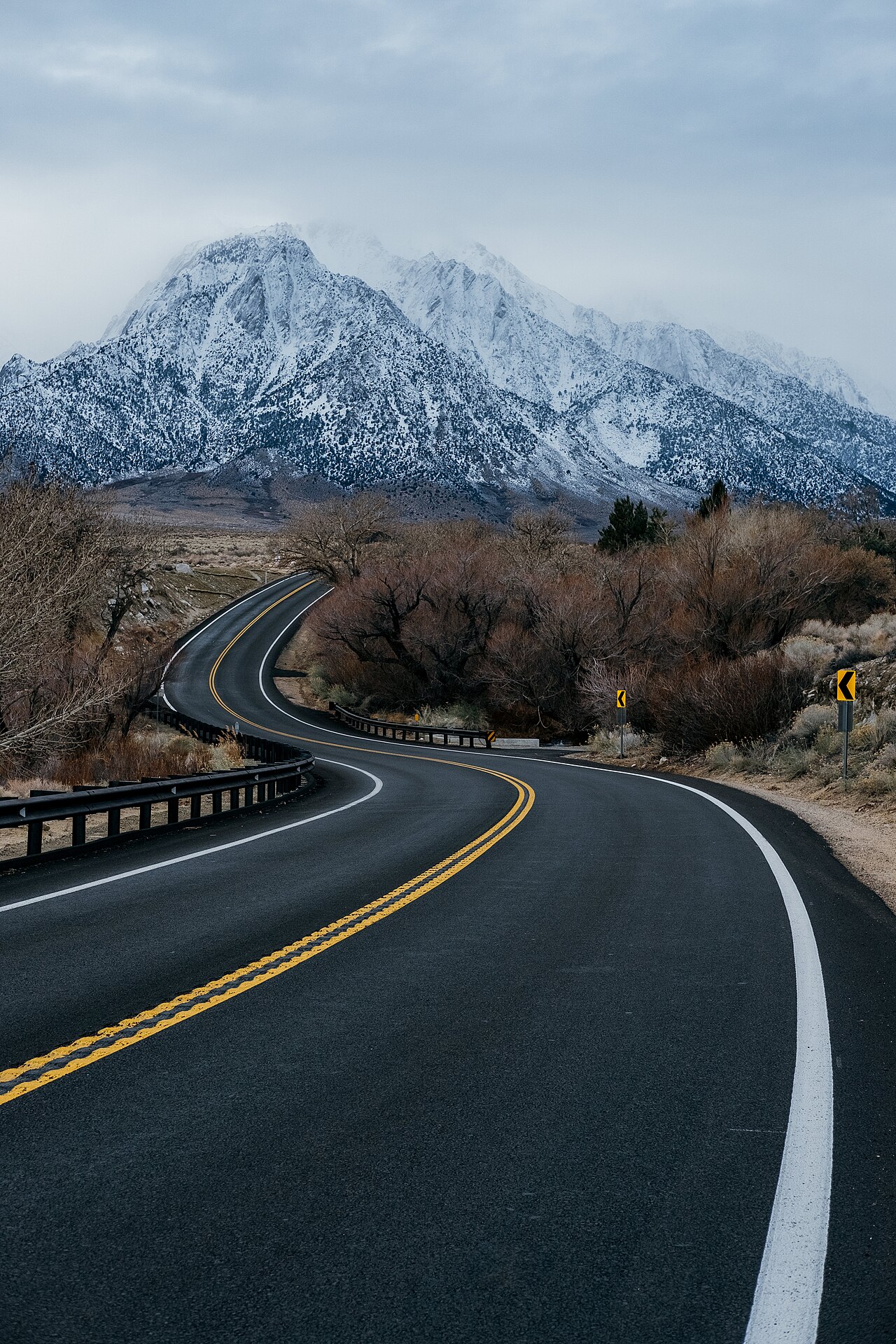
- From mile 42 (Stovepipe Wells) only. Runners 65 and older may use a pacer from the Natural Bridge turn-off at mile 3.5, and blind runners may have a guide from the start.
- Behind the runner, never in front. A pacer may come alongside briefly, on the left, to hand something off or spray the runner.
- Any crew member who runs along for more than a few moments is a pacer and must wear the pacer bib.
- At night, pacers need 360-degree reflectivity and front and rear blinking lights, same as the runner.
- Runners and pacers travel single file on the far left of the road, facing traffic. Earphones are allowed with care; the race recommends the kind that sit outside the ear.
In practice the pacer is a mobile aid station. They carry the spare bottle and the sprayer, and on Father Crowley they're the only crew member allowed near the runner between zones.
Poles: not here
Trekking and walking poles are prohibited at Badwater. So are umbrellas or any shade cover while moving, and so are cooling vests, cooling hats and any product whose only purpose is artificial cooling. Ice, wet towels, hand sprayers and ordinary sun clothing are fine.
That matters because 46 miles of this course are uphill and most of the field walks them. In the sample splits the race prints on its route sheet, a 36.5-hour finisher took about 4 hours 40 minutes for the 17 miles from Stovepipe Wells to the top of Towne Pass. A 15-time finisher writing for the race says he power-walked every climb and spent his last three weeks of training doing nothing but power-walking hills. If you normally climb with poles, train the Towne Pass and Portal Road grades (5.6% and 7.4% for hours) with your hands free.
What veterans say that the rules don't
Paraphrased from Badwater University articles by multi-time finishers and crew, and the race's support-vehicle article:
- Eat less than you think. A 15-time finisher who set an age-group record at 70 says he never took more than about 200 calories an hour, all liquid, and less in the worst heat. He lists overeating among the mistakes that wrecked his earlier races, along with untested food and a restaurant meal before the start.
- Weigh the runner. Start weight on a mechanical scale, then keep within a few pounds. The same veteran calls overhydration, not dehydration, his number one problem over the years: too much water and too much sodium led to bloating, cramping and nausea.
- Stay wet. Garden-style pump sprayers full of ice water, an ice bandana or ice-filled buff on the neck (one crew says a rolled buff of ice lasts 20 to 40 minutes), and wet white clothing through the day.
- Ration the chair. The 15-time finisher didn't bring one; his only planned break was a 15-minute leg massage on a yoga mat at Father Crowley. A 2010 pacer timed her runner's stops and held them to five minutes. A seven-time finisher who describes himself as a 40-plus-hour runner plans his rests by mile, not by the clock: 27, 50 (just past the first cutoff), 59 (the top of Towne Pass), 72 (just past the second cutoff) and 80.6 (Father Crowley).
- Feet: light-colored shoes, a pair a size or more larger for when feet swell, and foot powder in the socks. Tape adhesive can melt.
- Use the roadside mile markers. The route sheet lists highway mile markers along most of the course, and a pacer writing for Badwater University describes getting her runner to commit only as far as the next marker.
- Bring a privacy umbrella or tarp. There are no bushes. Each team must also bring at least eight approved portable toilet kits to check-in; a zip-top bag doesn't count, and public defecation by runner or crew is a disqualification.
- Help the next crew. Crews are allowed to lend each other supplies in the spirit of the event, and one crew account describes tracking down another team that had run short and handing over a spare tub of drink mix.
A note on sourcing: we looked for Reddit threads from Badwater crews and didn't find any detailed enough to cite, so everything above comes from the race's own veteran and crew articles. The three details credited to a 2017 crew chief's blog report in the driving section are one crew's account, and we couldn't re-check that page when we fact-checked this guide.
The finish line is decided here
Stovepipe Wells to Darwin, miles 42 to 90.7: the two climbs in the first day's sun.
The finish rate at Badwater is high because the field is hand-picked: 88 of 95 in 2026 and 93 of 99 in 2025. It isn't guaranteed. In 2024 only 74 of 97 starters finished, and in 2018 it was 69 of 99.
The race publishes every runner's time splits, so you can see where the non-finishers last checked in. We counted the four most recent editions on the standard course (2022, 2024, 2025 and 2026; the 2023 race had different checkpoints). Of 52 runners who didn't finish:
| Last checkpoint reached | Runners | What it means |
|---|---|---|
| Furnace Creek (17.7) | 6 | Out before Stovepipe Wells |
| Stovepipe Wells (42) | 18 | Out on the Towne Pass climb, or stopped by the 10:00 AM cutoff at 50.8 |
| Towne Pass (58.9) | 1 | Out on the descent or the valley floor |
| Panamint Springs (72.8) | 14 | Stopped at the resort, or out on the Father Crowley climb |
| Darwin (90.7) | 8 | Out before Keeler |
| Keeler (108.4) | 4 | Out before Lone Pine |
| Lone Pine (122.8) | 1 | Out on Portal Road |
Three in five of them, 32 of 52, checked in at Stovepipe Wells or Panamint Springs and never reached the next checkpoint. Those are the two long climbs, Towne Pass in the morning sun and Father Crowley in the afternoon heat, and each starts at a place with a store, a restaurant and a motel. In 2024, ten of the 23 non-finishers got to Stovepipe Wells and no farther. The splits show where a race ended, not why. The 15-time finisher's list of the mistakes that wrecked his own races is mostly things done hours earlier: too much water, too many calories, running the hills.
Get past Darwin (mile 90.7) with a moving runner, and the odds change. In those four races 346 runners checked in at Darwin and 332 became official finishers, about 96 percent (13 dropped later and one finished outside the limit). The last big climb before Lone Pine is done, the next 32 miles are flat or downhill, and the signal comes back around mile 100. One caution: three of those four races had a 48-hour limit. In 2026, the first year at 45 hours, three of the seven non-finishers had already made Darwin, so the back half is less forgiving than it used to be. From Lone Pine, anyone inside 40 hours with working legs has five hours for 12.2 miles.
How not to DNF at Badwater
- Run the first 42 miles slower than feels necessary. It's dark and you'll feel good. The race starts at sunrise on Towne Pass.
- Fix the stomach the moment it turns. Slow down, cool down, small sips. Don't push calories into a hot gut.
- Crew: short stops, every time. Bottle, ice bandana, spray, go. Have it in your hands before the runner arrives.
- Leave Panamint Springs quickly. Eat, restock, and get the runner onto the grade before the chair wins. Remember the official planning number: six to eight hours from here to Darwin for the back of the field.
- Plan one real nap in the second night, 15 to 20 minutes in the reclined front seat, somewhere after Darwin. The runner can't be driven off the course to rest; leaving by vehicle is for medical reasons only and requires staking the exact spot with the numbered stake the race provides.
- Warm clothes in Lone Pine. After 120 miles of heat, the race warns that the top of Portal Road can approach freezing at night.
- Just get to the next marker. The course is 270 half-miles long, and you only ever have to do one.
Gear for this course
- OSHA Class 3 hi-vis shirts for every crew member, with a spare each. Check that the label says Class 3 and that the sleeves have reflective stripes, or order the race's approved shirt.
- Clip-on LED blinky lights, front and rear for everyone outside the vehicle at night. The rules require a minimum of 10 to 14 per team at check-in, plus at least two reflective running vests.
- A 360-degree reflective running vest for the runner and each pacer.
- Large ice chests, three of them, and a spigot drink cooler for ice water.
- A pump garden sprayer or two for misting the runner with ice water at every stop.
- Ice bandanas, several, pre-filled and rotated.
- A white UPF sun hoodie and a hat with a neck cape. Full coverage and kept wet beats bare skin out there.
- A 16 oz handheld bottle. With a crew every two miles, nobody wears a pack.
- Electrolyte capsules you've used in training.
- Portable toilet bags of the approved kit type, at least eight.
- Two-way radios for the pacer and the van, especially on Father Crowley.
Also pack, no link needed: a mechanical bathroom scale, foot powder and a blister kit kept in its own small cooler, blue painter's tape, a clipboard, an outdoor thermometer, headlamps with spare batteries, and a satellite communicator if you have one, since phones are dead for most of the first 100 miles.
The van idea, honestly
Badwater is the purest crew-vehicle race there is, and it's also the one where we have to be straight with you: our van can't be your on-course support vehicle. It's a high-roof Sprinter, and the rules cap vehicles at 82 inches wide and 84 inches tall and name Sprinter vans, Ram ProMasters and RVs as not allowed. Check any vehicle's manufacturer dimensions against the current rules before you count on it.
Where a van does fit is around the race. Lone Pine is base camp from Sunday check-in through Monday staging, and again from Wednesday's finish through the post-race party that night. Family and friends aren't allowed on the course at all, so they wait in Lone Pine for a day and a half. A van parked there gives a wrecked runner and crew a bed, a fridge, shade and compression boots a few minutes from the bottom of Portal Road.
That's the idea behind AZ Ultra Vans. It's a reservation-interest waitlist while we learn which races people want it for; the card above isn't a booking or a promise of availability. More at van.azsvinternal.com.
Badwater 135 FAQ
When is the Badwater 135 in 2027? Monday to Wednesday, July 19-21, 2027. Waves start at 8:00, 9:00 and 10:00 PM Monday at Badwater Basin, and the course closes 45 hours after each wave.
How do you qualify for Badwater? Finish four ultras of 100 miles or more with at least one since January 1, 2026, or finish the previous year's Badwater 135 plus a recent 50-miler. Then apply between January 2 and January 20, 2027. A committee selects up to about 100 runners.
How much does it cost? The entry fee is $1,695. Add a rental vehicle, fuel, ice, lodging in Lone Pine and Death Valley, and travel for two to four crew.
Are there aid stations? No. There are eight timing checkpoints, a medical team and race staff on the road. All food, water and ice come from your own crew vehicle.
What vehicle can my crew use? One four-wheeled vehicle no wider than 82 inches and no taller than 84 inches. Minivans are recommended. Sprinter-type vans, RVs, 15-passenger vans and trailers are banned.
Can I use trekking poles? No. Poles, umbrellas while moving, and artificial cooling vests or hats are all prohibited.
When can I pick up a pacer? At Stovepipe Wells, mile 42. Runners 65 and older may have a pacer from mile 3.5. Pacers must stay behind the runner.
What are the cutoffs? Mile 50.8 by 10:00 AM Tuesday, Panamint Springs (72.8) by 7:00 PM Tuesday, the Darwin turn-off (90.7) by 3:30 AM Wednesday, Lone Pine (122.8) within 40 hours of your start, and the finish within 45 hours.
Who wrote this
Johnathon Lawson is a Gilbert, Arizona ultrarunner, track and cross-country coach and father of three, and a three-time 100-mile finisher: Zion 100 (2025), Mogollon Monster 100 (2025) and San Diego 100 (2026). He hasn't run or crewed Badwater; this guide is researched from the official race materials, veteran articles and crew reports. Follow his training on Strava, his results on UltraSignup, and AZ Ultra Adventure on YouTube and Instagram.
Sources: Badwater 135 official page (2027 schedule, entry, route and race rules, read November 15, 2026) and the 2026 route sheet linked from its Route tab; the race's results and time splits for 2018 and 2022 through 2026; its 45-hour limit announcement and 2026 pre-race press release; the race's course description, Father Crowley parking zones and ideal support vehicle articles; Badwater University pieces The Art of Finishing Badwater 135, Lessons Learned at Badwater and What to Bring; and a 2017 crew chief and pacer report (personal blog). For race photos, see the galleries on the official webcast page. Dates, cutoffs, store hours and vehicle rules change, so confirm everything on the official page before race week.
Some links are Amazon affiliate links. As an Amazon Associate we earn from qualifying purchases, at no extra cost to you.