 AZ Ultra Adventure
On this page
- What changed for 2027
- The 2027 race in one table
- The island, briefly
- The 50 mile, in three acts
- Aid stations: the 2027 50 mile
- The finish line is decided here: Lower Frary to the Ranch and back
- Bison: the actual rules
- March weather, and the gnat question
- Crew guide
- Do you need poles?
- Gear for this course
- The van idea
- Buffalo Run FAQ
- More guides
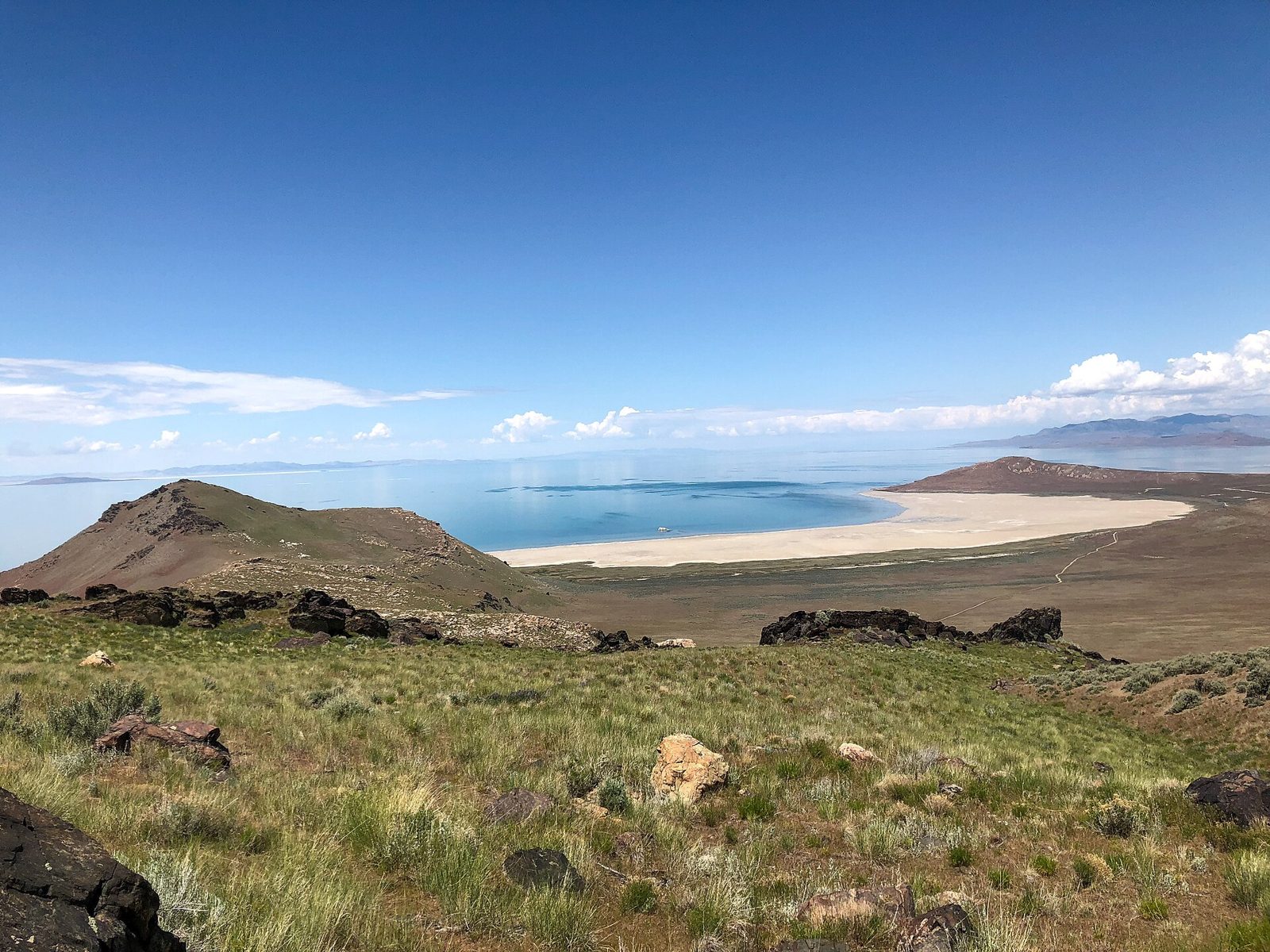
On the last weekend of March 2026, the Buffalo Run didn't happen. Not because of snow, wind or a closed causeway, which are the things you'd guess on an island in the Great Salt Lake in March. It was called off because of bugs. A record heat wave hatched Antelope Island's biting gnats weeks early, and the founding race director, Jim Skaggs, told KSL that in 20 years of the race they had never been out on race day.
That one story tells you most of what you need to know about this race. It's a fast, friendly, very runnable early-season ultra on one of the strangest pieces of ground in the West: a bison range on a mountain island in a salt lake, 40 minutes from Salt Lake City. And it's run at the mercy of whatever late winter decides to do that week.
For 2027 the race has new owners, a new date, and no 100. Here's the whole thing, as of November 19, 2026.
What changed for 2027
- New race directors. Jim Skaggs, who started the race in 2006, said 2025 was his last year directing. Massif Running (Finn Melanson and Julia Campanelli, the people behind the Singletrack podcast and the Twisted Fork races) now own it. The old buffalorunadventures.com race page now redirects to Massif Running.
- Earlier date. Saturday, March 13, 2027, two weeks earlier than the 2026 date. The race hasn't said why, but an earlier date puts more distance between race day and gnat season.
- No 100 mile. The 100 was last run on March 28, 2025 (two laps of the 50-mile course, finishing at White Rock Bay). The 2027 menu is 50 mile, 50K and 25K. A race calendar listing said the 100 would move to the fall, but the October 2026 Antelope Island Fall Classic only offered a 68K, 50K and 10 mile. If a Buffalo Run 100 comes back, we'll update this guide.
- Registration moved to RunSignup. It opened October 19, 2026. Older results still live on UltraSignup.
The 2027 race in one table
| 50 mile | 50K | 25K | |
|---|---|---|---|
| Date | Sat, March 13, 2027 | Sat, March 13, 2027 | Sat, March 13, 2027 |
| Start | 7:00 AM | 8:00 AM | 9:00 AM (the 25K page says 8:00 AM) |
| Cutoff | 8:00 PM (13 hours) | 6:00 PM (10 hours) | 6:00 PM |
| Real distance | 50.0 mi | 32.5 mi | 16.5 mi |
| Gain | ~3,430 ft | ~3,855 ft | ~1,690-1,940 ft (the race lists both) |
| Course | One big tour of the island | The 25K loop twice | One loop |
| Aid stations | 8 stops | 4 stops plus halfway | 2 stops (one station, twice) |
| Fee through Dec 16, 2026 | $210 | $150 | $120 |
| Fee through Mar 6, 2027 | $240 | $175 | $130 |
Fees don't include RunSignup's processing fee or tax. Start and finish for every distance is the White Rock Bay campground on the island's west side. The race lists a Syracuse, Utah address, which is the town at the start of the causeway.
Refunds are tiered: 75% back 120+ days out, then race credit (50%, then 25%) closer in, and nothing inside 30 days. Massif offers optional insurance, and has a no-questions pregnancy deferral that covers partners too. Details are on the Massif FAQ.
Course record money. $500 for a men's or women's 50 mile or 50K record and $250 for the 25K. The marks to beat: Alex Proctor's 6:09:45 (50M, 2025), Bethany Lewis's 6:55:29 (50M, 2012), Adam Peterman's 3:27:51 (50K, 2024) and Sarah Cummings's 4:07:01 (50K, 2021).
Qualifiers. The race doesn't say whether the 2027 50 mile is on the Western States, Hardrock or UTMB lists. Check the Western States qualifying races page before you build a season around it.
The island, briefly
Antelope Island is the largest island in the Great Salt Lake, about 15 miles long, reached by a 7-mile causeway from Syracuse. Its high point, Frary Peak, is 6,596 feet, but the race never goes up it. The course stays between about 4,200 and 4,900 feet on rolling grassland, singletrack and dirt road.
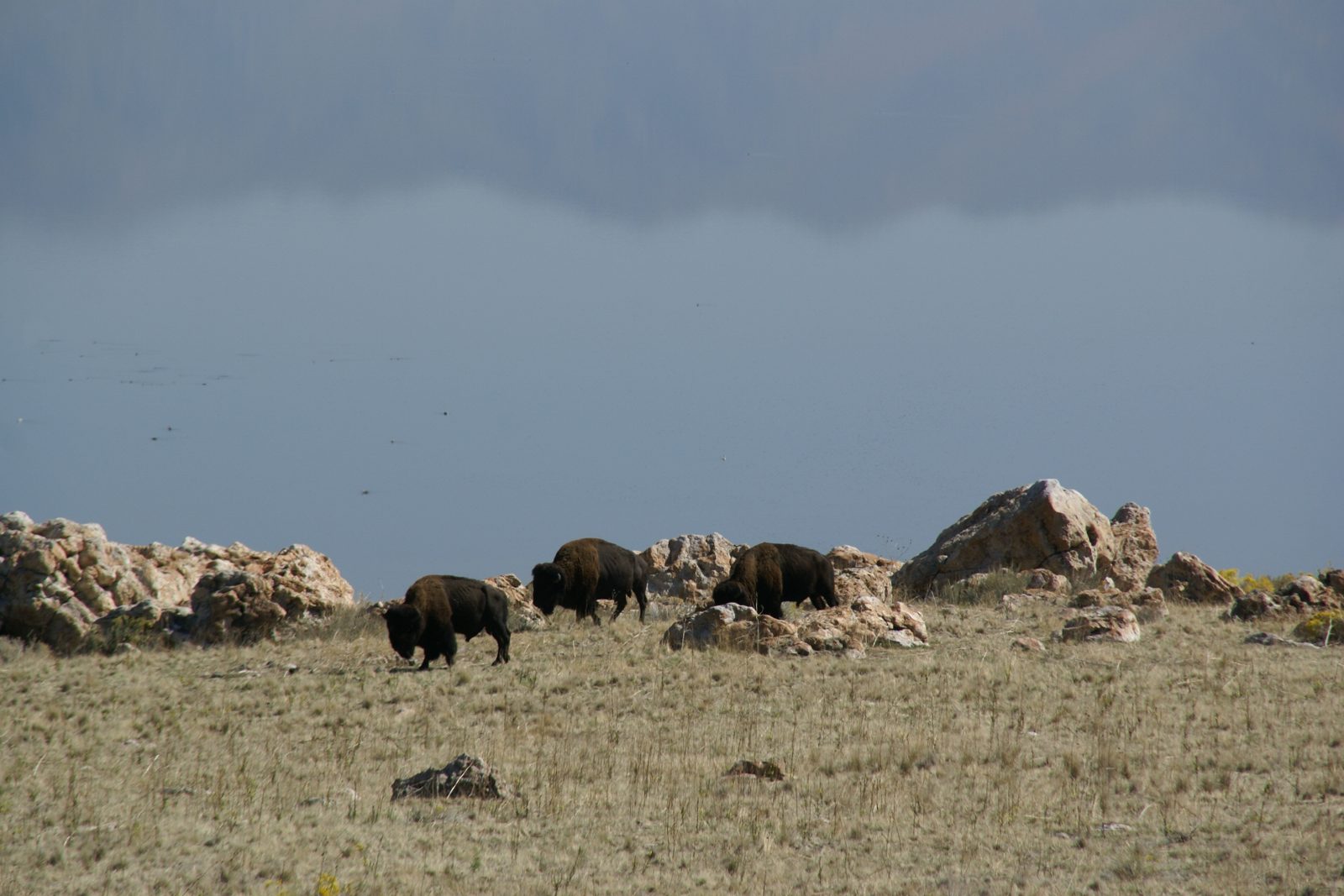
The island's bison herd started with 12 animals brought over by boat in 1893. Today it's one of the oldest public herds in the country, and it's rounded up and thinned every fall. You will see bison. You might have to wait for them.
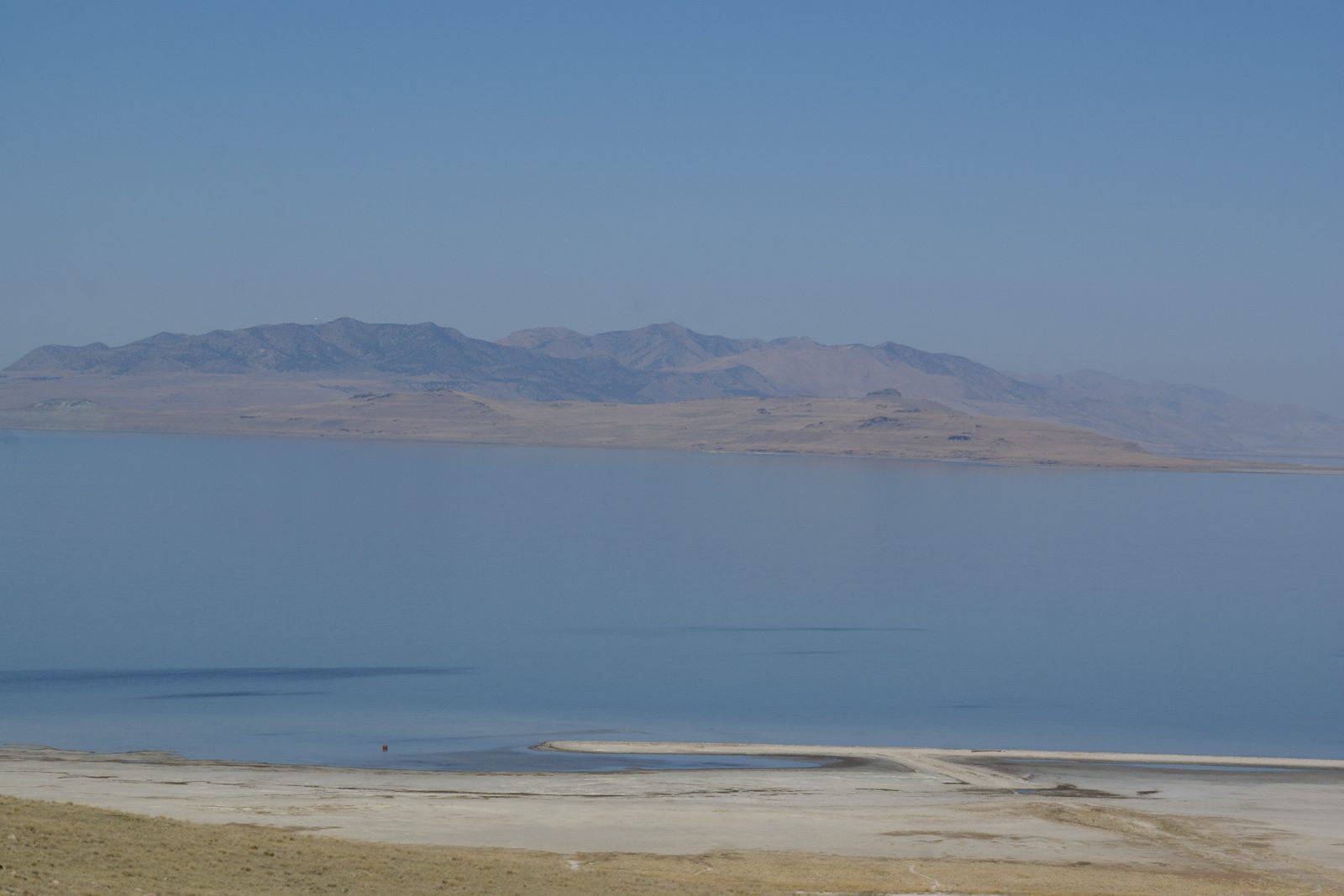
One other thing to know: the water around the island is salt water, and the lake level changes a lot from year to year. Don't count on any natural water source. Everything you drink comes from an aid station or your pack.
The 50 mile, in three acts
The 50 mile has a shape that fools people. Almost all the climbing is in the first 19 miles. The last 31 are close to flat. Runners who read that as "easy back half" are the ones walking it.
Act one: the hilly heart (miles 0 to 19)
From White Rock Bay you follow the fence line south on a jeep road, go through a gate onto the White Rock Loop, and start a gradual climb to the first high point near mile 2.5. The Junction Trail drops you gently to the Bone Road junction at a lone cedar, then One Tree Hill is a short, steep pitch up to the Elephant Head aid station (mile 5.8).
You'll see Elephant Head three times. First, an out-and-back along the ridge to the Elephant Head overlook (more than 600 feet above the lake) and back to the aid station at mile 8.5. Second, the Split Rock Loop: 600 feet down a wide doubletrack in 1.5 miles to the low point by the bay, then 600 feet back up over 2 miles of switchbacks, then flowing singletrack back to Elephant Head at mile 13.7. Third visit done, you drop down One Tree Hill, climb the Junction Trail a final time and run 2.5 mostly downhill miles of what the race calls some of the nicest singletrack anywhere, back to White Rock Bay at mile 19.
The Split Rock climb is the biggest single effort of the day. Run the descent easy. That's the advice we'd give anyone, because the race still has 37 miles left when you top out.
Act two: Mountain View and the Ranch (miles 19 to 43.4)
This is the act that decides the race. From White Rock Bay, the course climbs about 200 feet on a jeep road, drops to the Mountain View Trail, does a short 0.9-mile spur to the Mountain View trailhead and back, then turns south. For the next 10 miles you run the island's east side, nearly flat, with Frary Peak above you on the right and the Wasatch Front across the water on the left.
You pass Lower Frary (mile 27.2) and reach the Fielding Garr Ranch (mile 32.8), built in 1848 and still on its original foundation. Then you turn around and run all of it back: Lower Frary again at 38.5, and the fence line at 43.4.
Two things make this hard. The first is the 8.2-mile gap from White Rock Bay to Lower Frary, the longest on the course. The second is the exposure. There is no shade and nothing to break the wind, and you're out there for 24 miles of the same kind of step. The race's own description calls it a different kind of hard, and that's right.
Act three: the Lakeside finish (miles 43.4 to 50)
Back up the 200-foot climb to the dirt road, onto Buffalo Point Road, then the Lakeside Loop along the north shore with Fremont Island and the Stansbury Mountains in view. Near mile 46, turn right for a short out-and-back into Bridger Bay. You must go into this aid station and cross the timing mat; skipping it gets you disqualified. Then 4 miles back to White Rock Bay. The finish is a quarter mile up the dirt road past the fence line.
The GPX for each distance and the aid station sheet are on the race's 50 mile, 50K and 25K pages. The race hasn't published an embeddable route map, so load the GPX into your watch or phone app.
Aid stations: the 2027 50 mile
This is the race's preliminary 2027 aid station sheet. The race says the official version will be in the 2027 runner guide, which isn't out yet.
| Aid station | Mile | To next | Crew | Pacer pickup | What to know |
|---|---|---|---|---|---|
| Start, White Rock Bay | 0 | 5.8 | Yes | Gradual climb, then One Tree Hill | |
| Elephant Head 1 | 5.8 | 2.8 | No | No | Bison often on this ridge |
| Elephant Head 2 | 8.5 | 5.2 | No | No | Split Rock Loop next: 600 ft down, 600 ft up |
| Elephant Head 3 | 13.7 | 5.3 | No | No | Last climb of the day is the Junction Trail, right after |
| White Rock Bay | 19.0 | 8.2 | Yes | Yes | Longest gap next. Fill everything |
| Lower Frary | 27.2 | 5.6 | Yes | No | Flat, exposed |
| Fielding Garr Ranch | 32.8 | 5.6 | Yes | Yes | Turnaround |
| Lower Frary | 38.5 | 7.5 | Yes | No | Second-longest gap next, ending with a 200 ft climb |
| Bridger Bay | 46.0 | 4.0 | No | No | Mandatory timing mat. Last aid |
| Finish, White Rock Bay | 50.0 | Yes | Cutoff 8:00 PM |
Source: the race's 2027 aid station sheet. Intermediate cutoffs, drop bag locations and the food menu weren't published as of November 19, 2026. Check the 2027 runner guide when it comes out.
The 50K runs the 25K loop twice, with Elephant Head at miles 5.8 and 11, the halfway stop at White Rock Bay (mile 16.25), and Elephant Head again at 21.7 and 26.9. From that last visit it's about 5.6 miles to the finish with no aid. The 25K has just two aid stops (Elephant Head, twice), then the same 5.6 unsupported miles home. Carry enough for that last stretch in both races.
Pace math for the 50 mile. The 13-hour limit works out to an average of 15:36 per mile. That sounds roomy, but the first 19 miles hold most of the climbing and the bison stops. A runner who reaches White Rock Bay in 5 hours has 8 hours for the flat 31 miles, about 15:30 per mile. That's very doable if you're still running. It's a problem if you've started walking the flats at 18 minutes a mile, which is exactly what tired legs do out there.
The finish line is decided here: Lower Frary to the Ranch and back
If you're going to come apart here, it's most likely on the Mountain View out-and-back, not on the climbs. It makes sense when you look at it. You arrive at White Rock Bay at mile 19 feeling good because the hard-looking part is over. Then you face 24 flat, windy, shadeless miles with crew access but no change of scenery, and a turnaround where you can see every runner ahead of you.
The old 100 tells the same story twice. Finish rates in recent years ran about 74% (2022), 78% (2024) and 66% (2025) on UltraSignup, and the runner reports we read kept naming the same places: the wind at the Ranch, the cold after dark on the east side, and sleepiness on the long flat second lap.
Get back to the fence line at mile 43.4 with an hour or more in hand and you're very likely to finish. From there it's 6.6 miles, one aid station, and the prettiest stretch of the day.
How not to DNF on Antelope Island
- Run the Split Rock descent like you're saving money. You're going to want those quads on mile 35.
- Leave White Rock Bay at mile 19 full. 8.2 miles is a long way with no shade if you've drunk less than you thought.
- Have a plan for the flats. Run-walk by time (say, 8 minutes running, 2 walking) and stick to it from the moment you leave White Rock Bay. Decide it at home, not at mile 30.
- Don't drop your jacket at the Ranch. A runner in the 2018 race wrote that they regretted leaving warm layers at the Ranch when the wind picked up on the way back. In March the afternoon can turn fast.
- Use your crew at Lower Frary twice. It's the same spot outbound and inbound, so your crew can wait there through your Ranch turnaround if they don't want to drive further.
- Pick up a pacer for the second half. Pacers can join at White Rock Bay (mile 19) or the Ranch (mile 32.8). On a course where the flats are mental, company matters.
- Respect the bison. Waiting two minutes for an animal to move costs you two minutes. Getting charged costs a lot more.
Bison: the actual rules
The race's rule is 100 yards, and it gives a simple test: hold your thumb out at arm's length. If you can see bison around your thumb, you're too close. Never run between animals, and do what the volunteers tell you when bison are on the trail. The Elephant Head ridge is a favorite spot for them.
This isn't theory. In the 2014 race, the bison were more ornery than usual and some runners were charged and had to go around. A bison can outrun you, and it doesn't care that you have a cutoff. If the herd is across the trail, stop, give it room, and wait or detour widely.
March weather, and the gnat question
March on Antelope Island can be anything. Runner reports describe a 2018 start in falling snow, a 2011 start at about freezing, cold, clear nights, and other years close to 70 degrees. The wind is the constant. It can be calm at the start and blowing hard by midday on the exposed east side.
Plan for a cold start, a warm afternoon and a cold finish, especially if you'll be out past sunset. On March 13, 2027, sunrise is about 6:45 AM and sunset about 6:35 PM in northern Utah (clocks don't spring forward until the next day, March 14). That means a 50-mile runner near the cutoff will finish in the dark. Pack a headlamp in the 50 mile even if you think you won't need it.
The gnats. Antelope Island's biting gnats (no-see-ums) usually come out from about mid-April to mid-June, once it's warm. Normally a March race misses them, but in 2026 they hatched early in a heat wave and the race was cancelled. Bug spray doesn't do much against them. If it's unusually warm the week of the race, pack a fine-mesh head net and long sleeves, and watch for an announcement from the race. The swarming midges you may see on the causeway don't bite.
Crew guide
Crew can get to four places on the 50 mile: the start/finish at White Rock Bay, Lower Frary (twice), and the Fielding Garr Ranch. Elephant Head and Bridger Bay are runner-only.
Getting onto the island. Everyone enters through the state park gate at the Syracuse end of the causeway and pays the vehicle entry fee (it was $15 per vehicle with up to 8 people at our last check, and a 2026 fee list showed it rising to $20; check Utah State Parks for the current price). The race says the park has raised its participant and special-use fees, but those are paid through your entry, not at the gate. The park is open roughly 6 AM to 8 PM; crews shouldn't plan on getting in early before a 7 AM start, and runners should look for any early-entry instructions in the runner guide.
White Rock Bay. Follow the island's main road north and west from the causeway toward Bridger Bay and White Rock Bay. The start, mile 19 aid station and finish are all here, within a few hundred yards of each other.
Lower Frary and the Ranch. Both are off the paved East Side road that runs south along the island toward the Fielding Garr Ranch. By our estimate it's about 10-20 minutes from White Rock Bay to Lower Frary and another 10-15 minutes to the Ranch. Use the GPS coordinates on the race's aid station sheet. These are our estimates, not the race's, so leave margin.
A simple crew plan for the 50 mile:
- See your runner off at 7 AM at White Rock Bay.
- Wait there (or explore the beach and visitor center) for the mile 19 stop, which most mid-pack runners hit somewhere around 4 to 6 hours.
- Drive to Lower Frary for mile 27, then to the Ranch for mile 33, then back to Lower Frary for 38.5. The runner covers 5.6 miles each way, so there's time for both moves.
- Drive back to White Rock Bay for the finish. Bridger Bay at 46 is runner-only.
What to bring. A windbreak for the crew too: a camp chair with a blanket, a puffy, and a thermos. There's no real shade or shelter at the east-side stops, and the sun is strong even in March. Cell coverage on the island is generally decent along the main roads, but don't build your plan on it.
Where to stay. Syracuse, Layton and Clearfield are 15-25 minutes from the causeway. Ogden and Salt Lake City work too, about 40-50 minutes from the start. The park also has a campground at Bridger Bay, and White Rock Bay has group sites, if you want to sleep right at the start.
Do you need poles?
Probably not. With about 3,400 feet of gain over 50 miles, and almost all of it on runnable grades, most runners will be faster without them. If you're using poles, the only places they earn their weight are the Split Rock climb (600 feet in 2 miles) and the steep pitch of One Tree Hill, both in the first 14 miles. Your crew can take them at White Rock Bay at mile 19 before the flat half. In the 50K, you'll climb Split Rock twice, and the second time is the hardest stretch of that race, so poles make a little more sense there.
Gear for this course
- A vest with room for 2 liters and a jacket, for the 8.2-mile gap and the wind: trail running hydration vest
- A wind shell you'll actually wear, because the east side gets windy fast: packable running windbreaker
- Light gloves and a buff for a near-freezing start: lightweight running gloves and neck gaiter
- A headlamp in the 50 mile, for a finish after sunset: rechargeable running headlamp
- A mesh head net, cheap insurance if it's a warm week: no-see-um mesh head net
- Sunscreen and a cap, because there's no shade on the flats: sport sunscreen stick and running cap
- Electrolytes, for a long exposed day that may be warmer than you planned for: electrolyte capsules
- Anti-chafe, because 30 miles of the same flat stride finds every seam: anti-chafe balm
- For your crew, a warm, wind-blocking setup for the east side: folding camp chair and stadium blanket
The van idea
On Antelope Island, the crew's biggest enemy is the wind, and the next biggest is the long wait at Lower Frary and the Ranch with nothing to hide behind. A van fixes both. It's a warm place for your crew to wait out the afternoon, a kitchen for hot soup at mile 38, a place to change into dry clothes, and a bed at White Rock Bay when you finish after dark and don't want to drive the causeway right away. We're building the first AZ Ultra Vans now. If you'd want one for this race, join the van list and we'll reach out if one is available for your dates.
Buffalo Run FAQ
Is there still a Buffalo Run 100 mile? Not in 2027. The 100 was last held in March 2025. The 2027 race on March 13 offers a 50 mile, 50K and 25K.
When is the 2027 Buffalo Run? Saturday, March 13, 2027, at Antelope Island State Park, Utah. The 50 mile starts at 7:00 AM, the 50K at 8:00 AM and the 25K at 9:00 AM.
Why was the 2026 Buffalo Run cancelled? A record heat wave hatched the island's biting gnats early, and the race was called off. The race director said it had never happened in 20 years.
How hard is the 50 mile? It has about 3,400 feet of gain, almost all in the first 19 miles, and a 13-hour limit. The climbing isn't the hard part for most people. The 24-mile flat, exposed out-and-back to the Fielding Garr Ranch is.
Are pacers and crew allowed? In the 50 mile, crew can meet you at White Rock Bay (start, mile 19, finish), Lower Frary (miles 27 and 38.5) and the Ranch (mile 33). Pacers can join at White Rock Bay (mile 19) or the Ranch. Check the 2027 runner guide for the final rules.
Are the bison dangerous? They can be. Stay at least 100 yards away, never pass between animals, and follow volunteer directions. Bison have charged runners in past years.
Do I have to pay the park entrance fee? Your crew does, per vehicle, at the gate. Check Utah State Parks for the current amount.
Is it a Western States qualifier? The race hasn't said for 2027. Check the Western States qualifying list before you count on it.
More guides
- Salt Flats 100, the other big Utah desert ultra, two hours west
- Bryce Canyon 100, when you're ready for the next step up in Utah
- Dead Horse Ultra, a Moab 50 mile and 50K
- The drop bag system for a 100 miler
- The crew chief playbook
Who wrote this
Johnathon Lawson is a Gilbert, Arizona ultrarunner and a three-time 100-mile finisher: Zion 100 (2025), Mogollon Monster 100 (2025) and San Diego 100 (2026). He hasn't run the Buffalo Run; this guide is researched from the race's official pages, past results and runner reports. Follow his training on Strava and the AZ Ultra training page, his results on UltraSignup, and AZ Ultra Adventure on YouTube and Instagram.
Sources: Massif Running's Buffalo Run page, 50 mile, 50K and 25K course pages, the 2027 aid station sheet and the FAQ; RunSignup; the 2025 UltraSignup page and results splits for 2022, 2024 and 2025; KSL on the 2026 cancellation; Utah State Parks; Discover Davis on the gnats; and runner reports from iRunFar (2011), UltraRunning (2014) and On Belay (2018). Drive times, pace math and sunrise/sunset times are our own estimates. Check the 2027 runner guide before you travel.
Some links are Amazon affiliate links. As an Amazon Associate we earn from qualifying purchases, at no extra cost to you.