 AZ Ultra Adventure
On this page
- The short version
- What kind of race this is
- The course, loop by loop
- Aid stations and cutoffs
- What the 2026 splits say about pacing
- Crew guide: Highway 79 and Sunrise Highway
- Where poles help
- What race reports say that the website doesn't
- The finish line is decided here: your own car, miles 31.8 and 44.6
- Gear for this course
- The van idea: a base camp you pass twice
- Cuyamaca 100K FAQ
Most 100Ks take you away from your car. Cuyamaca brings you back to it twice.
The course is three loops, all different, all starting and ending at a sixth-grade science camp on Highway 79 an hour east of San Diego. Loop 1 is a full 50K over the highest point in the park. Loop 2 is a half marathon through the oak country to the south. Loop 3 is 18 miles north to the Pacific Crest Trail and the edge of the Anza-Borrego desert, usually in the dark and the wind.
That design is why people love it: one drop bag you see twice, a crew that barely has to drive, a finish line with a food truck. It's also the trap. At mile 31.8 and again at mile 44.6 you run straight past your own cooler, your own chair and your own car keys. In the race's 2026 split file, 47 of the 64 runners who didn't finish have their last recorded split at the camp. More on that below, because it's the whole race.
I haven't run the Cuyamaca 100K. I have run these mountains: I finished the San Diego 100 on May 1-2, 2026 in 28:37:12, which goes over the same Cuyamaca Peak and uses Green Valley and Sunrise as crew stops. Everything about this race comes from the official site, the 2026 rules sheet, the official aid station chart, the 2026 results with splits, UltraSignup, and race reports the race itself links to. The 2027 details aren't all published yet, and I say where.
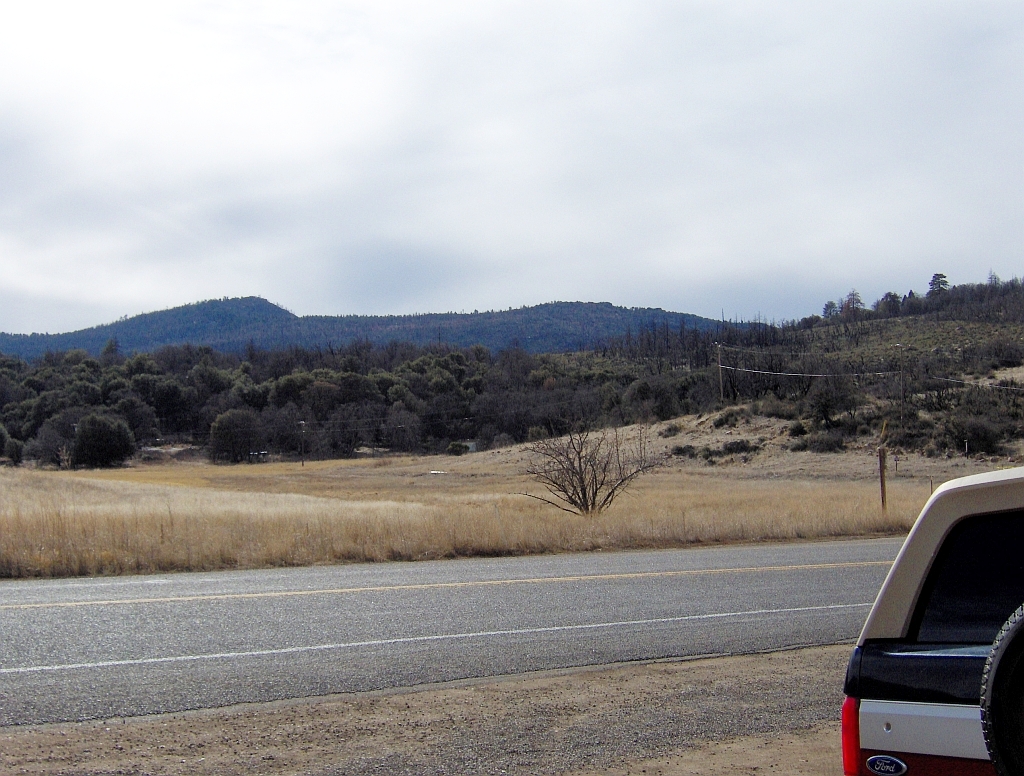
The short version
| Next race | Saturday, October 2, 2027, 6:30 AM per UltraSignup. The official site still shows 2026 (October 3) details |
| Start / finish | Camp Cuyamaca (the "School Camp"), 12561 Hwy 79, Descanso, CA, surrounded by Cuyamaca Rancho State Park |
| Distance | 62.8 miles on the official aid chart: loops of 31.8, 12.8 and 18.2 |
| Climbing | 8,800 ft of gain and loss (official) |
| Elevation | About 3,400 ft at Merrigan to 6,512 ft on Cuyamaca Peak |
| Time limit | 19 hours (1:30 AM Sunday) with cutoffs at seven points |
| Western States | Finish under 17 hours to qualify. UltraSignup lists the 2027 race as a 2028 qualifier |
| Field | 250 runners, first come first served, with an ordered waitlist |
| Entry | UltraSignup. 2027 registration opens Thursday, April 1, 2027 (UltraSignup says 12:00 AM PT; 2026 opened at 6 AM, so confirm). 2026 fee was $255 plus fees |
| Qualifier to enter | A verifiable trail race of 50K or longer in the race year or the year before (2026 rule: 2025 or 2026). A pending qualifier was allowed if you finished it before race day |
| Pacers | One at a time, from dusk or the start of loop 3, whichever comes first |
| Crew | Five places: the camp, Green Valley, Paso Picacho, Sunrise, Pedro Fages. One crew vehicle |
| Drop bags | Start/finish only. You reach it at miles 31.8 and 44.6 |
| Poles | Allowed |
| Tracking | A GeoTracks pod you must carry, plus Ultralive splits |
| 2026 result | 194 finishers from 258 in the results (75%). Median finish 15:52. Only 6 runners broke 12 hours |
| Official pages | cuyamaca100k.com, race info, aid stations and cutoffs, UltraSignup 2027 |
A note on the numbers: the race's own pages give the loops as 31.8 / 12.8 / 18.2 (aid chart), 32.3 / 12.6 / 18.3 (route page) and 31 / 13 / 18 (rules sheet). This guide uses the aid chart, because that's the one the cutoffs are tied to.
What kind of race this is
The Cuyamaca 100K has run since 2012. It belongs to the same San Diego mountain scene as the San Diego 100 and the Noble Canyon 50K (the rules sheet says that defying an aid station captain can get you barred from all three). The venue is the Cuyamaca Outdoor School, the camp where San Diego sixth graders have gone for more than 70 years, and the race asks runners to support it.
The tone is small and local. The 2026 rules sheet tells runners not to bother the camp office because the staff are not part of the race and, in its words, "they do not want to talk to you." It also notes, under important updates, that the race director appreciates gifts of cheese. Finishers get a medal that doubles as a bottle opener, and runners eat free at the finish-line food truck from about 5:00 PM.
Don't mistake friendly for easy. The fastest time ever run here is 8:32. In 2026 the winner ran 9:53 and the median finisher took almost 16 hours.
The course, loop by loop
The race publishes a Strava route, GPX files for each loop and printable maps. Download the GPX to your watch: the rules sheet warns that markings sometimes get vandalized.
Maps and GPX for each loop are on the official route page. Each loop has its own ribbon color: orange for loop 1, blue for loop 2, yellow for loop 3. Where loops overlap (mostly along the East Side Trail), follow your color.
The gain figures below are my rough read of the official GPX. Treat them as approximate.
Loop 1: the 50K with the mountain in it (miles 0 to 31.8)
- Camp to Merrigan (8.4 miles). Net downhill, about 1,100 ft of descent to the lowest point on the course near 3,400 ft. It funnels to singletrack almost at once; one 2018 finisher wrote that the first quarter mile was a walk and recommended lining up closer to the front than feels polite.
- Merrigan to Green Valley (5.8 miles). About 1,150 ft up. A race report describes a long, gentle grade here that's easy to underestimate, where you have to decide whether you're a runner or a hiker today.
- Green Valley to Cuyamaca Peak (9.0 miles). The longest leg and the biggest climb: roughly 2,800 ft, from about 4,000 ft to 6,512. Most of it is gradual. The last half mile is not; reports put it at a 16 to 18 percent grade, hiking only.
- Peak to Paso Picacho (5.0 miles). About 1,750 ft down. Two separate reports call the first couple of miles the most technical ground of the day: boulders, loose rock, a trenched-out trail. The last mile into the campground is groomed gravel.
- Paso Picacho to camp (3.6 miles). About 700 ft down. Easy, which is when one reporter rolled an ankle.
Loop 2: the one nobody trains for (miles 31.8 to 44.6)
Short on paper, sneaky in practice. You leave camp and climb about 800 ft in the first three miles, to around 4,900 ft, on legs that just ran a mountain 50K. More than one report names this climb as the low point of the race. Then it's open grassland and a long descent to East Mesa Trailhead (8.0 miles), and 4.8 rolling miles back to camp with one more bump of about 450 ft.
Loop 3: wind, desert and headlamps (miles 44.6 to 62.8)
North through the park past Lake Cuyamaca and around Stonewall Peak, a steady climb of about 1,000 ft over 6.8 miles to Sunrise. The course briefly leaves the park for Anza-Borrego Desert State Park and follows the Pacific Crest Trail with the desert falling away to the east, reaches Pedro Fages, then turns south through the meadows and drops about 900 ft over the last 6.8 miles.
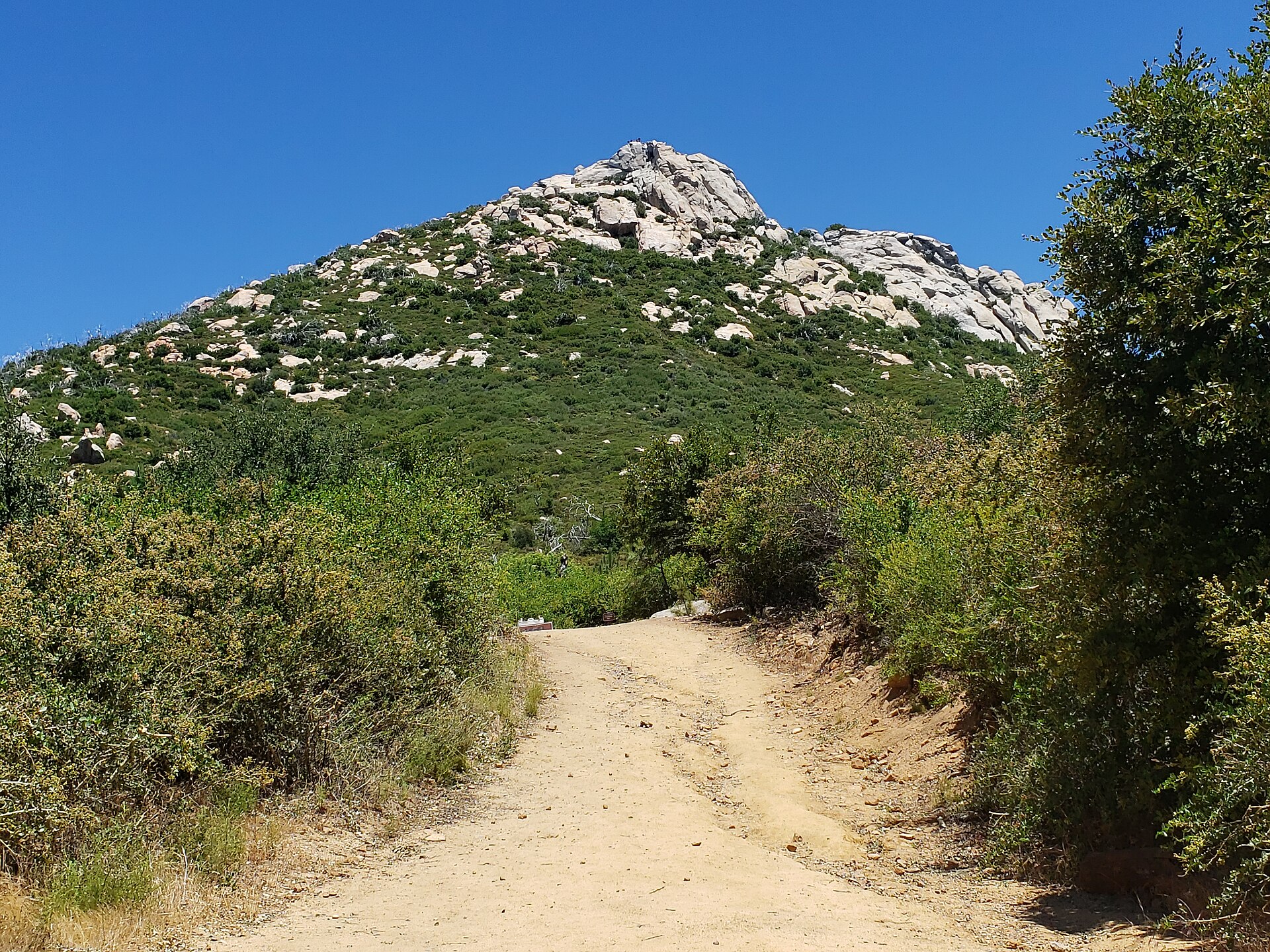
The 2018 reports agree on what loop 3 is about: wind. It was strong enough on the ridge to shove runners toward the edges of a rutted trail, and the turn south at the end puts it in your face. Sunrise to Pedro Fages is otherwise smooth and runnable.
For a feel of the terrain, the race's results page links this runner-made film:
Aid stations and cutoffs
From the official 2026 chart. Clock times assume the 6:30 AM start. Check the current chart before race week.
| Aid station | Mile | To next | Elev (ft) | Crew | Drop bag | Cutoff | Notes |
|---|---|---|---|---|---|---|---|
| Camp Cuyamaca (start) | 0 | 8.4 | 4,080 | Yes | Yes | 6:30 AM start | Check-in 5:00-6:10 AM, briefing 6:15 |
| Merrigan | 8.4 | 5.8 | 3,400 | No (changed in 2026) | No | None listed (closes 9:00 AM) | Course low point. Bathrooms |
| Green Valley | 14.2 | 9.0 | 3,980 | Yes | No | 11:00 AM | Bathrooms. Fill everything: longest leg, biggest climb |
| Cuyamaca Peak | 23.2 | 5.0 | 6,512 | No | No | 2:30 PM | High point. Rocky descent next |
| Paso Picacho | 28.2 | 3.6 | 4,890 | Yes | No | 3:00 PM | Campground picnic area. Bathrooms |
| Camp Cuyamaca (end loop 1) | 31.8 | 8.0 | 4,080 | Yes | Yes | 4:30 PM | Your bag, your crew, your car |
| East Mesa Trailhead | 39.8 | 4.8 | 3,920 | No | No | 7:00 PM | |
| Camp Cuyamaca (end loop 2) | 44.6 | 6.8 | 4,080 | Yes | Yes | 8:00 PM | Pacer pickup. Night gear |
| Sunrise | 51.4 | 4.6 | 5,058 | Yes | No | 10:00 PM | On Sunrise Highway. Hot food at night |
| Pedro Fages | 56.0 | 6.8 | 4,680 | Yes | No | 11:30 PM | Last aid. Soup |
| Finish | 62.8 | — | 4,080 | Yes | Yes | 1:30 AM Sunday | 17:00 (11:30 PM) for a Western States qualifier |
Every station has water, Tailwind, Huma gels, salt, fruit, chips, sweets and ice. The later ones add soup, broth and hot food. Race reports mention bacon and popsicles on the peak and a Paso Picacho specialty: a dill pickle split lengthwise and stuffed with ham, bacon and cheese.
Two cutoffs that are tighter than they look:
- Cuyamaca Peak at 2:30 PM is not a real deadline. Paso Picacho closes at 3:00 PM and it's five rocky downhill miles away. To make Paso Picacho you need to be off the summit by roughly 1:30 PM.
- East Mesa at 7:00 PM, camp at 8:00 PM. That's 4.8 miles in an hour at mile 40, with a climb in it, in the dark.
What the 2026 splits say about pacing
The race posts full splits. I pulled a few groups out of the 2026 file so you can see what a real day looks like. Times are elapsed; add 6:30 AM for clock time.
| Checkpoint | Mile | Finished around 14:30 | Finished 17:30 to 18:30 | Slowest split that still finished | Cutoff (elapsed) |
|---|---|---|---|---|---|
| Green Valley | 14.2 | 2:18-2:52 | 2:40-3:37 | 3:37 | 4:30 |
| Cuyamaca Peak | 23.2 | 4:35-5:11 | 5:32-6:38 | 6:46 | 8:00 |
| Camp, end loop 1 | 31.8 | 6:28-6:56 | 7:49-8:52 | 9:04 | 10:00 |
| Camp, end loop 2 | 44.6 | 9:51-10:13 | 11:58-12:53 | 13:19 | 13:30 |
| Pedro Fages | 56.0 | 12:59-13:17 | 15:37-16:39 | — | 17:00 |
Ranges are from a sample of runners in each group, not the whole field. Three things stand out:
- No 2026 finisher has a loop 1 split later than 3:34 PM, even though the gate doesn't close until 4:30. Arriving in the last hour before a camp cutoff means the later ones catch you.
- Green Valley to the peak took the back of the field close to three hours. Carry water and food for that, not for "nine miles."
- For Western States, leave Pedro Fages with at least 1:45 in hand. The 2026 runners who finished around 17:30 reached Pedro Fages between 15:37 and 15:50.
Crew guide: Highway 79 and Sunrise Highway
Cuyamaca is one of the easier 100Ks to crew. Every crew point is on pavement, on one of two roads, and the camp is in the middle. The hard part is the rules.
The rules that matter:
- One crew vehicle. Extra vehicles at aid stations will be sent away. If family is coming in several cars, the race asks them to meet at the Sweetwater trailhead on Hwy 79 and pile into one.
- Crew only at the five listed stations. Showing up at Merrigan, Cuyamaca Peak or East Mesa can get your runner disqualified. (The 2026 rules sheet still mentions parking at East Mesa in one line, but the aid chart and the crew list both say no crew there. Go with the chart.)
- $10 state park day pass for Green Valley, Paso Picacho, Sweetwater and the fee area at the School Camp. Sweetwater is cash only. Bring exact change and leave the receipt on the driver's side of the dash. Sunrise and Pedro Fages need no permit.
- No parking on the Hwy 79 shoulder except in marked turnouts.
- No dogs at the race, please, and no tents, RVs or trailers at the camp.
Getting there. Camp Cuyamaca is on Hwy 79, roughly 9 to 10 miles north of Interstate 8 (take the Hwy 79 / Japatul Valley Road exit toward Descanso). It's about an hour from San Diego. From the Phoenix area it's I-8 almost the whole way through Yuma and El Centro, about five to six hours; we haven't timed it to the camp gate. Drive distances below are approximate.
| Stop | Mile | How to get there | What to know |
|---|---|---|---|
| Camp Cuyamaca | 0, 31.8, 44.6, 62.8 | 12561 Hwy 79, Descanso | Runner cars get priority on race morning. Overflow is the long turnout on Hwy 79 just south of the entrance, about half a mile from the start. Crew help happens on the paved road in front of the grove |
| Green Valley | 14.2 | 11842 Hwy 79, about 3 miles south of camp | You can't drive to the aid station. Park at the Arroyo Seco picnic area and walk a quarter to half a mile. Aid is allowed only in the falls parking area. The rules sheet contradicts itself on parking in the falls lot, so do what the marshals say |
| Paso Picacho | 28.2 | Hwy 79 about 4 miles north of camp (32.960028, -116.579828) | Campground picnic and parking area. Limited race parking; overflow goes along the loop road north of the picnic area. Runner must check in at the aid tables |
| Sunrise | 51.4 | Hwy 79 north past Lake Cuyamaca to the Sunrise Highway (S-1), then about 3 miles down S-1. Roughly 20 minutes from camp | No permit. Crew area is after the fence and before the road crossing. The San Diego 100's guide lists strong cell signal here |
| Pedro Fages | 56.0 | 15608 Sunrise Hwy, back toward Hwy 79 from Sunrise, a few minutes' drive | No permit. Same rule: after the fence, before the road |
The crew day, in order: start at camp, drive to Green Valley and walk in, drive to Paso Picacho, go back to camp for the end of loop 1. Stay put for loop 2 (East Mesa is closed to crew, so this is your two-to-four-hour window to eat and reset the cooler). After your runner leaves on loop 3, drive to Sunrise, then Pedro Fages, then back to camp for the finish.
Cell signal in the park is patchy. The race uses GeoTracks live tracking and Ultralive splits, and warns that tracking can lag in the remote sections. Agree on a plan that doesn't depend on a text getting through.
The Sunrise Highway after dark has deer and fast drivers. Anyone walking the shoulder at Sunrise or Pedro Fages should wear a light.
For how to run a crew stop in under five minutes, see the crew chief playbook.
Where poles help
Poles are allowed, and this is a one-climb pole course.
- Green Valley to Cuyamaca Peak (miles 14.2 to 23.2) is where they pay: about 2,800 ft, with a steep final half mile.
- The descent to Paso Picacho is rocky enough that a pole is a useful brake for tired quads.
- The first three miles of loop 2, if your legs are gone.
- Loop 3 is gradual and windy. Some runners like poles for balance in the gusts; many leave them.
The plan: drop bags don't travel, so your options are your crew or your vest. With a crew, pick poles up at Green Valley (14.2) and hand them back at Paso Picacho (28.2) or at camp. Without a crew, carry folding poles from the start and leave them in your bag at mile 31.8.
What race reports say that the website doesn't
These come from finisher reports the race links on its own results page (personal blogs from 2018 and earlier). I wasn't able to search Reddit threads for this guide, so nothing here is credited to Reddit.
- Start near the front if you plan to run. The opening singletrack bottlenecks.
- Don't carry only a handheld. One 2018 runner started with a single bottle and had a sore arm by mile 13; he switched to a pack at camp. Another ran with a 55 oz bladder plus a handheld.
- Pale dust reflects your headlamp. A reporter found the trail surface washed out under a head-mounted light and saw better carrying the lamp at waist height, where rocks throw shadows.
- October can go either way. In 2018 it was 48°F at the start with a high around 65 and a cold, windy night. The race stocks ice at every station because early October inland can also be hot. Check the forecast the week of the race and pack for both.
- The pass through camp after loop 1 is a low point for a lot of people. One reporter with a fresh ankle sprain wrote that he thought seriously about stopping there, then finished in 16:09.
- Run aid station to aid station. That's the advice from a first-time 100K finisher in the same year, and the course is built for it: the longest gap after the peak is 8 miles.
The finish line is decided here: your own car, miles 31.8 and 44.6
In the 2026 split file, 64 runners have no finish time. Their last recorded splits:
- 32 at camp after loop 2 (mile 44.6)
- 15 at camp after loop 1 (mile 31.8)
- 5 at East Mesa, 5 at Cuyamaca Peak, 3 at Paso Picacho, 3 at Sunrise, 1 at Green Valley
Sunrise splits are incomplete in that file, so a few of the 32 probably went back out. Even so, about three quarters of the DNFs end at the same parking lot. About ten of those reached the end of loop 2 after the 8:00 PM gate. Most of the rest were inside the cutoff when they stopped, some by hours.
That's what a loop course does. I've written about loops versus point-to-point before: the loop is easier on logistics and harder on your will, because quitting costs nothing. There's no van ride of shame. Your car is 100 feet away.
Get out of camp on loop 3 and you're very likely to finish. After mile 44.6 there are two crewed aid stations 4.6 miles apart with hot soup, a pacer beside you, and a net-downhill final leg. Pedro Fages at 11:30 PM leaves two hours for 6.8 miles.
How not to DNF at Cuyamaca
- Decide before the race that camp is a pit stop. Tell your crew the rule: nobody asks "how do you feel?" and nobody offers the chair. They hand you things and walk you to the trail.
- Pack two labeled kits in your drop bag, "Loop 2" and "Loop 3," so there's nothing to think about. Five minutes each time.
- Put your headlamp in the Loop 2 kit, not the Loop 3 kit. Sunset was 6:28 PM in 2026. Runners who finished in 17 to 19 hours came in off loop 2 between about 6:30 and 7:50 PM. If you're leaving camp for loop 2 after about 2:00 PM, take the light.
- Eat on the climb to the peak. Three hours at 5,000 to 6,500 ft is where stomachs and energy start to slide, and you pay for it on loop 2.
- Walk the loop 2 climb on purpose. Everyone says it feels terrible. It's three miles. It passes.
- Dress for loop 3 before you need to. Wind shell, sleeves and gloves go on at camp or Sunrise, not after you're shivering on the ridge.
- Feet: the peak descent is where blisters start. Fresh socks at mile 31.8 take two minutes.
- First 100K? Bring a pacer for loop 3. The race itself strongly encourages it for first-timers.
Gear for this course
- Folding carbon trekking poles for the 2,800 ft climb to the peak. Folding matters because you'll stash them.
- A hydration vest with a bladder for Green Valley to the peak. Nine miles took back-of-pack finishers nearly three hours in 2026.
- A rechargeable headlamp, 400 lumens or more. Only six runners broke 12 hours in 2026, and sunset comes about 12 hours after the start.
- A waist light or a second small lamp to carry low. Runners report the pale dust is easier to read with shadows.
- A packable wind jacket and light gloves for the PCT section of loop 3.
- Arm sleeves: sun cover on the exposed climb, warmth at night, easy to push down.
- Trail shoes with a rock plate for the descent off the peak.
- Trail gaiters to keep dust and grit out of your socks, and a spare pair of merino trail socks in each loop kit.
- An ice bandana for a warm year. Every aid station has ice.
- Anti-chafe balm in the drop bag. You get two chances to reapply.
- For the crew: a folding camp chair (for them, not the runner) and a hard cooler for the long wait at camp.
I fuel long races on cold whole chocolate milk out of the crew cooler, which is its own post. A course that passes your cooler twice is a good one for real food.
The van idea: a base camp you pass twice
The race allows one crew vehicle and one drop-bag location, and both are at the camp. So that one vehicle does a lot of work: it's the kitchen, the gear closet, the place a pacer waits, and the warm seat for the crew during the night on Sunrise Highway.
That's the job AZ Ultra Vans is meant for: a fridge with cold drinks and real food, shade for the afternoon stops at Green Valley and Paso Picacho, a bed for whoever drove from Arizona, and compression boots at 1:00 AM. Two cautions specific to this race. The camp doesn't allow RVs or trailers, and parking there is tight, so ask the race director before planning to sleep in a van at the start. The simple answer is a site at the Paso Picacho or Green Valley campgrounds, both inside the park and both on the course.
The van is a reservation-interest waitlist for now, and availability isn't promised. Add your name on the card above or at van.azsvinternal.com.
Cuyamaca 100K FAQ
When is the Cuyamaca 100K in 2027? UltraSignup lists Saturday, October 2, 2027, with a 6:30 AM start. The 2026 race was October 3. The official site hadn't been updated for 2027 when this was written.
When does registration open? UltraSignup shows April 1, 2027. The field is 250, first come first served, with a waitlist. In 2026 the fee was $255 plus UltraSignup fees. Check the current price.
Is the Cuyamaca 100K a Western States qualifier? Yes, if you finish under 17 hours. The overall limit is 19 hours, so 17:00 to 19:00 counts as a finish but not a qualifier. In 2026, 158 of 194 finishers broke 17. For other options see our qualifier guide for the Southwest.
Do I need a qualifier to enter? Yes: a verifiable trail race of 50K or longer. For 2026 it had to be run in 2025 or 2026. Confirm the window for 2027.
How hard is it compared with other 100Ks? It has 8,800 ft of climbing with one long climb to 6,512 ft, and a 19-hour limit. The median 2026 finisher took 15:52. If you're choosing between this and a desert 100K, compare it with Black Canyon, which is net downhill and has much less climbing.
Where can my crew meet me? Camp Cuyamaca (miles 31.8 and 44.6), Green Valley (14.2), Paso Picacho (28.2), Sunrise (51.4) and Pedro Fages (56.0). Nowhere else. One vehicle.
Can I have a pacer? One at a time, from dusk or the start of loop 3 (mile 44.6), whichever is first. Pacers can't carry your gear.
Where do drop bags go? Only the start/finish. They aren't taken anywhere else on the course, and unclaimed bags are donated after two weeks.
Can I camp at the start? Car camping at the School Camp was allowed in 2026 (arrive Friday between 4:00 and 7:00 PM), with no tents, RVs or trailers, and there are bunks in the camp dorms. State park campgrounds at Paso Picacho and Green Valley are the other option, with rooms in Julian, Alpine and at Lake Cuyamaca.
Who wrote this
Johnathon Lawson is a Gilbert, Arizona ultrarunner, track and cross-country coach and father of three, and a three-time 100-mile finisher: Zion 100 (2025), Mogollon Monster 100 (2025) and San Diego 100 (2026, 28:37:12), which crosses the same Cuyamaca mountains as this race. He hasn't raced the Cuyamaca 100K; this guide is researched from the official race materials, the 2026 split results and runner reports. Follow his training on Strava, his results on UltraSignup, and AZ Ultra Adventure on YouTube and Instagram.
Sources: Cuyamaca 100K official site, its race information, route, aid stations and cutoffs and results pages; the 2026 "Detailed Information" rules sheet (updated 4/6/26) and the 2026 results with splits, both on the official site; UltraSignup 2027 listing; 2018 finisher reports linked from the race's results page. Dates, fees and cutoffs change. Check the current official pages before race week.
Some links are Amazon affiliate links. As an Amazon Associate we earn from qualifying purchases, at no extra cost to you.