 AZ Ultra Adventure
On this page
- The short version
- The time-zone trap
- How the four races fit together
- The loop, piece by piece
- Every aid station: the 50-mile lap
- Every aid station: the 50K lap
- Budgeting 48 hours
- Crew guide
- Where poles help
- What runners say
- The finish line is decided here
- The night plan
- Gear for this course
- The van idea
- If you like this one
- Grandmaster Ultras FAQ
Some 100-mile races make you earn your way in with a qualifier, a lottery ticket, or both. Grandmaster Ultras asks for one thing: a birth date at least 50 years before race day.
That is the whole idea. Every person on the start line in the far northwest corner of Arizona is 50 or older. UltraSignup's top-performances list for the 100 mile includes Pam Reed (25:02:54 in 2021, at age 59), and a 2020 runner's review describes meeting Gordy Ainsleigh, the first person to run the Western States course on foot, out there in the 100. The cutoffs are built for steady forward motion instead of speed, and the race hands out awards under the name Old is Cool. A 100-mile runner gets 48 hours. So does a 100K runner. The 50 mile and 50K each get 24.
Don't read that as "easy." The course is rocky ATV trail in open Mojave desert, nights in February can drop to near freezing, and 48 hours means two full nights outside if you use all of it. One RaceRaves reviewer titled their 50-mile review "Tougher than I thought."
I haven't run Grandmaster Ultras, and I can't. UltraSignup has me at 33, which leaves me about seventeen years short of the entry requirement. This is a researcher's and crew guide built from the official race site, the 2027 RunSignup pages, the old UltraSignup listing and runner reviews. Where the official pages disagree with each other, I say so.
The short version
- Dates: Friday to Sunday, February 26-28, 2027. UltraSignup shows results for every year from 2019 through 2026.
- Who can enter: runners 50 or older on race day (RunSignup lists ages 50 to 99). No qualifier, no lottery.
- Distances: 100 mile, 100K, 50 mile, 50K.
- Starts: 100 mile and 100K on Friday, February 26. 50 mile and 50K on Saturday, February 27. RunSignup lists every start at 8:00 AM Arizona time (7:00 AM in Mesquite), and its event page says 100-mile runners can request a 6:00 AM Friday early start. The race's own home page shows a different hour for Friday. See the time-zone section below.
- Time limits: 48 hours for the 100 mile and 100K. 24 hours for the 50 mile and 50K.
- Where: start/finish is on open desert just off old Highway 91 between Mesquite, Nevada and Littlefield, Arizona, at 36.82721, -113.99767. The race says a regular car can reach it. The race describes Mesquite as about 8 miles away and points runners there for hotels.
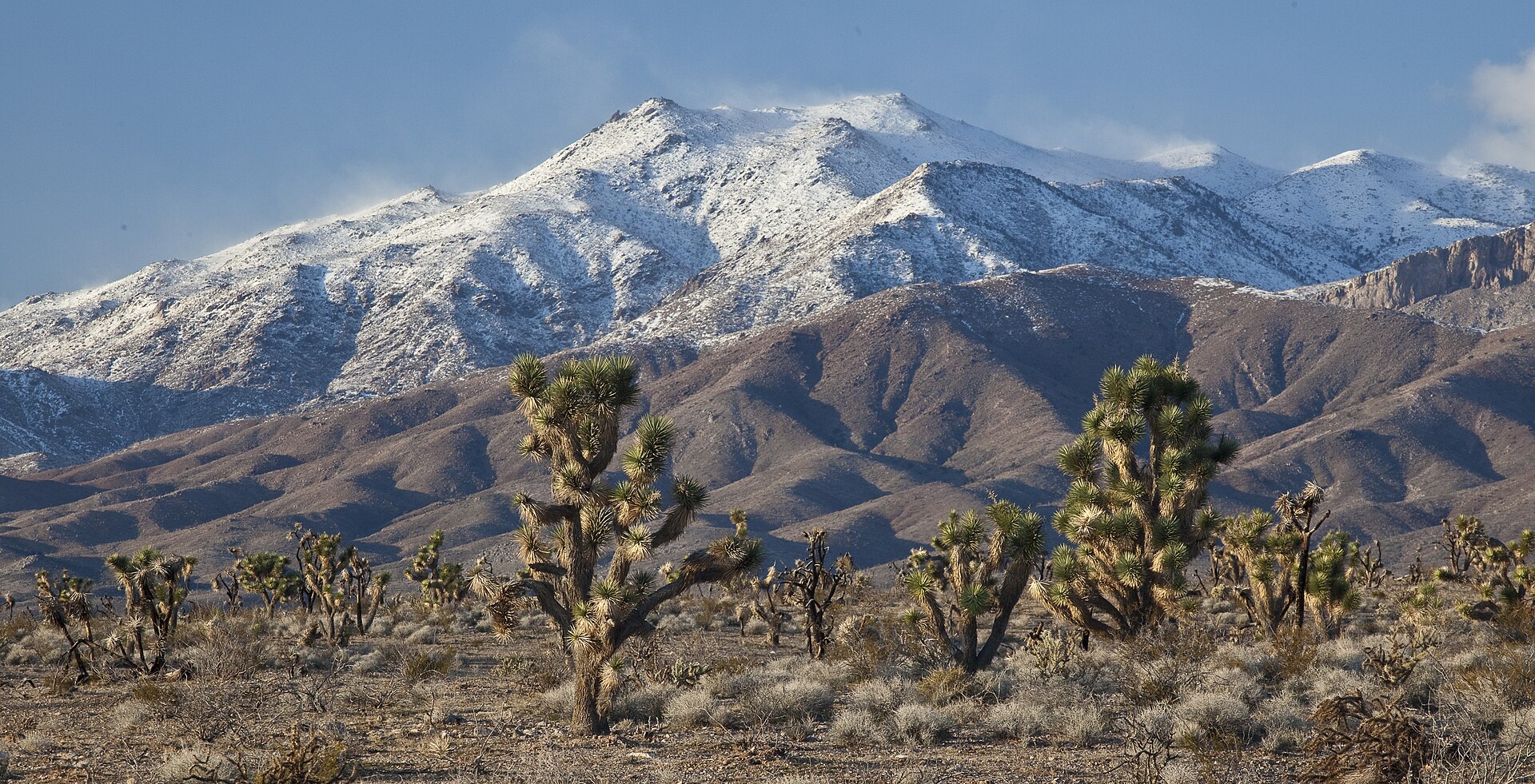
- Course: a clockwise lollipop on the "Thelma & Louise Loop," mostly rocky ATV trail with rolling hills. Low point about 1,722 ft, high point about 2,605 ft.
- Climbing: about 1,580 ft per 50K lap and 2,450 ft per 50-mile lap. That makes roughly 3,160 ft for the 100K and 4,900 ft for the 100 mile.
- Entry (2027, RunSignup): 100 mile $275, 100K $245, 50 mile $180, 50K $160, plus a RunSignup processing fee of roughly $11 to $16. After November 30, 2026 the prices go to $295, $265, $190 and $170. The 50 mile showed 8 spots left when we checked on November 15.
- Refunds and deferrals: the 2027 policy on RunSignup is a sliding refund of the base fee, a $50 deferral to 2028, and bib transfers. The numbers are in the FAQ below.
- Pacers: 100 mile and 100K after the first lap or once it's dark. 50 mile and 50K if you'll finish in the dark. Runners 70 and older may have a pacer from the start, in any distance.
- Awards: buckles for every finisher, plus the Old is Cool awards.
- How fast is fast here: the quickest 100-mile times on UltraSignup's list are 17:42:34 (Tor Gudmundsen, 2019) and 23:43:31 (Marie Pontius, 2023), on earlier versions of the course. Even the fastest 100 here finished after midnight.
- Links: official site, 2027 registration on RunSignup, course preview and maps, aid station pages for the 50 mile / 100 mile and the 50K / 100K, and the 2026 UltraSignup listing with all-time top performances. Questions go to the race directors at [email protected].
The time-zone trap
The start line is in Arizona, which stays on Mountain Standard Time all year. The hotels are in Mesquite, Nevada, which is on Pacific time. In February those are one hour apart. When it is 7:00 AM on your hotel clock in Mesquite, it is 8:00 AM at the start.
RunSignup handles this by listing both: 8:00 AM MST in the description, 7:00 AM PST in the event time field. The race's home page, when we read it on November 15, showed 7:00 AM MST for the Friday races and 8:00 AM MST for Saturday. Those can't both be right for Friday. RunSignup's event page adds that 100-mile runners can request an early start at 6:00 AM Friday, without saying which clock that is on.
What to do about it:
- Trust the race's pre-race email over any web page, including this one. If it hasn't settled the Friday hour by race week, email the race directors.
- Ask one question when you pick up your bib: "What time does my race start on a Mesquite clock?"
- Set a manual alarm. A phone near a state line can pick up a tower on either side and show either time.
How the four races fit together
There is one piece of desert and four ways to run it. Every distance uses the same out-and-back "stem" from the start to Cross Roads and the same clockwise Thelma & Louise Loop.
| Distance | What you run | Laps | Gain (approx.) | Limit | Average pace to finish |
|---|---|---|---|---|---|
| 50K | Stem out, loop once, stem back | 1 | 1,580 ft | 24 h | 46:27 per mile |
| 50 mile | Stem out, loop twice, stem back | 1 | 2,450 ft | 24 h | 28:48 per mile |
| 100K | The 50K course twice | 2 | 3,160 ft | 48 h | 46:27 per mile |
| 100 mile | The 50-mile course twice | 2 | 4,900 ft | 48 h | 28:48 per mile |
Those pace numbers include every minute you spend sitting, eating and sleeping. The 100 mile and the 50 mile ask for exactly the same average: a hair under 29 minutes a mile, all in.
The lap rule for two-lap races. The old UltraSignup listing says 100-mile and 100K runners must start their second lap by 8:00 AM on the second morning, which is 24 hours in (the listing still carries a stale date from an earlier year). The 2027 RunSignup page only states the 48-hour total. Check the race's current runner guide, but plan as if the 24-hour halfway rule is still there.
The loop, piece by piece
This is the layout published for 2027. The course has been redrawn more than once since 2019, so a report from an older year may describe different ground. The race's segment-by-segment preview videos and Garmin courses are the best way to see it before you go.
The Garmin Connect courses are here: 50K course and 50 mile course. Load the right one on your watch, and if a link won't open, ask the race directors for the file. A RaceRaves reviewer said the 2020 course was flagged in orange every few hundred yards, but cell coverage is spotty, so a course on your wrist is cheap insurance at 3 AM.
Start to Oasis (mile 0 to 1.9). The start runs downhill to a short tunnel (mile 0.6 on the current pages, 0.8 on the old listing), then turns right up a short steep hill around mile 1. RunSignup lists an Oasis aid station at mile 1.9. The race site's own station list starts at Cross Roads and doesn't say what Oasis stocks, so leave the start carrying the food you need to reach Junction at mile 9.8.
Oasis to Cross Roads (1.9 to 6.2). About 4.3 miles of rocky trail. This is the stem of the lollipop; you'll come back down it at the end on tired feet.
Cross Roads to Junction (6.2 to 9.8). About 3.6 miles of rocky dirt road heading north. Cross Roads is water only. Junction is the first full-service stop, with drop bags, HAM radio operators, and hot food and drinks at night.
Junction to Cattle Gate (9.8 to 17.2). About 2 miles toward the state line, a right turn along a power line for 1.9 miles, then a water-only stop at about mile 14 (RunSignup says 13.8). From there an ATV trail runs 3.2 miles to Cattle Gate.
Cattle Gate to Overlook (17.2 to 23.7). The longest gap on the course (6.5 miles the first time around, 6.7 the second by the race's own mileages), and the scenic one. The Thelma & Louise viewpoint comes about 1.8 miles in, at mile 19, with views over Beaver Dam Wash. The stretch ends with a mile and a half of uphill dirt road to the Overlook aid station.
Overlook to Cross Roads (23.7 to 24.7). One mile. 50K and 100K runners turn for home here. 50-mile and 100-mile runners go around the loop again.
Cross Roads to the finish (the last 6.3 miles). About 4 miles of rocky ATV trail back to Oasis, which is unmanned on the return, then down the steep hill, back through the tunnel and a last third of a mile to the line. The race starts downhill to that tunnel, so expect the last stretch to climb. Save a little for it.
A note on Three Corners. Older versions of the course (the race's 2021 course pages and the old UltraSignup description) sent runners to the monument where Arizona, Nevada and Utah meet. The current Thelma & Louise loop description doesn't mention it. If the tri-state marker is on your list, ask the race directors whether the 2027 course still visits it.
Every aid station: the 50-mile lap
This is the lap 50-mile runners do once and 100-mile runners do twice. Miles, crew access and drop bags come from the race's aid station pages.
Two columns you might expect are missing on purpose. Cutoffs: the race posts none for individual stations; only the overall limits apply, plus the lap rule above. Pacer pickup: the race doesn't name exchange points. The rule for the 100 mile and 100K is lap two or dark, so the natural pickup is the start/finish at the lap. If you want a pacer to join at dusk instead, the crew-accessible stations are the candidates. Confirm that with the race directors.
| Stop | Lap 1 mile | Lap 2 mile (100) | To next | Crew | Drop bag | What's there |
|---|---|---|---|---|---|---|
| Start/Finish | 0 | 50 | 1.9 | Yes | Yes | Your car, your crew, your bag |
| Oasis | 1.9 | 51.9 | 4.3 | Not listed | Not listed | Aid station per RunSignup; not on the race site's station list |
| Cross Roads (1st pass) | 6.2 | 56.2 | 3.6 | Yes | No | Water only |
| Junction | 9.8 | 59.8 | ~4.2 | Yes (confirm route) | Yes | Electrolyte drink, water, snacks, sandwiches; hot food and drinks at night; HAM radio |
| Power-line water stop | ~14 | ~64 | ~3.2 | Not listed | No | Water only |
| Cattle Gate | 17.2 | 67.2 | 6.5 | Yes (confirm route) | Yes | Electrolyte drink, water, snacks, sandwiches. Thelma & Louise viewpoint comes next |
| Overlook | 23.7 | 73.7 | 1.0 | Yes (confirm route) | Yes | Aid station at the top of the dirt-road climb |
| Cross Roads (2nd pass) | 24.7 | 74.7 | 3.6 | Yes | No | Water only |
| Junction | 28.3 | 78.3 | ~4.4 | Yes (confirm route) | Yes | Same as above |
| Power-line water stop | 32.7 | 82.7 | ~3.3 | Not listed | No | Water only |
| Cattle Gate | 36 | 86 | 6.7 | Yes (confirm route) | Yes | Same as above |
| Overlook | 42.7 | 92.7 | 1.0 | Yes (confirm route) | Yes | Last full stop of the lap |
| Cross Roads (3rd pass) | 43.7 | 93.7 | ~4 | Yes | No | Water only |
| Oasis (return) | ~48 | ~98 | ~2 | No | No | Unmanned on the way back |
| Finish | 50 | 100 | — | Yes | Yes | Buckle |
Every aid station: the 50K lap
Run once for the 50K, twice for the 100K.
| Stop | Lap 1 mile | Lap 2 mile (100K) | To next | Crew | Drop bag | What's there |
|---|---|---|---|---|---|---|
| Start/Finish | 0 | 31 | 1.9 | Yes | Yes | Car, crew, bag |
| Oasis | 1.9 | 32.9 | 4.3 | Not listed | Not listed | Aid station per RunSignup; not on the race site's station list |
| Cross Roads | 6.2 | 37.2 | 3.6 | Yes | No | Water only |
| Junction | 9.8 | 40.8 | ~4.2 | Yes (confirm route) | Yes | Full aid, hot food at night, HAM radio |
| Power-line water stop | ~14 | ~45 | ~3.2 | Not listed | No | Water only |
| Cattle Gate | 17.2 | 48.2 | 6.5 | Yes (confirm route) | Yes | Full aid |
| Overlook | 23.7 | 54.7 | 1.0 | Yes (confirm route) | Yes | Aid station |
| Cross Roads | 24.7 | 55.7 | ~4 | Yes | No | Water only |
| Oasis (return) | ~29 | ~60 | ~2 | No | No | Unmanned |
| Finish | 31 | 62 | — | Yes | Yes | Buckle |
Three things the tables tell you:
- Water is frequent, calories are not. There's something to drink every 1 to 6.7 miles, but Cross Roads and the power-line stop are water only. The race describes food at Junction and Cattle Gate, and lists Overlook as an aid station with drop bags but no menu. Carry your own calories between them.
- Put your warm layers at Junction and Overlook. Those two drop bags bracket the loop, 14 miles apart. At a 2.5 mph walk that is five and a half hours.
- Overlook to Cross Roads is one mile. Don't linger at both. Do your sitting at Overlook, where your drop bag is, and walk straight through Cross Roads.
Budgeting 48 hours
Nobody publishes this, so here is the arithmetic. It's an illustration, not an official pace chart.
| If you move at | 100 miles of moving takes | Left over for stops and sleep |
|---|---|---|
| 3.0 mph (20:00 per mile) | 33 h 20 min | 14 h 40 min |
| 2.75 mph (21:49 per mile) | 36 h 22 min | 11 h 38 min |
| 2.5 mph (24:00 per mile) | 40 h | 8 h |
| 2.25 mph (26:40 per mile) | 44 h 27 min | 3 h 33 min |
A brisk, purposeful walk finishes this race with hours to spare. A slow shuffle with long stops does not. At walking pace, long stops are what put a 48-hour finish at risk.
A workable shape for a first-timer: lap one in 18 to 20 hours, done before Saturday's sunrise and well inside the 24-hour lap rule. Eat, change everything, sleep 90 minutes to 3 hours at the start/finish while it's dark and cold anyway, and leave for lap two with 24 hours or more still on the clock.
For the 50 mile, the same math applies in miniature: a steady 2.5 mph walk is 20 hours. A RaceRaves reviewer who called the hills manageable still needed more than 20 hours for the 50.
Crew guide
This is a friendly race to crew for one reason: every lap ends at your car. A 100-mile runner comes through the start/finish at mile 50, a 100K runner at mile 31. If your crew does nothing else, they can run a full pit stop there.
Getting to the start/finish. The race gives coordinates instead of a street address: 36.82721, -113.99767, just off old Highway 91, reachable in a regular car. Put the coordinates in your map app the night before while you still have a signal. Coming from the Arizona side, I-15 Exit 8 (Littlefield / Beaver Dam) puts you onto Highway 91. We haven't driven it, so follow the race's own directions.
Cross Roads (36.902, -114.0095; course miles 6.2, 24.7 and 43.7 on the 50-mile lap). This is the high-value crew point, because 50-mile and 100-mile runners pass it three times per lap. The race's aid station page says crews can drive there from the truck stop and links a Google Maps pin, which opens on the TA Express truck stop near I-15 at Littlefield. That is about 4 miles east of Cross Roads in a straight line. The page doesn't describe the road in between, so ask before you commit a low car to it. It's a water-only stop with no drop bags, which is exactly why a crew is worth having here: you are the food.
Junction, Cattle Gate and Overlook. The race's aid station page lists these as crew-accessible and gives coordinates (Junction 36.9535, -114.00757; Cattle Gate 36.93249, -114.00167; Overlook 36.8996, -113.99215), but it doesn't publish driving directions or say what kind of vehicle you need. The course itself is rocky dirt road and ATV trail. Ask the race directors which stations a passenger car can reach, and don't take a low rental car down an ATV track on a guess.
Oasis and the power-line water stop. No crew access is listed. Oasis is unmanned on the return leg.
Getting there from farther away (approximate, we haven't timed these):
- Las Vegas to Mesquite: about 80 miles up I-15, a bit over an hour. Harry Reid International is the big airport.
- St. George, Utah to Littlefield: about 30 miles down I-15 through the Virgin River Gorge. St. George has a small regional airport.
- Phoenix: roughly six hours, usually through Las Vegas on US 93.
Where to sleep. Mesquite has the hotels, groceries and gas. The clocks there are an hour behind the race.
Out on the course: ATVs and side-by-sides share these trails. A 2020 reviewer said most drivers slowed down and that race staff asked them to. Cell coverage is spotty. The race puts HAM radio operators at Junction, and that same reviewer said bib numbers were called in to headquarters from every aid station.
What a crew is actually for at this race. Warmth, food between the water-only stops, and the clock. Hand your runner a hot drink and a dry layer, then say the number out loud: "You have 31 hours for 50 miles. You are fine. Stand up."
Where poles help
Nothing in the race materials restricts poles. One RaceRaves reviewer said nearly every runner brought them in 2020, and another recommended both poles and gaiters.
With 2,450 feet of climbing in 50 miles, this isn't a course that needs poles for the hills. They earn their place for other reasons:
- Rocky footing at walking pace. Loose stones on ATV trail are easier with two extra points of contact, especially at night.
- The short steep hill at mile 1 (you come back down it near the end) and the mile-and-a-half dirt-road climb to Overlook at the end of each loop.
- The four rocky miles from Cross Roads back to Oasis, when your quads are finished.
- The second night. After 30-plus hours awake, poles are balance.
The pole plan: if you walk with poles in training, carry them from the start. If you only want them late, leave them in your start/finish bag and pick them up at the lap, or stash them in the Junction drop bag (mile 9.8) for the loop. Don't put them at Cross Roads; there are no drop bags there.
What runners say
Grandmaster Ultras is a small race with a thin paper trail. We haven't worked through Reddit or Facebook-group threads for it, so this section leans on three runner reviews at RaceRaves (all 50-mile runners, from the 2020 and 2021 races), one reviewer's longer 2020 race report, and the race's own preview videos. The race keeps a list of runners' blogs too.
One caution. Those races started behind Beaver Dam Station, on an earlier layout than the Thelma & Louise loop. The ground, the weather and the volunteers carry over. Station-by-station details may not.
For race-day pictures, see the official race photos and gallery pages.
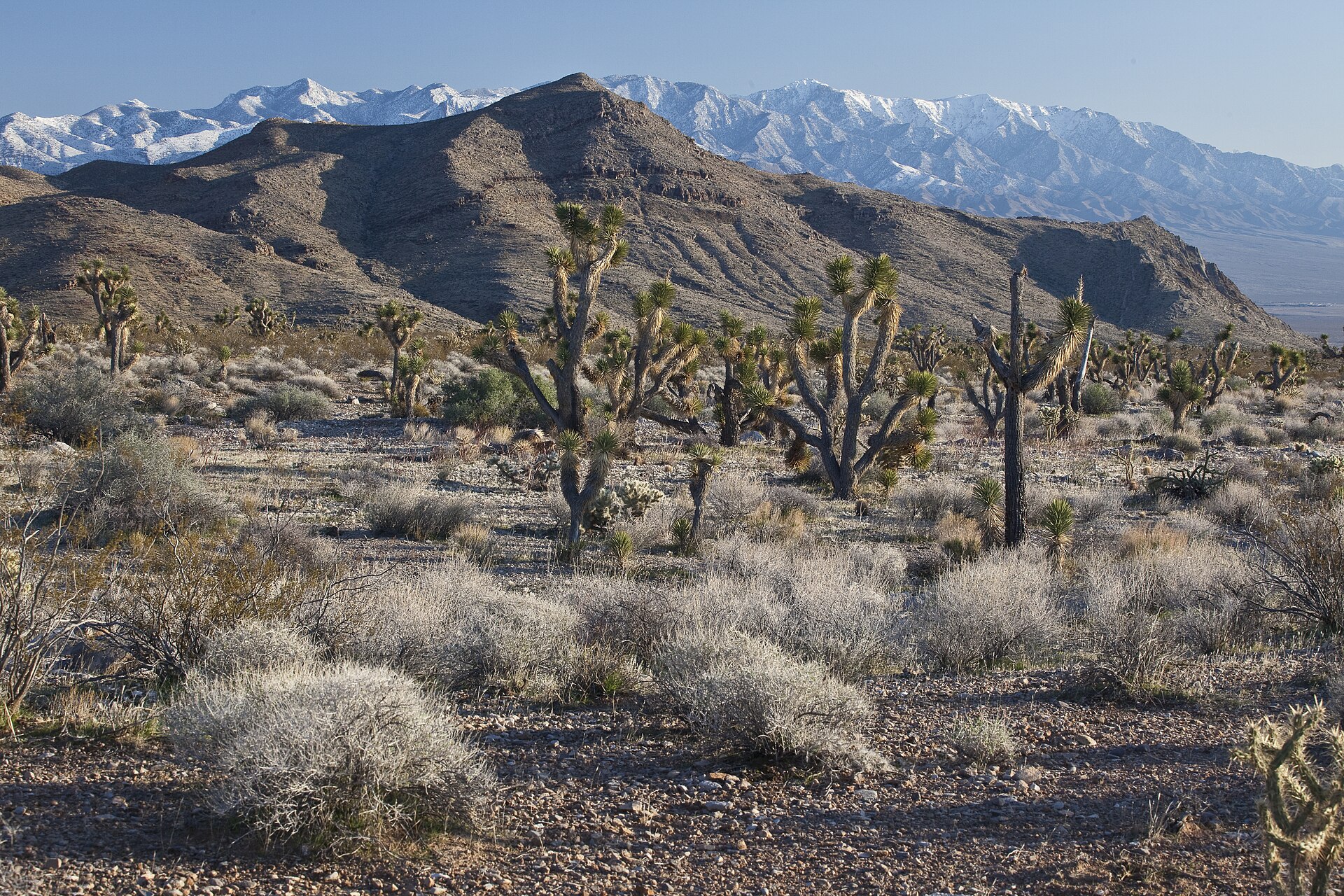
- It is harder than the elevation profile. The three reviewers rate difficulty 3 to 4 out of 5. The reasons are rocks, sand in places, and time on feet, not climbing.
- The stones are the complaint. One reviewer said the stones spread along many of the trails hurt to step on and recommended watching the ground ahead the whole way. He also nearly stepped in an animal burrow, so watch for holes.
- Days around 65°F, nights near freezing. That's what the 2020 reviewer recorded on February 8; his report puts the start-line temperature at 35°F. The other detailed review makes the same point: pleasant and sunny by day, cold after dark.
- The low patch came at miles 30 to 35. In the 2020 report it was afternoon warmth, monotony and the stones together. He ran well again after mile 40.
- Drink more than you think. The air is dry and cool, so you don't feel yourself sweating. That reviewer traced a mid-race stomach ache to under-drinking and fixed it by drinking more.
- Bring your own electrolytes if you're picky. In 2020 the on-course drink was a Hammer product and it didn't suit him. Hammer Nutrition is on the 2027 sponsor list on RunSignup, so train with it or pack your own.
- The aid stations are run by ultrarunners. Reviewers describe experienced, patient volunteers and real food in past years: pancakes, burgers, burritos. One 2020 reviewer noted that not every station had a restroom.
- In 2020 you could often see the next station from half a mile away. At night, a light in open desert looks closer than it is.
- Whether you need a light at the start depends on which start you get. At 8:00 AM Arizona time the sun is up. A 7:00 AM Arizona start is right around sunrise, and a 6:00 AM early start is in the dark. Everyone needs a light by evening.
The finish line is decided here
There's no public split data that shows where people drop at this race, so this is reasoning from the course layout, not statistics.
The start/finish between laps. For the 100 mile that's mile 50; for the 100K, mile 31. A first-timer on the plan above arrives between midnight and dawn. It can be close to freezing. Your car is right there with a heater in it, and the hotel is 8 miles down the road. Every part of that scene argues for stopping, and you have so much time left that "I'll rest and see" feels reasonable. That is the most dangerous spot on the course.
The second sunset. If you're using most of the 48 hours, Saturday evening is the other low. You've been up for 34 hours, the temperature drops fast when the sun goes, and you're somewhere on the loop for the fourth time.
The point after which you finish: your last pass through Cross Roads. Mile 43.7 for the 50, 93.7 for the 100, 24.7 for the 50K, 55.7 for the 100K. From there it's 6.3 miles past an unmanned Oasis to the finish, with a short climb likely at the very end. There is nowhere left to sit. Get to Overlook the last time, eat, walk the mile to Cross Roads, and keep walking.
How not to DNF at Grandmaster Ultras
- Decide your between-laps plan before the race, and write it down. "Eat, change socks and shirt, sleep 90 minutes in the car with an alarm and a crew member on watch, leave by 4:30 AM." A plan made at 2 PM on Thursday beats a decision made at 3 AM on Saturday.
- Never sleep without an alarm and a second alarm. A 48-hour cutoff makes a three-hour nap possible. It also makes a seven-hour accident possible.
- Dress for the walk, not the run. At 2.5 mph you make very little heat. Put the puffy on before you get cold, not after.
- Eat real food at Junction and Cattle Gate on every pass, and from your own drop bag at Overlook if the table is thin. The water-only stops between them are not meals.
- Drink on a schedule. Cool, dry air hides dehydration, and it's the one mistake a reviewer here documented.
- Keep grit out of your shoes. Rocks and sand over 30-plus hours will find any weakness. Wear gaiters and put spare socks in every drop bag.
- Chair rule: five minutes, timer running, at stations with food. Zero minutes at water stops. The longest gap on the course is 6.7 miles, so the next station is never far.
- Use the pacer rule. If you're 70 or older, you can have company from the first step. Everyone in the 100 mile and 100K can pick one up for lap two or at dark.
The night plan
Late February this far north gives you roughly eleven hours of daylight and thirteen of dark. By our estimate the sun comes up a little after 7:00 AM Arizona time and sets around 6:25 PM; treat those as approximate.
A 100-mile runner who starts Friday morning and finishes Sunday morning sees two complete nights. Plan lights for 25-plus hours of burn time across the race: a main headlamp, a backup, and spare batteries or a power bank in the Junction and start/finish bags. A waist or handheld light helps on rocky ATV trail because it throws shadows behind the stones a headlamp flattens. Junction is the station with hot food and drinks at night.
Gear for this course
- Folding trekking poles for rocky footing and second-night balance.
- A rechargeable headlamp plus a second one as backup, because the 100 mile can mean two full nights.
- A packable insulated jacket for near-freezing nights at walking pace. This is the single most important item on the list.
- Running gloves and a beanie in the Junction and Overlook bags.
- Trail gaiters to keep sand and grit out of your shoes.
- Cushioned trail shoes with a rock plate. The stones are the number-one complaint.
- Merino trail socks, a fresh pair in every drop bag.
- A hydration vest with soft flasks so you can carry your own calories through the water-only stops.
- Electrolyte drink mix you've already tested, in case the on-course drink doesn't agree with you.
- Sun hoody and a hat. A 2020 runner reported sun all weekend, and there's no shade out there. The race put a bandana in the swag bag that year for the dust.
- For the crew: a folding camp chair, a thermos of something hot and a heavy blanket for the long night at the start/finish.
The van idea
The whole race hinges on what happens at the start/finish between laps: a cold, dark patch of desert 8 miles from the nearest hotel, where a runner needs hot food, dry clothes and maybe two hours of real sleep, then needs to be sent back out.
That's close to the ideal use for AZ Ultra Vans: a crew van parked at the lap point with a bed that isn't a reclined car seat, a fridge, a heater, a place to change out of the wind, and compression boots for the drive home. It's a reservation-interest waitlist for now while we see which races people want it for, and availability isn't guaranteed. Add your name on the card above or at van.azsvinternal.com.
If you like this one
- Across the Years in Peoria is the other Arizona race where the clock is generous and walkers thrive.
- Coldwater Rumble 100 is a January desert 100 on loops at Estrella Mountain Regional Park in Goodyear.
- Zion 100 is roughly an hour and a half away, past St. George. I finished it in April 2025.
- Which Arizona 100-miler should be your first? and the 2027 Arizona ultra calendar.
Grandmaster Ultras FAQ
When is Grandmaster Ultras 2027? February 26-28, 2027. The 100 mile and 100K start Friday, February 26. The 50 mile and 50K start Saturday, February 27.
How old do you have to be? 50 or older on race day. There is no qualifying race and no lottery.
What is the cutoff for the 100 mile? 48 hours, which works out to 28:48 per mile including stops. The 100K also gets 48 hours. The 50 mile and 50K get 24 hours. The old UltraSignup listing also required two-lap runners to start lap two within 24 hours; confirm that in the current runner guide.
Is the race in Arizona or Nevada? The start/finish and every aid station the race lists are in Arizona, on the Arizona Strip near Littlefield. Registration and lodging are listed under Mesquite, Nevada, about 8 miles away. The two are one hour apart on the clock in February.
What time does it start? RunSignup lists 8:00 AM Arizona time, which is 7:00 AM in Mesquite, with a 6:00 AM Friday early start available to 100-mile runners on request. The race's home page showed 7:00 AM Arizona time for Friday when we checked, so go by the pre-race email.
Can I have a pacer? Yes in the 100 mile and 100K after the first lap or once it's dark, and in the 50 mile and 50K if you'll finish in the dark. Runners 70 and older can have a pacer from the start.
Where can I leave drop bags? Junction, Cattle Gate, Overlook and the start/finish. Not at Cross Roads, the power-line water stop, or (as far as the race pages say) Oasis.
Is there a refund if I can't run? For 2027, yes, on a sliding scale of the base fee: 100% more than 180 days before the race, 75% at 121-180 days, 50% at 91-120, 25% at 61-90, 15% at 31-60 and nothing inside 30 days. In mid-November 2026 that puts you in the 50% window, and it drops to 25% in late November. Deferring to 2028 costs $50 and closes January 31, 2027. Bib transfers are allowed up to about a week before the race. Older years were rollover-only with no refunds, so don't go by an old listing. The RunSignup refund policy page is the one that counts.
Who wrote this
Johnathon Lawson is a Gilbert, Arizona ultrarunner, track and cross-country coach and father of three, and a three-time 100-mile finisher: Zion 100 (2025), Mogollon Monster 100 (2025) and San Diego 100 (2026). He hasn't run Grandmaster Ultras and won't be old enough to for a long while; this guide is researched from the official race materials and runner reviews. Follow his training on Strava, his results on UltraSignup, and AZ Ultra Adventure on YouTube and Instagram.
Sources, all read on November 15, 2026: the Grandmaster Ultras official site, its course preview and maps and aid station pages; the 2027 RunSignup registration page, its event details and refund policy; the 2026 UltraSignup listing; runner reviews on RaceRaves and one 2020 race report; the race's own YouTube course previews. Sunrise, sunset and drive times are our estimates. The mile-by-mile course page RunSignup links to was not loading, and the pages we read gave no race director names or packet pickup times. Check the race's current runner guide and pre-race email before race week.
Some links are Amazon affiliate links. As an Amazon Associate we earn from qualifying purchases, at no extra cost to you.