 AZ Ultra Adventure
On this page
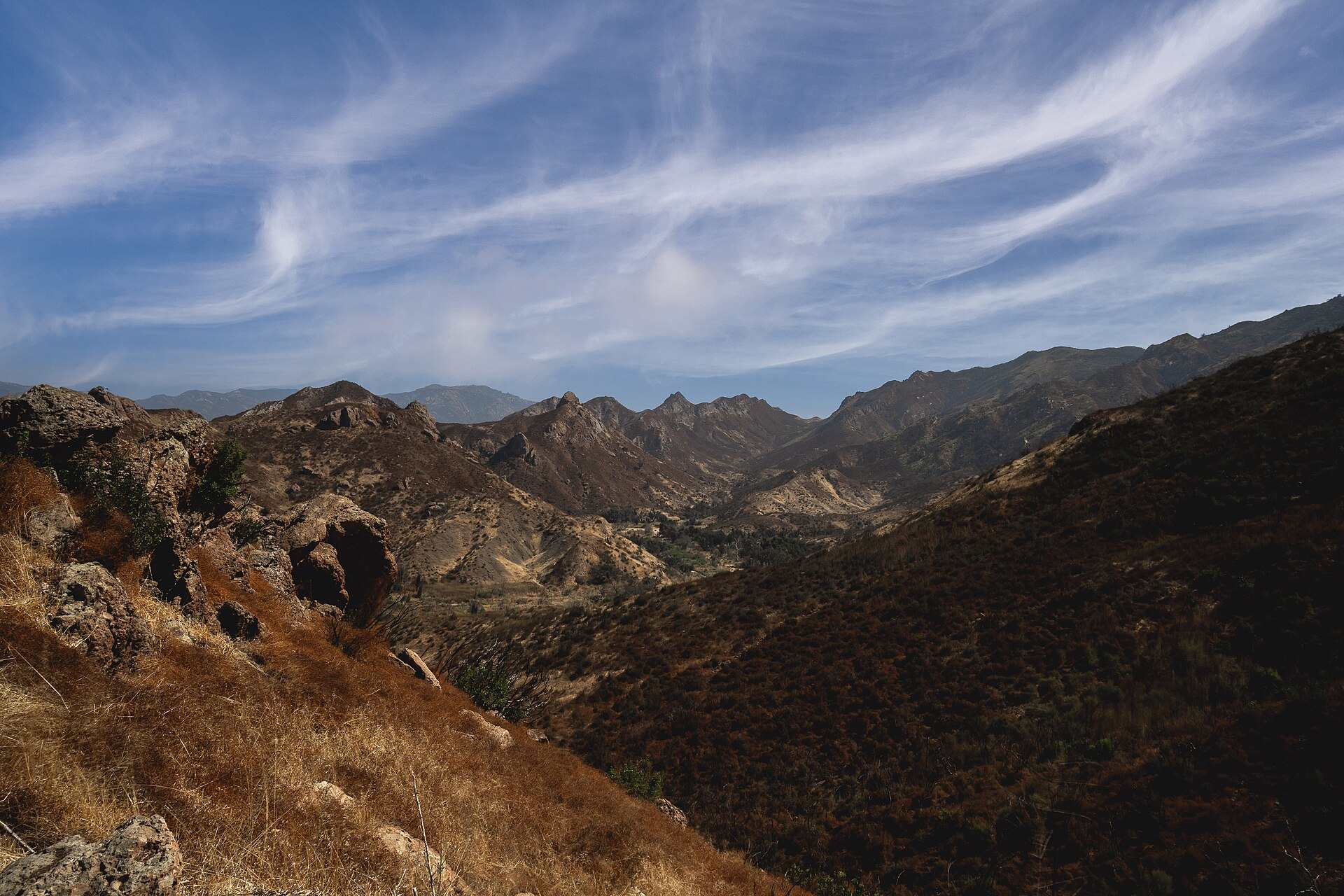
For four years, the Sean O'Brien 100K was the first big race on the American trail calendar where people could earn a Golden Ticket to Western States. Top runners flew in each winter to race in the hills above Malibu. Courtney Dauwalter set the women's course record here in 2018 in 9:38. Then, in November 2018, the Woolsey Fire burned through these mountains, the 2019 100K was cancelled, and the Golden Tickets moved on.
The race came back without the tickets, and that's why it's interesting now. It's still a Western States and Angeles Crest qualifier. It still climbs about 13,000 feet in 62 miles, from near sea level to ridges with views of the Pacific. But it's now a smaller race with real cutoffs, run mostly by people trying to finish, not win.
According to an old race listing, it's named for a close friend of race director Keira Henninger who mapped out the original course.
We haven't run Sean O'Brien. This guide is built from KH Races' 2027 Athlete Guide and series page, UltraSignup, the Western States qualifying list, results from 2014 to 2026, and finisher reports from 2016 to 2024. We found no Reddit or video coverage worth citing, so the insider notes come from blog race reports and we say whose.
Can you still get in?
As of November 18, 2026, every distance is sold out and the waitlist is free. Registration and waitlist changes close December 1 at 11:59 PM Pacific. If you want a winter 100K qualifier, get on the waitlist now on UltraSignup. Waitlist spots usually move in the weeks before a race as people get hurt or change plans, but no spot is guaranteed.
The 2027 race in brief
| Date | Saturday, January 30, 2027 |
| Start / finish | Malibu Creek State Park, 1925 Las Virgenes Road, Calabasas, CA 91302 |
| Organizer | KH Races (Keira Henninger) |
| 100K | 61.7 mi, about 13,179 ft of climbing and the same coming down. 5:30 AM start, 17-hour limit (10:30 PM) |
| Other distances | 50 mile (49 mi, about 11,500 ft, 6:00 AM), 50K, marathon and 30K (7:00 AM) |
| Price | 100K $300, 50 mile $250 (plus fees) |
| Western States | 100K qualifier for the 2027 and 2028 lotteries, qualifying time 17 hours |
| Also qualifies for | Angeles Crest 100 |
| Crew and pacers | 100K only, and only at the Bulldog turnaround (mile 47.5) |
| Cups | Cupless |
| Poles | Allowed, except for the first 2 miles to the creek crossing |
| Official pages | KH Races series page, 2027 Athlete Guide (PDF), UltraSignup |
Race morning: 100K check-in opens at 4:15 AM and drop bags are due by 5:00 AM. 50-mile check-in opens at 5:00 AM and bags are due by 5:45 AM. Optional bib pickup is Friday, January 29, from 3:00 to 6:00 PM (location to be announced). Parking is $15, cash only, exact change, and California State Parks passes are honored. Don't arrive before your check-in time, and follow the parking crew in orange vests.
Size and finish rate. In 2025, 70 of 85 starters finished the 100K, according to a MassUltra roundup. One 2024 finisher estimated about a 24% DNF rate on a hot day.
The course
The 100K is a lollipop with an extra stick. You leave Malibu Creek State Park, cross a creek about 2 miles in (knee-deep with a rope in 2024), and head west along the ridges on singletrack and fire road, through Corral Canyon and across Kanan Road to Zuma Edison Ridge Motorway. Around Bonsall, in the Zuma Canyon area, you run a loop, then you come back the way you came. After the return to Corral Canyon, the 100K adds a long out-and-back down to Bulldog and back up before the final miles to the finish. The 50 mile skips Bulldog.
On a clear day you can see the ocean. The race calls the course 98% gravel and dirt. Mapping data shows a high point of about 2,408 feet and a low of about 98 feet, which tells you how much up and down there is in a course that never goes very high.
Things reports point out:
- The creek crossing near the start, and another near the finish. Your feet will get wet early. Carry the shoes and socks you're happy to run 60 miles in, or put a dry pair in a drop bag.
- A concrete bridge near Bulldog sits about 3 feet above the trail. In 2024 there was a step ladder.
- The descent to Bulldog drops about 1,950 feet and is steep and rocky in places, and you have to climb all of it back.
- The course is marked with orange ribbon and signs, but the race expects you to carry the GPX and know the route.
Aid stations and the cutoff ladder
The 2027 Athlete Guide lists the stations below. Several have two cutoffs: if you miss the first, you're moved down to the 50 mile; if you miss the second, you're pulled. That makes this race different from most 100Ks. Your 100K can end long before mile 62 while you're still running.
| Aid station | Mile | To next | Drop bag | Crew / pacer | 2027 cutoff | Notes |
|---|---|---|---|---|---|---|
| Corral Canyon #1 | 7.3 | 6.2 | No | No | Creek crossing about 2 miles in. No poles until after it | |
| Kanan Road #1 | 13.5 | 2.6 | Yes | No | One bag serves both Kanan visits | |
| Zuma Edison Ridge Mtwy #1 | 16.1 | 6.2 | No | No | ||
| Bonsall #1 | 22.3 | 3.5 | Yes | No | 11:15 AM to 50M, 12:00 PM pulled | Bottom of the Zuma loop |
| Bonsall #2 | 25.8 | 6.2 | Yes | No | 1:30 PM pulled | Fill everything. The hardest climb is next |
| Zuma Edison Ridge Mtwy #2 | 32.0 | 2.6 | No | No | 3:00 PM to 50M, 3:45 PM pulled | |
| Kanan Road #2 | 34.6 | 6.2 | Yes | No | 3:45 PM to 50M, 4:30 PM pulled | Pick up your headlamp here |
| Corral Canyon #2 | 40.8 | 6.7 | No | No | 5:15 PM to 50M | Decision point. After this you're committed to Bulldog |
| Bulldog (100K turnaround) | 47.5 | 6.7 | Yes | Yes, the only stop | 6:30 PM pulled | Bottom of a 1,950-ft descent |
| Corral Canyon #3 | 54.2 | 5.3 | No | No | 8:30 PM pulled | Top of the climb back |
| Piuma Creek (no aid) | 59.5 | 2.2 | No | No | 10:00 PM pulled | Cutoff check only |
| Finish | 61.7 | 10:30 PM (17 h) | Same as the WSER qualifying time |
Source: 2027 Athlete Guide. The race notes distances are approximate and the course can change for park, permit or safety reasons.
Aid stations have plenty of sweet and salty snacks, PB&J, potatoes, fresh fruit, GU gels, Roctane salt pills and electrolyte drink, Fluid electrolyte, and ice if it's hot. Volunteers hand out food with tongs and fill your bottles, but you open and close your own pack.
What the ladder really asks of you
Do the math backward from the finish and the cutoffs get tighter than they look.
- Corral Canyon #2 at 5:15 PM, then Bulldog at 6:30 PM. That's 6.7 miles in 75 minutes, about 5.4 mph, with the first mile uphill. Almost no one can do that at mile 41. So the real 100K cutoff at Corral Canyon #2 is closer to 4:00 or 4:15 PM.
- Bulldog at 6:30 PM, then Corral #3 at 8:30 PM. That's 6.7 miles and about 1,900 feet of climbing in 2 hours, in the dark.
- Piuma at 10:00 PM, then the finish at 10:30 PM. That's 2.2 miles in 30 minutes, about 4.4 mph on singletrack at night.
Put together, the late cutoffs only work for someone moving steadily. If you're at Kanan #2 after about 3:00 PM, you're probably in 50-mile territory. A 2020 runner who missed the Kanan-to-Corral split finished at 50 miles instead.
None of this is a reason to skip the race. It means you need a plan, and a 15-hour runner's day in the first half, not a 17-hour runner's day, if you want the 100K.
The finish line is decided here: Bonsall to Zuma, then the climb out of Bulldog
Bonsall #2 to Zuma Edison #2 (miles 25.8 to 32) is where this race is won or lost. A 2024 finisher measured that leg at 7.8 miles with about 2,900 feet of climbing, exposed, sandy in places, with two climbs, in the warmest part of the day. On a warm day it hits hard: that 2024 race ran at about 72°F, and the same runner lost most of his time here. Leave Bonsall with all your bottles full and something to eat in your hand.
The climb out of Bulldog (miles 47.5 to 54.2) is the other one. You've just run 1,950 feet downhill on tired legs and now have to climb it back, usually at dusk or in the dark. The 2024 report singles it out, along with the Zuma climb, as where the time went. Your pacer joins at Bulldog, which is exactly when you need one.
After Corral Canyon #3, you're almost home. It's about 7.5 miles, mostly downhill (one 2024 split shows about 2,300 feet down and 800 up), though the last miles are technical singletrack in the dark. Make it out of Corral #3 with time to spare and you'll very likely finish.
How not to DNF
- Run the first 22 miles with restraint. Amelia Boone, who was second woman in 2016, wrote that runners shouldn't spend too much energy before Bonsall. It's easy to burn energy on the early ridges.
- Carry your headlamp, or have it at Kanan #2. The 50-mile cutoff note there says not to forget your light. Sunset in Malibu at the end of January is around 5:20 PM, so almost every 100K runner finishes in the dark.
- Heat in January is real. 2016 and 2020 both had warm stretches, and 2024 was warm too. The Zuma climbs are exposed. Drink, take salt, and use ice if the station has it.
- Mud is also real. The 2017 course was changed because of rain, and the 2019 50K was washed out. Check the forecast.
- Bulldog is your one crew stop. Make it count: fresh socks, a warm layer, real food, your pacer. Then leave.
Crew and pacers
Crew and pacers are allowed for 100K runners only, and only at Bulldog (mile 47.5). No crew or pacers at all for the 50 mile. The race says National Park Service and State Park rules forbid spectators anywhere on the course except the start and finish.
Getting there. Crews and pacers pay to park and hike about a quarter mile to the Bulldog aid station; there's no direct vehicle access. Ask at check-in exactly where to park and walk in, and give yourself plenty of time. There's no overnight parking in the Day Use Area at Malibu Creek State Park.
Timing. Fast runners reach Bulldog in the afternoon, but most 100K runners arrive between about 4:00 and 6:30 PM, near the cutoff. Be there early, with a warm layer and a headlamp for your runner.
Pacers start at Bulldog and run the last 14 miles with you. The race guide doesn't list any other pacer rules, such as age, so check with the race if you have a question.
Cell signal: we couldn't confirm coverage at Bulldog, and canyon bottoms are where signal usually drops. Agree on a plan before the start that doesn't depend on texting.
From Phoenix, Calabasas is roughly a 6-hour drive on I-10 and US-101. From LAX it's usually 35 to 60 minutes, depending on traffic.
Drop bags
Drop bags go to Kanan Road (one bag for both visits, miles 13.5 and 34.6), Bonsall (miles 22.3 and 25.8) and Bulldog (47.5). Put your bib number on the outside (bib numbers are assigned race week, and there's tape and markers at check-in). No glass, coolers, large boxes or valuables, including car keys. Bags must be closed securely.
A simple plan:
- Kanan: headlamp and spare batteries, a long-sleeve layer, gloves and a second refill of whatever you eat.
- Bonsall: sunscreen, extra electrolytes, a fresh pair of socks if the creek soaked you, and food for the hard climb to Zuma.
- Bulldog: your crew can handle this one, but leave backup food and a warm layer in case they're late.
Poles
Poles are allowed except for the first 2 miles, until the creek crossing. Carry them folded on your pack until then.
Where they help:
- The climb out of Bonsall #2 to Zuma Edison #2, the hardest one on the course.
- The climb back up from Bulldog to Corral Canyon #3, about 1,900 feet on tired legs.
If you don't want to carry poles all day, leave them in your Bonsall bag for the climb to Zuma, and have your crew bring a pair to Bulldog for the climb back out. That leaves the Kanan-to-Corral stretch without poles, which is fine. Be careful on the narrow singletrack: the race asks runners to be mindful of others with poles.
Weather
Late-January highs around Malibu are usually in the 60s, with lows in the 40s, but race days have ranged from below freezing at the start (2014) to a warm 72°F (2024). Rain can turn the trails muddy and has changed the course before. The safest plan is a light, quick-drying setup with a warm layer and gloves in your pack for the morning and the night.
Gear for this course
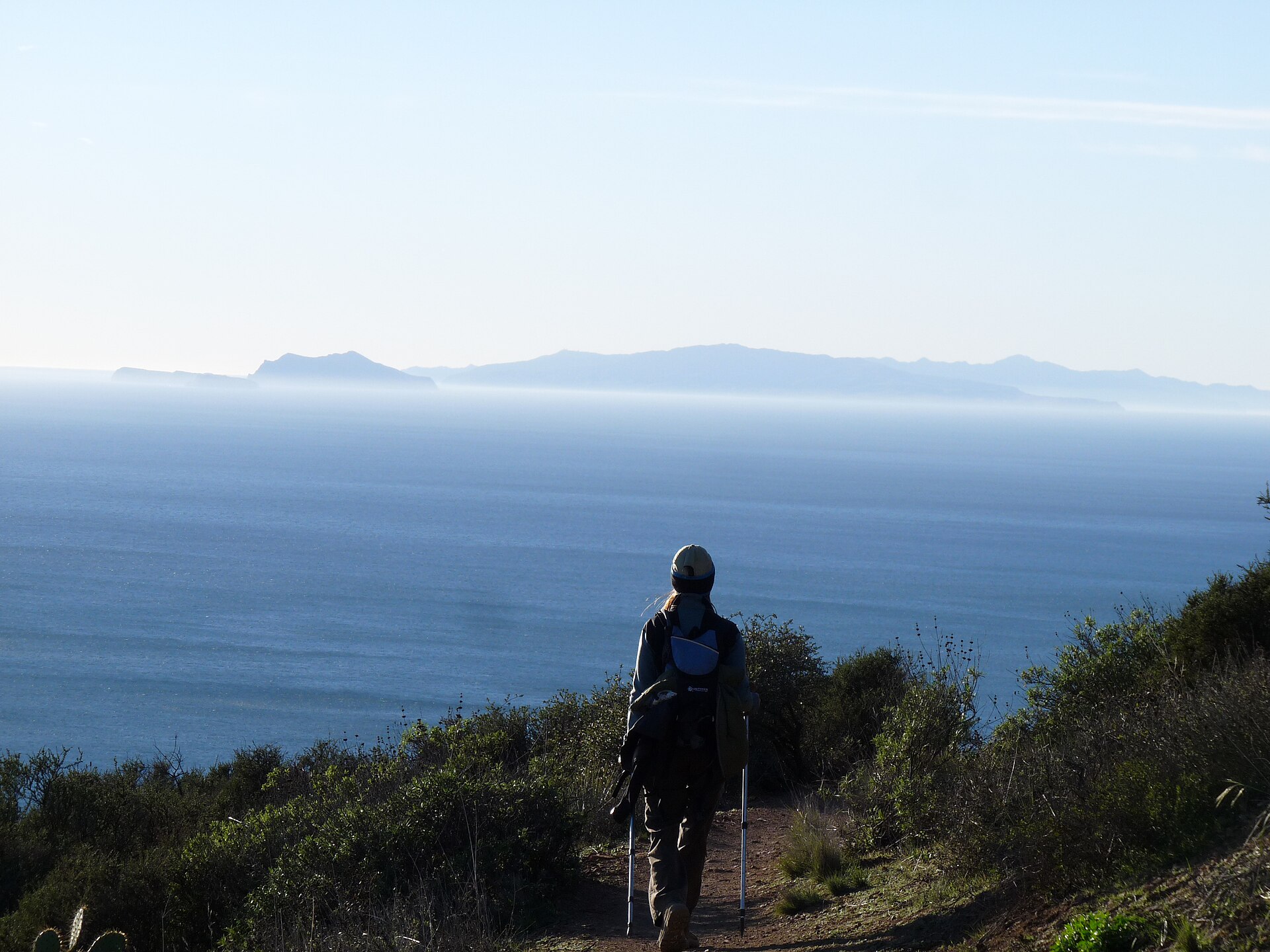
- A collapsible cup or soft flask, because the race is cupless: collapsible running cup
- A bright headlamp for the last miles of singletrack: rechargeable running headlamp
- Folding poles for the Zuma climb and the climb out of Bulldog: folding carbon trekking poles
- A vest that carries 2 liters for the long, exposed leg from Bonsall: trail running hydration vest
- Electrolytes for a warm day: electrolyte capsules
- Quick-drying socks and blister care after the creek: trail running socks and anti-chafe balm
- A light layer and gloves for the morning and night: packable running jacket and running gloves
- Sun protection for the open ridges: running sun hat
- For the finish, the race says to bring a chair and hang out: folding camp chair
The van idea
This is a one-day race with a 4:15 AM check-in, about 6 hours' drive from Phoenix, and a finish that runs until 10:30 PM. A van as base camp means you sleep near the start instead of in an LA hotel, keep your drop bags and food organized, and have somewhere warm and quiet to lie down after the finish instead of driving home at midnight. For your crew, it's a place to rest while they wait for Bulldog. Remember that there's no overnight parking in the park's Day Use Area, so book a legal campsite. We're building the first AZ Ultra Vans now. If you'd want one for this race, join the van list and we'll reach out if one is available for your dates.
Sean O'Brien 100K FAQ
When is the Sean O'Brien 100K in 2027? Saturday, January 30, 2027. The 100K starts at 5:30 AM at Malibu Creek State Park, Calabasas, California, with a 17-hour limit. (Western States' list shows "February 2027", but the race guide and UltraSignup both say January 30.)
Is it a Western States qualifier? Yes. The 100K is a qualifier for the 2027 and 2028 Western States lotteries, with a 17-hour qualifying time. It also qualifies you for the Angeles Crest 100.
Is Sean O'Brien still a Golden Ticket race? No. It awarded Western States Golden Tickets from 2015 to 2018. After the Woolsey Fire cancelled the 2019 race, the tickets moved elsewhere.
How much climbing is in the 100K? About 13,179 feet up and the same down in 61.7 miles, according to the race.
Can I have a crew or pacer? 100K runners can have both, but only at the Bulldog turnaround at mile 47.5. 50-mile runners can't have either, and no one can spectate elsewhere on the course.
What happens if I miss a cutoff? At Bonsall #1, Zuma Edison #2, Kanan #2 and Corral Canyon #2, missing the first cutoff moves you to the 50 mile. Missing the second cutoff, or any cutoff after Corral #2, pulls you from the race.
Are poles allowed? Yes, except for the first 2 miles until the creek crossing.
The race is sold out. Is the waitlist worth it? It's free, so there's nothing to lose. Changes close December 1, 2026, at 11:59 PM Pacific.
More guides
- Angeles Crest 100, the Southern California hundred this race qualifies you for
- Cuyamaca 100K, another Southern California 100K
- Western States 100, the race most people run this one to qualify for
- Western States, Hardrock and UTMB qualifiers in Arizona and the Southwest
- Black Canyon 100K, Arizona's winter 100K
Who wrote this
Johnathon Lawson is a Gilbert, Arizona ultrarunner and a three-time 100-mile finisher: Zion 100 (2025), Mogollon Monster 100 (2025) and San Diego 100 (2026). He hasn't run Sean O'Brien; this guide is researched from the official race information and finisher reports. Follow his training on Strava and the AZ Ultra training page, his results on UltraSignup, and AZ Ultra Adventure on YouTube and Instagram.
Sources: KH Races' Sean O'Brien series page and 2027 Athlete Guide; UltraSignup; the Western States qualifying list; the HelloDrifter course map; iRunFar's coverage of 2014, 2017 and 2018; Canadian Running on the 2019 cancellation; the MassUltra 2025 roundup; and finisher reports by Amelia Boone (2016), greateridiot (2017 and 2020) and Educated Guesswork (2024). The cutoff math, sunset time and drive times are our own estimates. Check the race's final email before you travel.
Some links are Amazon affiliate links. As an Amazon Associate we earn from qualifying purchases, at no extra cost to you.