 AZ Ultra Adventure
On this page
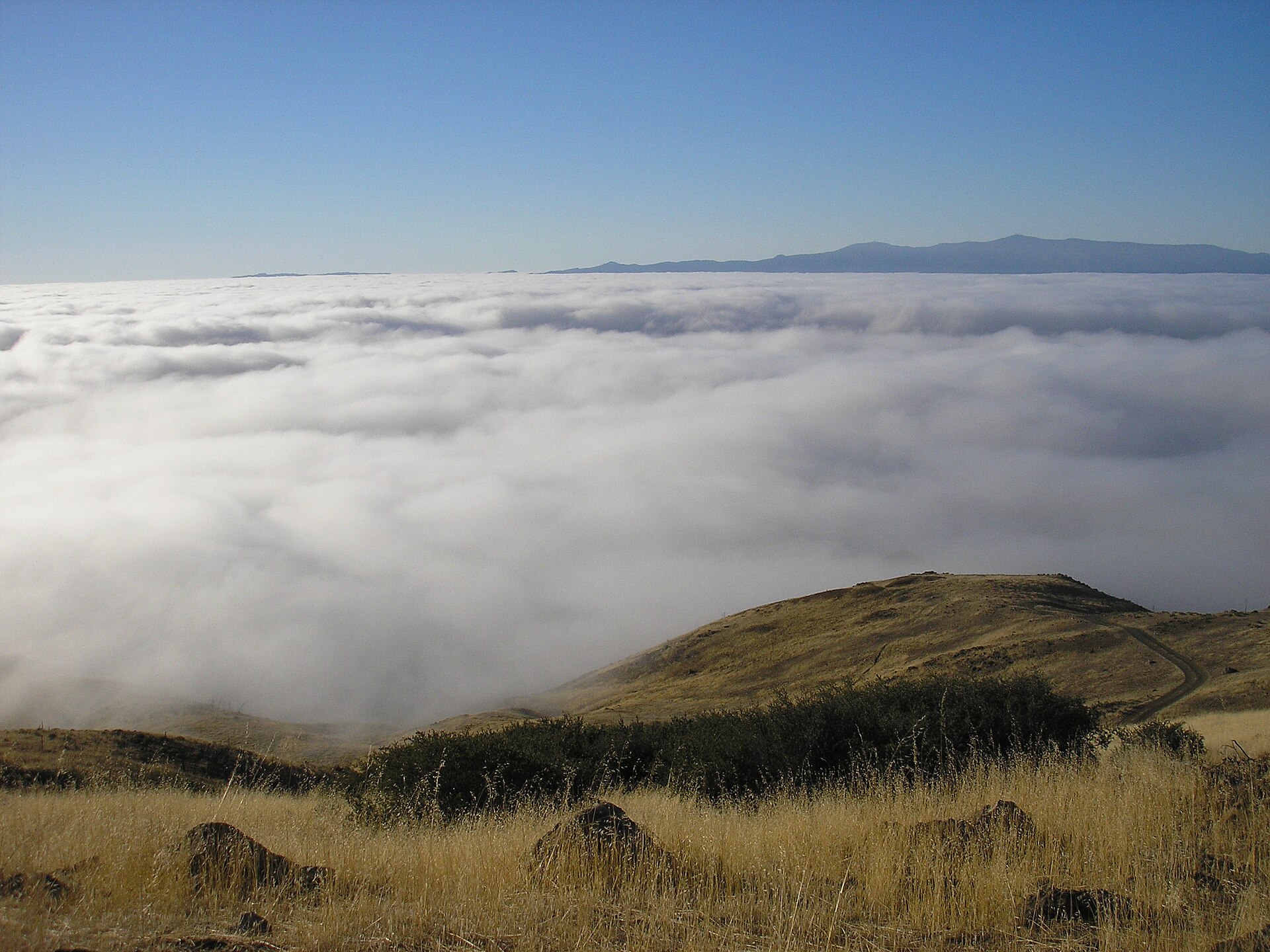
The start of a Born to Run race goes like this. A crowd of runners in costumes, running vests and sandals gathers in a ranch field in the hills above Los Olivos. Race director Luis Escobar, the photographer from Christopher McDougall's book Born to Run, gets everyone to raise their right hand and repeat an oath written by the late Micah True, the runner the book called Caballo Blanco. It ends: "If I get lost, hurt, or die, it's my own damn fault!" Then Luis fires a shotgun, and the race starts.
That tells you most of what you need to know. This is a real 100 with about 18,500 feet of climbing, wrapped in a five-day campout with bands, costumes, beer races and a "Dirtbag Prom." Some people come for the party and run a 10-miler. Some come to run 200 miles in four days. Almost everyone camps.
It's a fantastic first 100 for the right runner and a hard one for the wrong one. The loops bring you back to camp every 10 miles, and camp is the best and most dangerous thing about this race. This guide is about using it well. Facts are from the race's 2027 UltraSignup listing and runner reports, as of November 20, 2026.
The week, day by day
The 2027 event runs Wednesday, May 12, through Sunday, May 16. Every race has the same hard finish: 8:00 a.m. Sunday, May 16. What changes is when you start.
| Day | Gate / check-in | What happens |
|---|---|---|
| Tue, May 11 | 3:00 to 6:00 p.m. | Early arrival for 4-Day runners |
| Wed, May 12 | 8:00 a.m. to 6:00 p.m. | 4 Day (96 h) starts at 8:00 a.m. |
| Thu, May 13 | 6:00 a.m. to 6:00 p.m. | 3 Day (72 h) starts at 8:00 a.m. |
| Fri, May 14 | 6:00 a.m. to 6:00 or 8:00 p.m. (the listing says both) | 100 Mile starts at 8:00 a.m. |
| Sat, May 15 | 6:00 a.m. to 12:00 p.m. | 10, 20 and 30 mile races start at 8:00 a.m. Party night |
| Sun, May 16 | — | Everything finishes by 8:00 a.m. |
There's no entry after the gate closes, and security watches it after hours. If your crew or pacer is planning to show up Friday night after work, check the 2027 participant guide for the exact cutoff, because the listing gives two different closing times for Friday.
A word on the dates, since you'll see several online. The UltraSignup banner says May 12-16, the race's own site mentions May 15, and older UltraSignup pages say other things. They're all describing the same event: May 12-16 is the whole week counting from the 4-Day start, May 14-16 is the 100, and May 15 is the short-race Saturday. The 2027 listing also has some weekday typos (it calls May 12 a Tuesday; in 2027 it's a Wednesday). Trust the calendar dates.
Pick your race
| Race | Start | Finish rule | 2027 price (after Mar 31) |
|---|---|---|---|
| 100 Mile | 8:00 a.m. Fri, May 14 | Finish 100 miles within 48 hours for the buckle | $450 ($500) |
| 3 Day (72 h) | 8:00 a.m. Thu, May 13 | 100 miles in 72 hours for the buckle | $550 ($600) |
| 4 Day (96 h) | 8:00 a.m. Wed, May 12 | 100 or 200 miles in 96 hours for a buckle | $650 ($700) |
| 30 / 20 / 10 mile | 8:00 a.m. Sat, May 15 | No buckle | $125 ($135) |
Multi-day awards go to the top man and woman by most laps. There's no 50K on the 2027 schedule; the 30-miler is the longest of the short races.
Extra costs to budget: a ranch fee of $10 per person per day, cash at check-in, and a Guest Day Pass of $35 per day for crew, pacers and guests. No refunds, transfers or deferrals. Capacity is the first 300 registered participants and guests, which is small, so don't wait if you're set on going.
Which one should you do? The 48-hour limit on the 100 is already generous. A 100 in 48 hours is a 28:48-per-mile average, which is a hiking pace. The 3-Day is for people who want to sleep a full night or two and still finish 100. The 4-Day is for runners chasing 200, or a very relaxed 100. If you're on the fence between the 100 and the 3-Day for a first hundred, the 3-Day's real advantage is that it lets you sleep through the worst of a night without the clock pressure.
Official pages: 2027 UltraSignup listing and allwedoisrun.com.
The ranch
The race is on a private working cattle ranch at 4155 Figueroa Mountain Road, Los Olivos, in the Santa Ynez Valley. Older race reports call it East Creek Ranch. You'll share the course with cows, and with what cows leave behind. Rattlesnakes live here too.
Getting there: from Santa Barbara, take Highway 154 over San Marcos Pass to Los Olivos, then head up Figueroa Mountain Road. From Los Angeles, take US-101 north and cut over on 154. From Phoenix it's a long day: roughly 8 to 9 hours of driving via I-10 and the LA basin, so most Arizona runners will want to arrive the day before their start.
Camping on the ranch is included for runners. Food in past years has included a burrito truck run by Luis's sister. Toilets are port-a-potties. We couldn't confirm the current rules on showers, generators, fires or quiet hours. Read the 2026 participant guide now and watch for the 2027 version.
The book and the people
Born to Run started around a campfire, and its results go back to 2011. The connection to the book is real: Luis Escobar was the photographer on McDougall's story of the Rarámuri (Tarahumara) runners of Mexico's Copper Canyons and the race Micah True organized there. Over the years Rarámuri runners have traveled to this race. In 2014 organizers raised money for visas so three could come up from the Copper Canyons, and the 2026 guide announced a Rarámuri group, a sweat lodge and a meeting with a Tarahumara poet. UltraRunning Magazine once covered a rematch here between Arnulfo Quimare and Scott Jurek, the two runners at the center of the book's final race.
If you've read the book, this is about as close as you can get to its spirit in the U.S.
The vibe, honestly
People come for different things. Reports over the years describe:
- Bands every night, late. Past acts include Metalachi, the Drive-In Romeos and mariachi bands.
- Games and side events: a beer mile, costume contests, wheelchair balloon battles, a Lego lava walk, a lucha libre battle royal and a "Dirtbag Prom" on the last night.
- A shotgun start for every race, and campers woken up by the shotgun, mariachis and loudspeaker calls before each start.
All of that is great on Saturday night if you're running the 10-miler. It's a different experience if you're on mile 70 of the 100 and trying to sleep for 30 minutes in your tent. Plan for it.
The course: two loops, one camp
The course is a figure eight of two one-way loops, both starting and finishing at the central camp:
| Loop | Distance | Climbing (per the race) |
|---|---|---|
| Pink loop | About 10 miles | About 2,100 ft |
| Yellow loop | About 10 miles | About 1,600 ft |
The 100 is ten loops, alternating colors, so five of each. By our math from the race's loop figures, that's roughly 18,500 feet of climbing. That's about as much as Western States, packed into a 10-mile circuit. A 2022 runner's report lists the colors the other way round (pink as the easier loop), so check your map in 2027. We're going with the official listing here.
It's all dirt: ranch roads and singletrack through grass fields and oak groves, with steep descents, dry creekbeds, ridges, long grass and cow pies. Navigation: striped ribbon means a turn, blue ribbon means wrong way. A 2022 runner went off course at mile 16, so pay attention on the first lap of each color, in daylight, and then again on your first loop of each color at night.
Aid and timing
There's aid about every 5 miles, at camp and partway around each loop, and laps are counted with a timing chip at camp. The race's listing doesn't name the mid-loop aid stops, so here's how a 100 lays out in practice:
| Lap | Loop | Miles | Back at camp at | Notes |
|---|---|---|---|---|
| 1 | Pink | 0-10 | Mile 10 | Morning cool. Learn the turns |
| 2 | Yellow | 10-20 | Mile 20 | Learn the second loop's turns in daylight |
| 3 | Pink | 20-30 | Mile 30 | Usually the hot middle of the day. Ice and shade at camp |
| 4 | Yellow | 30-40 | Mile 40 | Late afternoon. Grab night gear before you go out if you'll finish this loop after dark |
| 5 | Pink | 40-50 | Mile 50 | Halfway. First full night loop for most |
| 6 | Yellow | 50-60 | Mile 60 | Cold. Music still going in camp |
| 7 | Pink | 60-70 | Mile 70 | The low point for most runners (see below) |
| 8 | Yellow | 70-80 | Mile 80 | Sunrise for most mid-pack runners |
| 9 | Pink | 80-90 | Mile 90 | Second day's heat starts building |
| 10 | Yellow | 90-100 | Finish | Done well before the 8 a.m. Sunday hard stop if you're inside 48 hours |
Every loop ends at camp, so camp is your drop bag, crew station and pacer pickup ten times over. There isn't a formal drop-bag system that we could find: your car or tent is the drop bag. Vehicles can reach the camp, and runners park close to the start/finish. One 2022 runner was parked about 200 feet away.
Crew and pacers
Crewing here is simple. You set up a camp next to the loop and your runner comes through every 10 miles. No driving between aid stations, no dirt roads at 2 a.m., no getting lost. The tradeoff is that your crew is also living in a festival for two days.
Things your crew should know:
- Buy the Guest Day Pass. Crew, pacers and guests need one: $35 a day. Plus the $10-per-day ranch fee in cash.
- Know the gate hours. If someone's arriving late, check the gate times, because nobody gets in after closing.
- Set up a real station. A pop-up for shade, a table, a cooler with ice, a stove for hot food at night, a lantern, and a chair for the crew. The runner's chair rule is below.
- Keep a lap log. Time in, time out, what they ate, what hurt. On loop 7 nobody remembers anything.
- Sleep in shifts. In a 48-hour race, a crew that doesn't sleep is a crew that's useless on Saturday afternoon.
Pacers. The 10/20/30-mile races say no pacers. For the 100 and multi-day races, pacers need a Guest Day Pass; we couldn't confirm the race's specific pacer rules (when they can start, whether they can mule). Check the 2027 participant guide. Since every loop returns to camp, a pacer can join for any loop, and a pacer for the two night loops after mile 50 is the best use of one. See our pacer handbook.
The finish line is decided here: loop seven, and your tent
On most 100s the DNF happens in a chair at an aid station. At Born to Run, it happens in your tent.
Every 10 miles you walk into a warm, lit, noisy camp with your sleeping bag 200 feet away, your friends hanging out and music playing. On a point-to-point 100, dropping takes effort: someone has to drive you out. Here, dropping is as easy as unzipping a tent.
The low point for most people is the middle of the first night, around miles 60 to 70, the seventh loop. One runner's 2022 report describes a cold night, an early wrong turn, knee pain and no poles (which they called a big mistake), and a drop at mile 70 after more than 20 hours. That's the classic Born to Run DNF: not a crash, just a slow grind into the tent.
The good news: the results say people finish here. In 2026, 31 of 38 entries in the 100 finished, about 82%, from Paul Sinclair's 19:09:51 to a final finisher at 44:59:30. That 45-hour finish is the point of a 48-hour limit. If you're moving at the start of loop 8 when the sun comes up, you'll finish. You'll have 20-plus hours for the last 30 miles. That's a walk.
How to get there:
- The tent rule. Decide before the race: no lying down in the tent before mile 70, and then only one planned sleep, with an alarm and a crew member who will drag you out. Twenty to forty-five minutes of sleep at 3 a.m. can save a race. Four hours in a warm sleeping bag usually ends one.
- The chair rule. Sit for five minutes at camp, then go. Every loop.
- Leave camp walking and eating. Grab the food and walk out. You can eat on the first climb.
- Dress for both days. RaceRaves' weather records for mid-May show highs between about 67 and 91 degrees and lows in the 40s to low 50s over recent years. Runners describe misty mornings, hot exposed afternoons, sunburn and freezing nights, and it has rained (2019 and 2022). You'll get two afternoons and one night if you're in the 100, more in the multi-day.
- Treat the heat like a real problem. One 2012 runner lost most of the middle of the race to afternoon heat, and an ice jacket at aid helped. Ice in a buff, ice in a hat, and slower climbing between noon and 4 p.m.
- Earplugs and an eye mask if you plan to sleep at all, for you and your crew.
- Just the next loop. Ten loops is too many to think about. One loop is two aid stops and one trip back to camp.
Do you need poles?
Yes, for most runners. With about 18,500 feet of climbing on steep ranch roads and singletrack, this is a pole course. The 2022 runner who dropped at mile 70 specifically regretted not bringing them.
Because every loop comes back to camp, the poles question is easy: keep them at your camp and grab them when you want them. A good plan is to run the first two loops without them while your legs are fresh, then pick them up for the night (loops 5 through 8), when the steep descents on tired quads are where they help most. Our trekking poles guide covers technique and which ones to buy.
Gear for this course
- Trekking poles. Light, folding. Carbon folding trekking poles
- A headlamp you can wear for 10-plus hours, plus a backup. Rechargeable running headlamp
- Hydration vest. Aid is about every 5 miles, so a vest with two soft flasks is plenty. Running hydration vest
- Sun hat and cooling gear for the two afternoons. Sun hat with neck cape and cooling towel
- Gaiters for the long grass, dust and seeds. Trail running gaiters
- Earplugs and an eye mask for camp. Sleep earplugs and sleep mask
- A pop-up canopy for your crew station. 10x10 pop-up canopy
- A warm layer for the night loops. Packable down jacket
- Anti-chafe and foot care. Ten loops of dust, dew and sweat. Anti-chafe balm and blister kit
- Electrolytes for the hot middle of each day. Electrolyte capsules
The van idea
Born to Run is a five-day campout with a race in the middle, which makes it the best possible race for a camper van. A van gives you a real bed for a planned sleep instead of a tent next to a mariachi band, a fridge for your race food and the crew's meals, a dark, quieter place for your crew to rest in shifts, and shade on a hot afternoon. And on Sunday morning, after an 8 a.m. finish and very little sleep, you don't have to break down a tent before driving home.
We're building the first AZ Ultra Vans now. If you'd want one for Born to Run, join the van list and we'll reach out if one's available for your dates.
Born to Run Ultra Marathons FAQ
When is Born to Run 2027? The event runs May 12-16, 2027. The 4-Day starts at 8 a.m. Wednesday, May 12, the 3-Day at 8 a.m. Thursday, the 100 mile at 8 a.m. Friday, May 14, and the 10, 20 and 30 milers at 8 a.m. Saturday, May 15. Everything finishes at 8 a.m. Sunday, May 16.
Is Born to Run a good first 100? For a lot of people, yes. The 48-hour limit is generous, you're back at camp every 10 miles, and about 82% of the 2026 field finished. The catches are the climbing (about 18,500 feet), the heat and the camp itself, which makes dropping very easy. A runner who has a "no tent before mile 70" plan and a crew to enforce it has a great shot.
How long are the loops? Two loops of about 10 miles each: pink (about 2,100 feet of climbing) and yellow (about 1,600 feet), per the 2027 listing. The 100 alternates them, five of each.
Is camping included? Camping on the ranch is included for runners. There's a $10 per person per day ranch fee in cash, and crew, pacers and guests need a $35 per day Guest Day Pass.
Can I bring my dog? Dogs aren't allowed on the course. We couldn't confirm the rule for dogs in camp. Check the participant guide.
Can I get a refund or transfer? No. The listing says no refunds, transfers or deferrals.
What's the 100 mile record? UltraSignup's all-time list for the 100 shows James Bonnett at 15:58:11 (2013) and Emily Geyman at 18:53:32 (2022). The course may have changed over the years, so treat those as the fastest recorded times rather than official records.
Do I need to have read the book? No, but you'll enjoy it more if you have. It's Christopher McDougall's Born to Run (2009), and the race director is one of the people in it.
More guides
- Which Arizona 100 should be your first?
- Across The Years, the Arizona multi-day loop race
- Javelina Jundred, the other famous party 100 in the Southwest
- The crew chief playbook
- The drop bag system for a 100 miler
- A camper van as crew base camp
Who wrote this
Johnathon Lawson is a Gilbert, Arizona ultrarunner and a three-time 100-mile finisher: Zion 100 (2025), Mogollon Monster 100 (2025) and San Diego 100 (2026). He hasn't run Born to Run. This guide is researched from the race's official listing, past results and runner reports. Follow his training on Strava and the AZ Ultra training page, his results on UltraSignup, and AZ Ultra Adventure on YouTube and Instagram.
Sources: the race's 2027 UltraSignup listing and allwedoisrun.com; UltraSignup results for 2026 and 2025; RaceRaves weather history; Ciele Athletics' journal on the ranch and the start; the Spartan profile of Luis Escobar; UltraRunning Magazine on the Quimare-Jurek rematch; and runner reports from 2012, 2014 and 2022. Total climbing, the lap timeline, pace math and drive times are our own estimates. Check the 2027 participant guide before you travel.
Some links are Amazon affiliate links. As an Amazon Associate we earn from qualifying purchases, at no extra cost to you.