 AZ Ultra Adventure
On this page
- The race at a glance
- Read the cutoffs like a budget
- The course, in four acts
- The finish line is decided here: Gila River to Picket Post
- Crew guide: three stops, then the finish
- Pacers
- Drop bags
- Poles
- Mandatory gear
- What's different about a first-year race
- Gear for this course
- The van idea
- El Jefe Hundred FAQ
- More reading
The number to remember for the El Jefe Hundred isn't 105.8. It's 21.7.
That's how many miles sit between the Gila River aid station and Picket Post, with 3,717 feet of climbing, at mile 78.5 of a race that has never been run. The race manual tells heavy drinkers to think about carrying five liters for that one leg. If you're running near the cutoffs, you'll start it at about sunrise on Sunday and spend the whole morning and early afternoon on it.
El Jefe is the newest race from Destination Trail, the company behind the Tahoe 200, Moab 240 and the Arizona Monster 300. It takes the last third of the Monster course, starts at the Tiger Mine Trailhead near Oracle, and runs almost entirely on remote desert singletrack to the town of Superior. It's named for the jaguar that wandered the Sky Island ranges of southern Arizona. The field is small, the aid stations are far apart, and for now nobody on earth has a finish time here.
We haven't run El Jefe, and no one has: the first edition is April 2027. This guide is built from the official 2027 Runner Manual, the race page and the UltraSignup listing, plus Arizona Trail Association notes on the same country and what runners reported from the overlapping Arizona Monster course. The manual was clearly adapted from the 300-miler and still has a few leftovers, which we flag below. Check it again before race week.
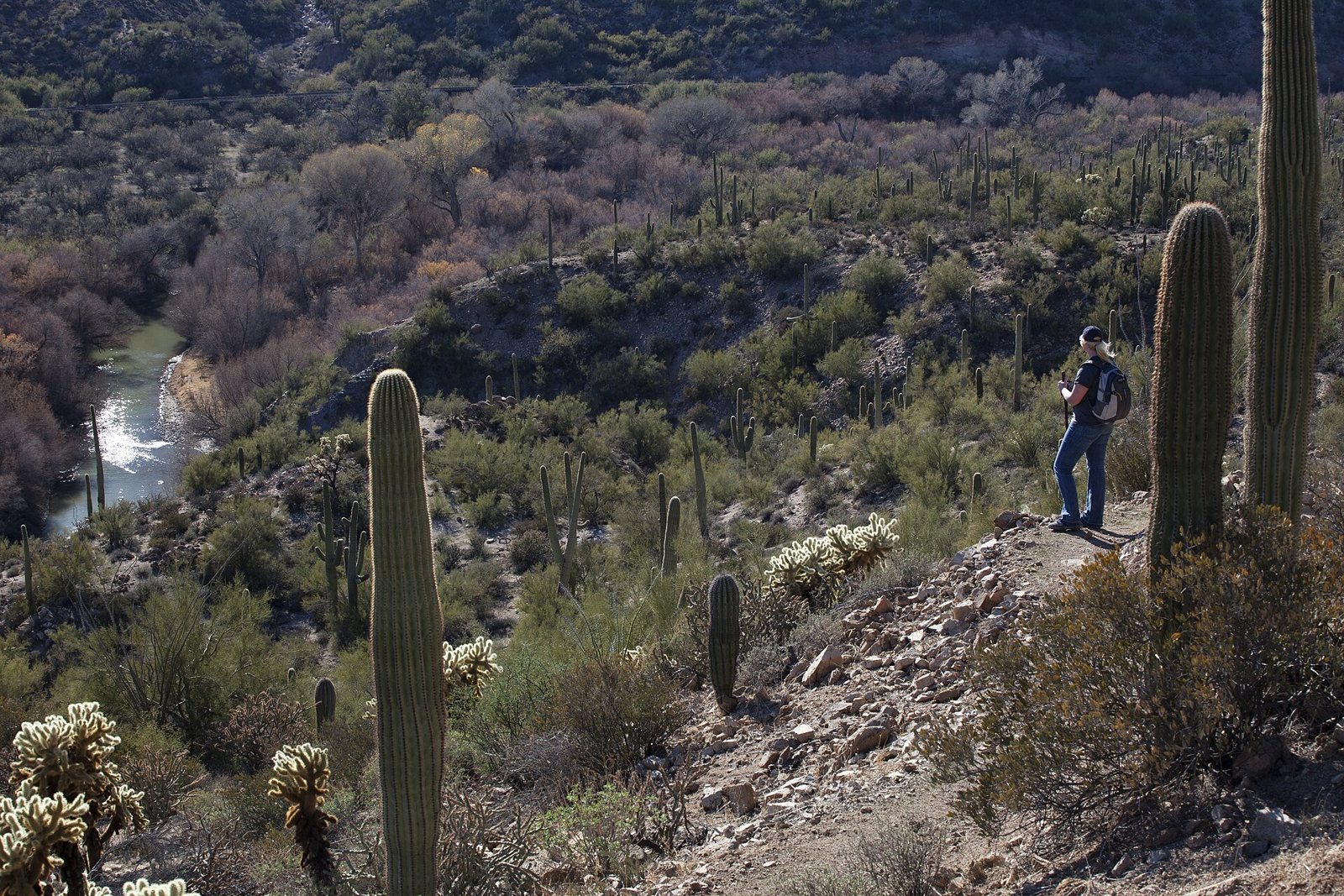
The race at a glance
| Date | Saturday, April 3, 2027, 6:00 AM, to Sunday, April 4, 6:00 PM |
| Limit | 36 hours, with a cutoff at every aid station |
| Start | Tiger Mine Trailhead near Oracle. Bus only from Superior |
| Finish / race HQ | Superior, AZ |
| Distance | 105.8 miles, point to point |
| Climbing | 12,548 ft up, 13,910 ft down |
| Aid | 6 stations: 5 full, 1 self-service |
| Crew | Freeman, Grand Enchantment, Gila River and the finish |
| Pacers | Allowed from Grand Enchantment (mile 62.2) |
| Entry | $495, or $587.08 with taxes and fees on UltraSignup. It showed 40 spots available when we checked. Online registration lists a March 22 close |
| Minimum age | 18 |
| Western States qualifier | Not on the current WSER qualifying list for the 2027 or 2028 lottery. That list updates each September |
| Official pages | Race page, 2027 Runner Manual, UltraSignup |
One date conflict to know about: Destination Trail's calendar page shows an 8:00 AM start. The Runner Manual and UltraSignup both say 6:00 AM, and the manual's bus schedule and cutoffs only work with 6:00 AM, so that's what we use here.
Read the cutoffs like a budget
Thirty-six hours for 105.8 miles looks generous: about 20 minutes a mile. It isn't spread evenly, though. The first 78.5 miles must be covered faster than that average so there's time left for the big climb at the end.
Here is every aid station from the manual's charts. The pace column is our math from the time allowed for each leg, and it includes any time you spend at aid.
| Aid station | Mile | Leg miles | Up / down on the way in (ft) | Must leave before | Elapsed | Pace the cutoff demands |
|---|---|---|---|---|---|---|
| Start, Tiger Mine | 0 | Sat 6:00 AM | 0:00 | |||
| Black Hills | 14.1 | 14.1 | +1,766 / −2,343 | Sat 10:15 AM | 4:15 | 18:05 /mi |
| Freeman | 29.7 | 15.6 | +2,329 / −1,814 | Sat 3:30 PM | 9:30 | 20:12 /mi |
| Tortilla | 47.5 | 17.8 | +714 / −1,472 | Sat 8:45 PM | 14:45 | 17:42 /mi |
| Grand Enchantment | 62.2 | 14.7 | +1,557 / −3,014 | Sun 1:30 AM | 19:30 | 19:23 /mi |
| Gila River | 78.5 | 16.3 | +1,764 / −1,933 | Sun 6:45 AM | 24:45 | 19:20 /mi |
| Picket Post | 100.2 | 21.7 | +3,717 / −2,931 | Sun 4:00 PM | 34:00 | 25:35 /mi |
| Finish, Superior | 105.8 | 5.6 | +701 / −403 | Sun 6:00 PM | 36:00 | 21:26 /mi |
Three things stand out:
- The first cutoff is real. Black Hills allows 4:15 for 14.1 miles. That's easy on a road and less so with a pack loaded for a long desert leg, at the start of a 100. Don't sprint it, but don't treat it as a warmup either.
- Freeman to Tortilla is the leg to bank time. It's the flattest climbing of the race (714 feet up, 1,472 down in 17.8 miles), and it's the fastest pace the clock asks for. It's also afternoon, and the race's sister course notes say there's little shade on it.
- Arriving at the cutoff is already too late. The manual says arriving at a station at the cutoff time counts as a DNF. You have to be gone before it.
What a realistic day looks like
The manual's leg hours scale neatly. This is our arithmetic, not a race pace chart, but it shows how much your goal changes what you face in daylight.
| Station | 30-hour pace | 36-hour cutoff pace |
|---|---|---|
| Black Hills | Sat 9:33 AM | Sat 10:15 AM |
| Freeman | Sat 1:55 PM | Sat 3:30 PM |
| Tortilla | Sat 6:18 PM | Sat 8:45 PM |
| Grand Enchantment | Sat 10:15 PM | Sun 1:30 AM |
| Gila River | Sun 2:38 AM | Sun 6:45 AM |
| Picket Post | Sun 10:20 AM | Sun 4:00 PM |
| Finish | Sun 12:00 PM | Sun 6:00 PM |
Look at the Gila River line. A 30-hour runner starts the big climb in the dark and is done by mid-morning. A cutoff runner starts at sunrise and climbs through the hottest part of Sunday. Those are two different races, and every hour you save before mile 78 is worth more than an hour saved anywhere else.
The course, in four acts
By distance, El Jefe tracks closely with Arizona Trail Passages 14 through 17: Black Hills, Tortilla Mountains, Gila River Canyons and Alamo Canyon. The official line is the CalTopo map, so use that for navigation and use the passage notes for what the land is like.
Act 1: Tiger Mine to Freeman (miles 0 to 29.7)
You get on a bus in Superior at 3:00 AM, ride about 90 minutes, pick up your tracker from 5:00 to 5:30, and start at 6:00. The Arizona Trail Association describes this country as washes, sandy soil, singletrack and doubletrack with a ridge climb, very little water and not much shade. Its passage page warns that spring highs here routinely top 100°F. Monster runners reported navigation errors near Black Hills and Freeman in 2025, so have the GPX running from the first step.
Act 2: Freeman to Grand Enchantment (29.7 to 62.2)
This is the middle of the race and probably your sunset. The 17.8 miles to Tortilla roll gently downhill through hot, dry, exposed desert. Tortilla is the only self-service stop: hot water, ramen-style soup, instant potatoes, oatmeal and drinking water, with minimal staffing and no crew. Plan to make your own food and carry what you actually want to eat. Then 14.7 miles and 3,014 feet of descent down to Grand Enchantment, where your crew and pacer finally come back into play.
Act 3: Grand Enchantment to Gila River (62.2 to 78.5)
Night running along the river canyons, on singletrack cut across many drainages. It's the kind of trail where you can lose a lot of time without noticing, because it never quite lets you settle. The river is there, but don't count on it: the Arizona Trail Association calls the Gila usually murky, notes that its flow is controlled by a dam upstream, and flagged E. coli in the river and a norovirus advisory in 2025. You're required to carry a water filter. Filter anything you take from it, and it's better not to need to.
Act 4: Gila River to Superior (78.5 to 105.8)
The crux, then the victory lap. We'll spend the next section on it.
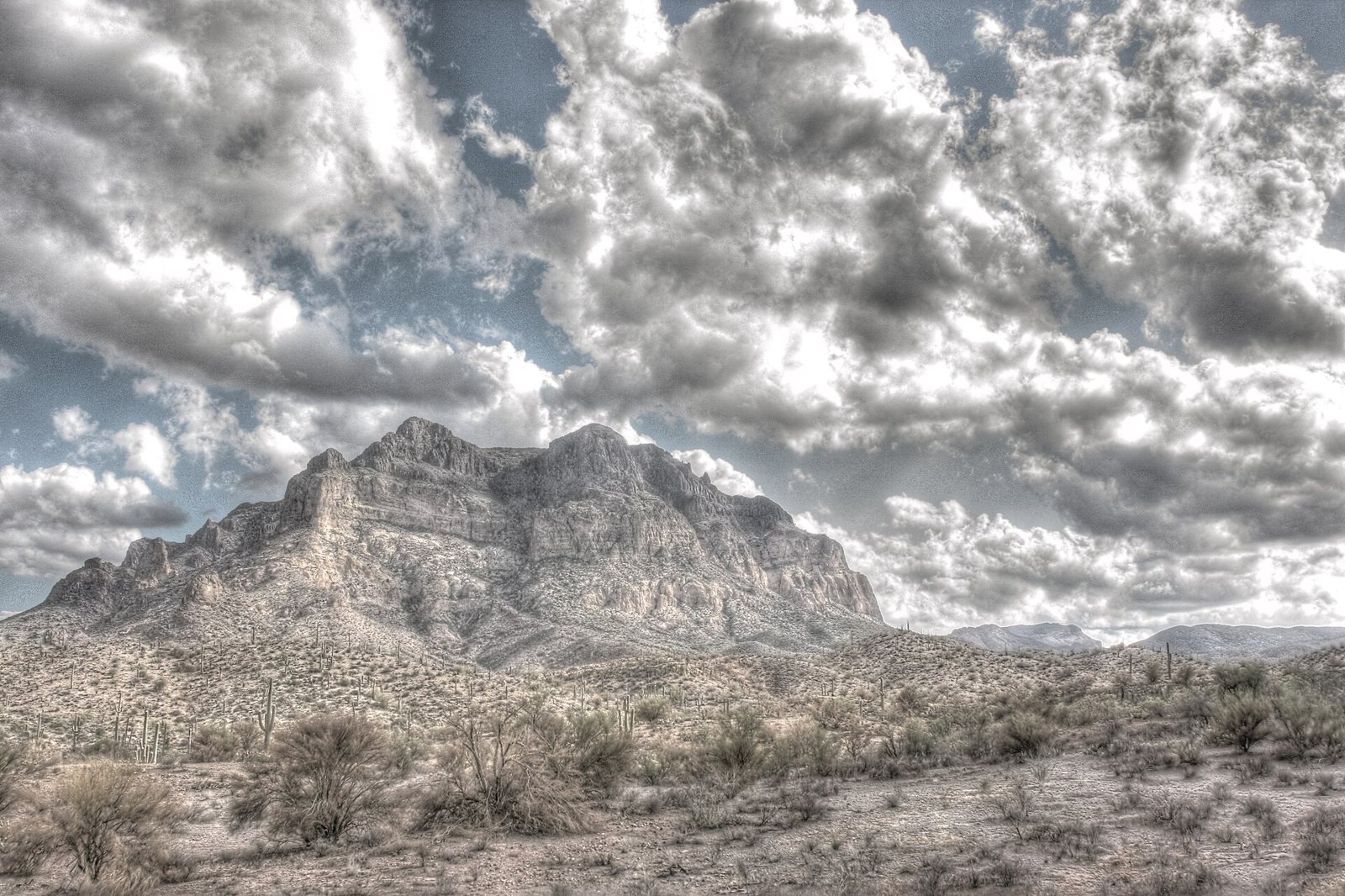
The finish line is decided here: Gila River to Picket Post
21.7 miles. +3,717 feet. −2,931 feet. 9 hours 15 minutes on the cutoff clock. The manual says this is the segment where you'll go more than 20 miles between full aid stations, and it's the only leg where it specifically suggests extra water capacity.
Reports from the Monster, which uses this same stretch, add two warnings. The Gila River station limited fills to 1.5 liters in 2025, and the leg to Picket Post was described as about 22 miles without water. So don't assume you'll get to fill everything you own. Arrive at Gila River with your bottles nearly dry but your stomach in good shape, and ask what's available right when you walk in.
How to get through it:
- Leave Grand Enchantment with this leg in mind. Eat well there and at Gila River. It's hard to catch up on calories once you're climbing in the heat.
- Have your crew at Gila River with everything ready. It's the last time you see them until the finish. Ice, a sun hat, sleeves, sunscreen, and all your water capacity filled, in one handoff.
- Take the full 3 liters as a minimum. If you sweat heavily or you'll be out there after 9 AM, carry 5.
- Walk early, on purpose. The clock allows about 25:35 per mile. You don't have to run this. You have to keep moving and keep drinking.
- Have a turnaround rule for your head, not your feet. There's no vehicle access on the north end of this passage, so "I'll just stop at the next road" isn't an option. Decide before you leave Gila River that you're going to Picket Post.
After Picket Post, you've basically done it. It's 5.6 miles with 701 feet of climbing and two hours on the clock. If you leave Picket Post before 4:00 PM Sunday but cross after 6:00, the manual gives you an unofficial finish: a finisher's print but no buckle. Get to the aid station with any time at all, don't sit down, and go.
Other ways to lose this race
- Sitting at Grand Enchantment. It's around mile 62, it's night, you've got a chair, a crew and a pacer. Set a timer and leave.
- Getting behind on the first 14 miles. A hard Black Hills cutoff at the start can force you to hurry through the heat later.
- Getting disqualified by your crew. The manual says nearly all the problems in its events come from crews. See below.
- Sloppy sanitation. Wag bags are required, burying waste isn't allowed, and leaving waste or wipes behind is a disqualification. A used wag bag goes with you to the next aid station.
Medical rules are firm too: needing an IV, or needing EMS or search and rescue, is an automatic disqualification.
Crew guide: three stops, then the finish
Crew are allowed at Freeman (29.7), Grand Enchantment (62.2), Gila River (78.5) and the finish (105.8). No crew at the start, Black Hills, Tortilla or Picket Post. Crewing is optional: the race says its aid stations are built to support runners who come alone.
| Crew point | Mile | Must leave before | From Superior HQ (race figures) | Coordinates | Drop bag | Pacer on/off |
|---|---|---|---|---|---|---|
| Freeman | 29.7 | Sat 3:30 PM | 52 mi, 1 hr 15 min | 32.87093, -110.88357 | Yes | No |
| Grand Enchantment | 62.2 | Sun 1:30 AM | 20 mi, 30 min | 33.10654, -110.97911 | Yes | Yes |
| Gila River | 78.5 | Sun 6:45 AM | 60 mi, 1 hr 30 min | 33.11151, -111.14714 | Yes | Yes |
| Finish, Superior | 105.8 | Sun 6:00 PM | 0 | 33.28390, -111.12519 | Yes | Yes |
For reference, the no-crew points are Black Hills (64 miles, 2 hours from HQ), Tortilla (30 miles, 1 hour) and Picket Post (5 miles, 10 minutes). Your crew has no reason to go to them, and contact there can disqualify you.
The rules your crew must actually read
- One vehicle per runner, with a crew parking pass in the front window. Passes go only to runners whose crew filled out the crew form, which is sent about a month before the race.
- Maximum vehicle size is 20 feet long by 8.5 feet wide. No trailers. No traditional RVs. A van is fine if it fits those numbers.
- Arrive no more than 30 minutes before your runner, using live tracking, and leave when your runner leaves.
- No crew camping at aid stations, in any type of vehicle.
- Never park on vegetation. If there's no legal spot, park farther away and walk.
- Bring your own food and drink. Aid is for runners.
- Contact with your runner between aid stations, or at a station after its cutoff, is a disqualification or DNF. Leaving items for your runner along the course is also a DQ.
Driving it
The manual says you won't need 4x4, but it recommends a vehicle small enough to turn around on a single-lane road and tells you to carry a spare or tire repair kit. Download the race's crew driving routes for Gaia or a similar app from the manual before you lose signal.
Plan on these warnings:
- Freeman Road: the Arizona Trail Association notes that the San Pedro River crossing on the Freeman Road approach can be impassable at high flow. If it has rained, check before you commit.
- Gila River is the long drive. It's 60 miles and 90 minutes from Superior by the race's numbers, and it was a brand-new crew stop on the Monster for 2027. Drive it in daylight if you can, and don't count on a shortcut from Grand Enchantment even though they look close on a map.
- Signal: the volunteer radio group for the Monster says much of this course has no cell coverage. Save the tracker page, maps and coordinates offline. SPOT positions update about every 7 minutes at best and can jump around.
The best crew schedule: drive to Freeman Saturday morning. See your runner, then go to Superior or Kearny for food and a nap. Be at Grand Enchantment for the night stop, then head straight for Gila River and sleep there only if you can do it legally away from the aid station. Gila River is the stop that matters most.
Pacers
- Pacing starts at Grand Enchantment (mile 62.2). Pacers can join or leave only at Grand Enchantment, Gila River and the finish.
- One pacer at a time, on foot, with a pacer bib from check-in or an aid station.
- No muling. A pacer can't carry your food, water or gear. If a pacer shares food or water with you, even in an emergency, the manual says you're disqualified.
- Pacers carry the mandatory gear too, and must supply their own bivy and wag bag. The race provides those to runners only.
- A pacer who can't keep up stops at the next aid station.
If you only have one pacer, the argument for starting at Gila River is strong: 27.3 miles covering the crux and the finish. If you have two, one takes the night from Grand Enchantment to Gila River and the other takes the climb. Our pacer handbook covers the job itself.
Drop bags
Bags go to Freeman, Grand Enchantment, Gila River and the finish, plus the start. They're optional. Maximum size is 16 by 24 by 10 inches, in a sturdy re-closable bag, with no coolers or securely closed plastic bins. Label each in bold with your full name, bib number and aid station.
Check-in runs 4:30 to 6:30 PM on Friday, April 2, in Superior, but the manual says bags must be in place by 5:00 PM or they may not reach their stations, so go early. Drop bags aren't mailed after the race.
Our packing plan:
- Freeman: fresh socks, sunscreen, more calories, a dry shirt.
- Grand Enchantment: warm layer, spare headlamp and batteries, night food, poles if you left them behind.
- Gila River: sun hat, sleeves, electrolytes, your best calories for nine hours, and a battery pack. There's no bag at Picket Post.
Poles
The manual lists poles as a recommended drop-bag item, and we didn't find a rule against them. Check the Facebook group or ask the race if you want it confirmed.
- Black Hills to Freeman (+2,329 ft): the first real climbing. Worth having if you're used to them, though you'd have to carry them from the start.
- Tortilla to Grand Enchantment: mostly descending. Poles help tired knees on the 3,014-foot drop.
- Gila River to Picket Post (+3,717 ft): this is where they count. If you only use them once, pick them up at Gila River or carry them from Grand Enchantment and keep them to the finish.
Our trekking poles guide has more on when they're worth carrying.
Mandatory gear
From the manual. Gear checks can happen anywhere, and missing items can mean a time penalty or disqualification.
- Waterproof jacket with a hood
- SPOT tracker and emergency bivy (the race provides these)
- Device loaded with the course GPX, plus a cell phone
- Headlamp or waist light, extra batteries, and a whistle
- Capacity for 3 liters of water
- A water filter device
- 500 extra calories kept for emergencies only
The manual says temperatures can range from 10°F to over 100°F. Some of that language is written for all of the company's desert events, but this is still April in Arizona: pack for a hot day and a cold night.
What's different about a first-year race
There are no race reports, no finish rates and no list of who DNF'd where. A few honest things to expect:
- The field will share the trail with the Monster. The Arizona Monster 300 runs the same week and also finishes in Superior by Sunday at 6:00 PM. On paper, the back of the 300-mile field will be ahead of you at the last stations, so a faster El Jefe runner may be passing people on day seven of their race. Say something kind when you do.
- The manual still has leftovers from the 300. It refers to an Arizona Monster crew pass, a Thursday check-in, a 9:30 AM tracker pickup and a 102.1-mile course in places. The schedule and charts at the top are the ones we trust: Friday check-in, tracker pickup at 5:00 AM, 105.8 miles. If anything matters to your plan, confirm it in the Facebook group linked from the race materials or with the race directly.
- Old Monster reports may run the other way. The 2025 and 2026 Monster ran Superior to Patagonia. El Jefe runs north, like the 2027 Monster, so climbs and landmarks will come at you in reverse from what those reports describe. See our Arizona Monster 300 guide for the full course.
- Refund dates come up fast. Before December 1, the race gives a 50% refund or a 75% credit toward 2028. December 1 to January 31, it's 25% or a 50% credit. In February, only a 25% credit. After that, nothing. A race cancellation doesn't bring a refund either.
Gear for this course
Picks for long water carries, a hot day and a cold night:
- A vest that really holds 3 liters or more: trail running hydration vest 12L
- Extra capacity for Gila River: 2 liter collapsible water bladder
- The required filter: squeeze water filter for hiking
- A main light with real battery life: rechargeable running headlamp
- Folding poles for the last climb: carbon folding trekking poles
- Sun protection for Sunday: sun hoodie for running and hat with neck cape
- Cooling at the crew stops: ice bandana
- Sand and grit: trail running gaiters
- Electrolytes: salt capsules
- For the crew: spare tire inflator and repair kit and a folding camp chair
The van idea
El Jefe's crew rules are about as strict as they get: one vehicle, 20 feet by 8.5 feet at most, and no camping at aid stations. That makes a compact van a natural fit, because your crew can sleep somewhere legal between Freeman and the Gila River stop, keep ice and cold drinks ready for that crucial handoff, and give the runner a real bed in Superior at the end. We're building the first AZ Ultra Vans now. If you'd want one for this race, join the van list and we'll reach out if one is available for your dates. Whatever you drive, measure it against the race's limits first. For more, read our crew base camp guide.
El Jefe Hundred FAQ
When is the first El Jefe Hundred? Saturday, April 3, 2027, at 6:00 AM per the Runner Manual and UltraSignup, with a 36-hour limit ending Sunday at 6:00 PM. The race's calendar page shows 8:00 AM, so confirm before you book.
Where does it start and finish? It starts at the Tiger Mine Trailhead near Oracle and finishes in Superior. Runners take a bus from Superior, loading at 3:00 AM.
How long is it really? The official mileage is 105.8. The manual says CalTopo will read short and that its own figures are the accurate ones.
Can I have a crew? Yes, at Freeman, Grand Enchantment, Gila River and the finish. You don't need one, and contact anywhere else risks disqualification.
Where can pacers start? Grand Enchantment at mile 62.2 is the first option. They can also join at Gila River.
How much water should I carry? You must be able to carry 3 liters. The manual suggests 5 liters of capacity from Gila River to Picket Post if you drink a lot, and you must also carry a filter.
Is it a Western States qualifier? It isn't on the Western States list for the 2027 or 2028 lottery as of this writing. The list is updated each September.
Is El Jefe a good first 100? We wouldn't pick it. The race calls itself graduate level, it asks for heavy carries over long gaps, and you have to be able to navigate if markings go missing. Our guide to choosing your first Arizona 100 has better starting points.
More reading
- Arizona Monster 300 guide, the race that shares this course
- Desert heat racing playbook
- Crew chief playbook and drop bag system
- Copper Corridor 50K guide, a much shorter way to meet the trails around Superior
Who wrote this
Johnathon Lawson is a Gilbert, Arizona ultrarunner, track and cross-country coach and father of three, and a three-time 100-mile finisher: Zion 100 (2025), Mogollon Monster 100 (2025) and San Diego 100 (2026). He has raced the Copper Corridor 50K out of Superior twice, but El Jefe hasn't been run yet, so this guide is research rather than a race report. Follow his training on Strava and the AZ Ultra training page, his results on UltraSignup, and AZ Ultra Adventure on YouTube and Instagram.
Sources: the 2027 El Jefe Hundred Runner Manual; Destination Trail's race page, calendar entry and announcement; UltraSignup; the Western States qualifying list; and Arizona Trail Association passage pages, including Passage 16, Gila River Canyons. Pace figures and the 30-hour schedule are our own arithmetic from the manual's charts. Race details can change before April 2027, so check the current manual.
Some links are Amazon affiliate links. As an Amazon Associate we earn from qualifying purchases, at no extra cost to you.