 AZ Ultra Adventure
On this page
- The numbers
- The race, one day at a time
- Aid station table (2027 Runner Manual)
- Crew guide: six stops and two long silences
- Pacers
- Poles
- Mandatory gear
- Weather: pack for 7°F and 90°F
- What finishers say that the manual doesn't
- The finish line is decided here
- Gear for this course
- The van idea
- Tahoe 200 FAQ
- More 200-mile and Tahoe guides
The Tahoe 200 is a simple idea. Start at a ski lodge on the Nevada side of Lake Tahoe, keep the lake on your right, and stop when you get back. It's 200.4 miles, 32,093 feet of climbing, and you have 105 hours: Monday morning to Friday evening.
For a few years it wasn't that simple. The Caldor Fire in 2021 closed the southern half of the course, and from 2022 to 2025 the race ran as out-and-backs instead. In 2026 the Forest Service approved the original loop again, late, and the race went back around the whole lake. The race says the loop is the course for 2027 and beyond.
That matters for how you read anything online. Most of the Tahoe 200 race reports from the last four years describe a course that went somewhere and came back. The loop is different in a way that changes everything for crews: there are two stretches of about 35 to 42 miles where nobody can drive to you.
I haven't run the Tahoe 200. This guide is built from the official 2027 Runner Manual (linked from destinationtrailrun.com/tahoe; note that tahoe200.com is not the race's site anymore), the race's CalTopo course and crew maps, UltraSignup results from 2018 to 2026, and finisher reports. Only one of the reports I used is from a loop year, so where the old course and the new one differ, I've followed the manual.
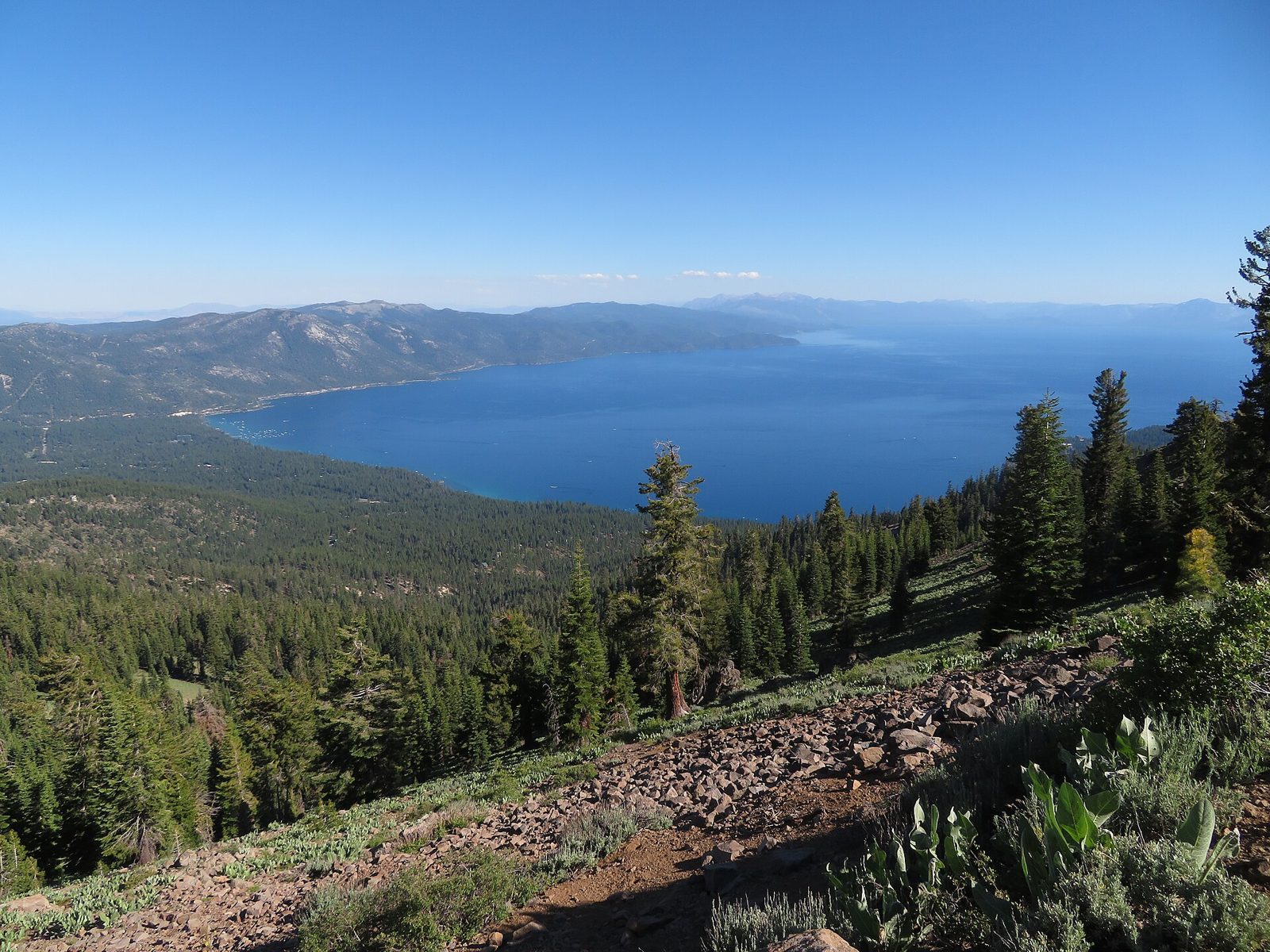
The numbers
- Dates: Monday, June 21, 2027, 9:00 AM start; final cutoff Friday, June 25, 6:00 PM (105 hours)
- Start and finish: Heavenly Stagecoach Lodge, 375 Quaking Aspen Lane, Stateline, Nevada. Runners can park overnight in the lower lot
- Course: one clockwise loop of the lake, 200.4 miles, 32,093 ft up and 32,077 ft down. The manual's mileage is official; CalTopo measures it a little short
- Aid: 12 full aid stations plus one grab-and-go, 6 with crew access, 3 with sleep tents
- Entry for 2027: sold out through the lottery (held last June). The waitlist on UltraSignup is free to join. Price was $1,795 before fees, with a payment plan available. Minimum age 18, no trail-work requirement in 2027
- Qualifier for: Hardrock and Western States
- Finish rate: about 70% in 2026 (183 of 261 starters, per UltraSignup), up from 58 to 65% in the out-and-back years. 2026's median finish was about 85.5 hours and the last official finisher came in just under 105
- Records: Aaron Kubala, 48:09:30 (2026, on the loop); Courtney Dauwalter, 49:54:36 (2018), still the women's record. Mika Thewes ran 51:10:26 in 2026
- Awards: every finisher gets a handmade buckle and a finisher print. Leave the last aid station inside its cutoff but finish after 105 hours and you get the print, not the buckle
- Official pages: race page, 2027 Runner Manual, course map, crew driving map, lottery info, FAQ
The Tahoe 200 is one of the Destination Trail Triple Crown races with the Moab 240 and Bigfoot 200. If Arizona is home, our Cocodona 250 guide covers the desert version, five weeks earlier.
The race, one day at a time
A 200 isn't a long 100. It's five days of daylight and four nights, and most runners think about it in days. Here's the loop broken up the way a typical mid-pack runner will live it, with the 2027 cutoffs that sit on each day. (The day splits are a guide built from the 2026 median finish of about 85 hours. Fast runners will be days ahead, and runners near the back will meet each cutoff on the day shown.)
Monday: Heavenly, the high point and Armstrong Pass (miles 0 to 43)
The race opens with a 10-mile loop that brings you back past the lodge at Heavenly (mile 10, a grab-and-go with crew and drop bags), then heads south on the Tahoe Rim Trail into the highest ground of the race. Runners in recent years have reported snow patches up near Freel Peak, around 9,600 to 9,700 feet, in late June. Day one is altitude day. Some runners get nauseous up here before they've done anything hard, and the advice in reports is to slow down and keep eating anyway.
From Heavenly to Armstrong Pass (mile 26) is 16 miles and about 2,900 feet of climbing, then 17.2 miles to Housewife Hill (43.2) through the Caldor Fire burn scar around the Armstrong Connector. That section is open, hot, and exposed in the afternoon. Neither station has crew. Armstrong is reached by a rough road and has the race's portable toilets with extra wag bags.
Cutoffs: Heavenly by 1:45 PM Monday (4.75 hours), Armstrong Pass by 9:45 PM (12.75 hours), Housewife Hill by 6:45 AM Tuesday (21.75 hours).
Tuesday: Sierra at Tahoe to Wrights Lake (miles 43 to 88)
Sierra at Tahoe (52.2) is the first real crew stop since the start. Then it's 18.5 miles, with about 3,000 feet of climbing, to Wrights Lake (70.7), the first sleep station, on the edge of Desolation Wilderness. There's no crew at Wrights Lake: crews aren't allowed on Wrights Lake Road. Drop bags only.
From Wrights Lake it's 16.9 miles to Loon Lake (87.6), where your crew can meet you again and where pacers are first allowed.
Cutoffs: Sierra at Tahoe by 11:30 AM Tuesday (26.5 hours), Wrights Lake by 9:30 PM (36.5 hours), Loon Lake by 6:30 AM Wednesday (45.5 hours).
Wednesday: the Rubicon, Barker Pass and the west shore (miles 88 to 130)
This is the day the loop is hardest on crews. Leave Loon Lake and your crew can't reach you again until Tahoe City at mile 130, 42.4 miles later.
The first part is the Rubicon: an off-highway-vehicle route of boulders, dust and jeep ruts that a 2019 finisher described as slow and miserable in the dark. Then Barker Pass (103.1), the second sleep station, and a short 7.5-mile, mostly downhill leg to Stephen Jones Memorial near Homewood (110.6). Then 19.4 miles to Tahoe City. Your pacer can stay with you through this stretch but can't start or stop at Barker or Stephen Jones.
Cutoffs: Barker Pass by 2:30 PM Wednesday (53.5 hours), Stephen Jones by 6:00 PM (57 hours), Tahoe City by 4:30 AM Thursday (67.5 hours).
Thursday: Tahoe City, Brockway and the north shore (miles 130 to 164)
The climb out of Tahoe City to Brockway Summit is the biggest single segment in the race: 18.6 miles and about 3,500 feet of climbing. One runner's report calls it the "Mountain of Doom." Brockway (148.6) is the last sleep station and a crew stop.
From Brockway the trail climbs along the rim toward Mount Baldy and then drops steeply down a powerline cut, about 1,350 feet in a little over a mile, into Incline Village and the Village Green crew stop (163.6). That descent is the steepest ground of the race, on legs with 160 miles in them.
Cutoffs: Brockway by 2:30 PM Thursday (77.5 hours), Village Green by 10:00 PM (85 hours).
Friday: Spooner and home (miles 164 to 200)
Leave Village Green and your crew won't see you again until the finish, 36.8 miles away. It's 18.7 miles with about 3,700 feet of climbing (up Tunnel Creek and past Marlette Lake) to Spooner Summit (182.3, no crew), then 18.1 miles with about 3,300 feet of climbing back over the Snow Valley high ground to the lodge. That's two big climbs on the last day of a five-day race.
Cutoffs: Spooner by 8:00 AM Friday (95 hours), finish by 6:00 PM (105 hours).
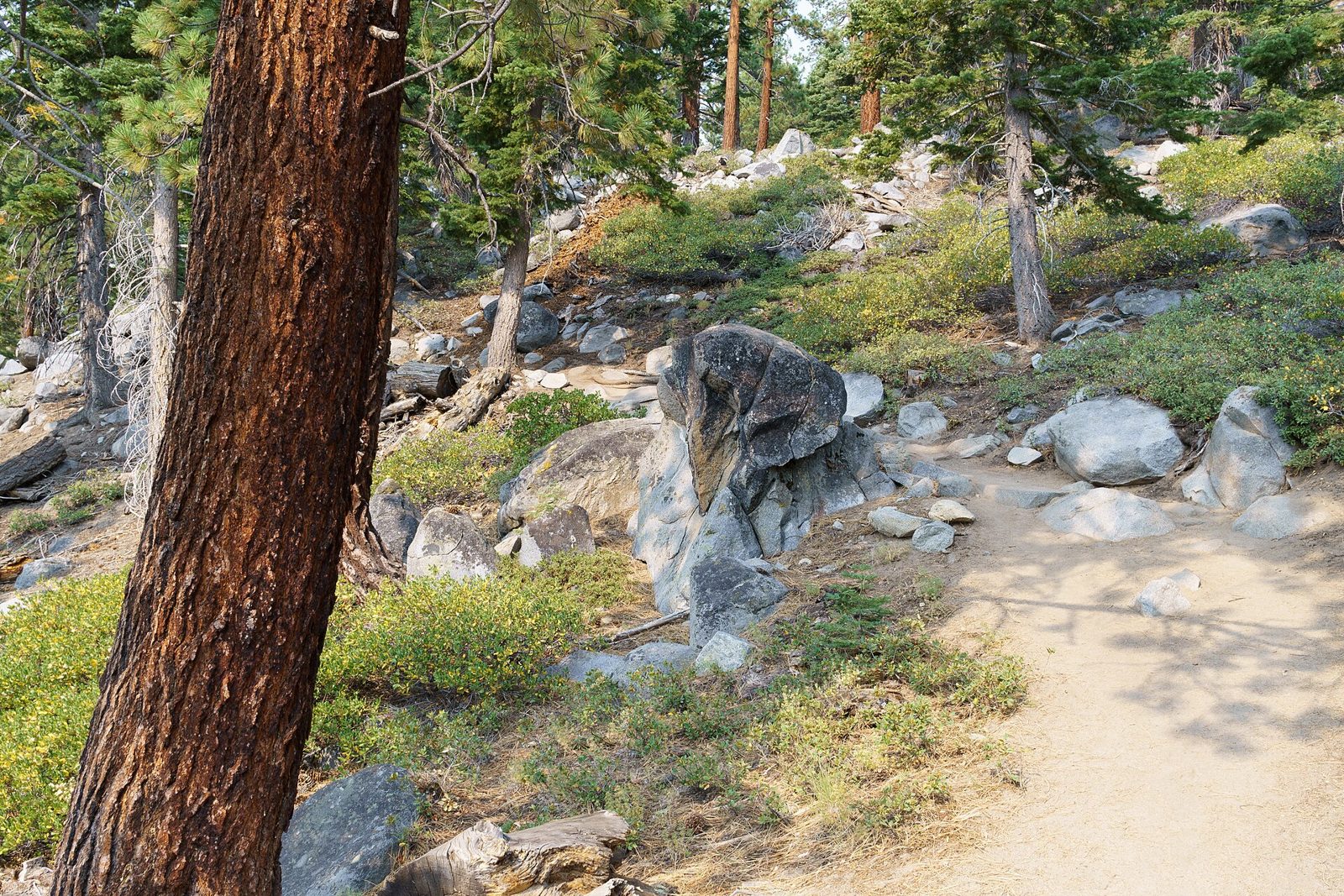
Aid station table (2027 Runner Manual)
The manual lists cutoffs as arrival times. Arriving at a station exactly at its cutoff counts as a DNF, so treat every time below as "be there before." Gains and losses are for the leg that starts at that station.
| Station | Mile | To next | Leg climb / drop | Crew | Drop bag | Pacers | Sleep | Cutoff (elapsed) | Notes |
|---|---|---|---|---|---|---|---|---|---|
| Start, Stagecoach Lodge | 0 | 10 | +1,617 ft | Yes | Yes | No | Mon 9:00 AM | ||
| Heavenly | 10 | 16 | +2,912 / −2,101 | Yes | Yes | No | Mon 1:45 PM (4.75 h) | Grab-and-go, back at the lodge. High point ahead | |
| Armstrong Pass | 26 | 17.2 | +2,358 / −4,124 | No | No | No | Mon 9:45 PM (12.75 h) | Rough road. Caldor burn scar next | |
| Housewife Hill | 43.2 | 9 | +1,621 | No | Yes | No | Tue 6:45 AM (21.75 h) | ||
| Sierra at Tahoe | 52.2 | 18.5 | +3,027 / −3,365 | Yes | Yes | No | Tue 11:30 AM (26.5 h) | First crew since mile 10 | |
| Wrights Lake | 70.7 | 16.9 | +2,353 / −2,847 | No | Yes | No | Yes | Tue 9:30 PM (36.5 h) | No crew on Wrights Lake Road |
| Loon Lake | 87.6 | 15.5 | +2,712 / −1,474 | Yes | Yes | Start / stop | Wed 6:30 AM (45.5 h) | First pacer station. Rubicon next | |
| Barker Pass | 103.1 | 7.5 | +106 / −1,560 | No | Yes | Pass through only | Yes | Wed 2:30 PM (53.5 h) | |
| Stephen Jones Memorial | 110.6 | 19.4 | +2,737 / −2,756 | No | Yes | Pass through only | Wed 6:00 PM (57 h) | Near Homewood. Bear country | |
| Tahoe City | 130 | 18.6 | +3,476 / −2,473 | Yes | Yes | Start / stop | Thu 4:30 AM (67.5 h) | Biggest climb of the race next | |
| Brockway Summit | 148.6 | 15 | +2,164 / −3,142 | Yes | Yes | Start / stop | Yes | Thu 2:30 PM (77.5 h) | Powerline descent next |
| Village Green, Incline | 163.6 | 18.7 | +3,716 / −2,825 | Yes | Yes | Start / stop | Thu 10:00 PM (85 h) | Last crew before the finish | |
| Spooner Summit | 182.3 | 18.1 | +3,294 / −2,964 | No | Yes | Pass through only | Fri 8:00 AM (95 h) | Big climb to finish | |
| Finish | 200.4 | Yes | Fri 6:00 PM (105 h) |
Things the table doesn't show:
- Legs of up to about 20 miles with no water in between. Plan water from the GPX, not from the table. One runner on the old course found a single stream in a 19-mile stretch.
- Sleep stations (Wrights Lake, Barker Pass, Brockway) have tents or canopies with pads and blankets, a 6-hour sleep limit, and runners get beds before pacers.
- Your crew can't touch you after a station's cutoff. Crew contact after cutoff is a DNF.
Crew guide: six stops and two long silences
The loop gives your crew six places to meet you: the start/Heavenly, Sierra at Tahoe (52.2), Loon Lake (87.6), Tahoe City (130), Brockway Summit (148.6) and Village Green (163.6), plus the finish. What it really gives you is a rhythm: a busy Tuesday, a long Wednesday with nothing to do, a busy Thursday, and an anxious Friday.
| Crew stop | Mile | Gap to next crew stop | Parking | Rough drive from the last stop |
|---|---|---|---|---|
| Heavenly / start | 0 and 10 | 42.2 mi | Stagecoach Lodge lots | |
| Sierra at Tahoe | 52.2 | 35.4 mi | Resort | About 40 min on US-50 |
| Loon Lake | 87.6 | 42.4 mi | Via Ice House Road | About 1 hr 45 min (US-50 west to Ice House Road) |
| Tahoe City | 130 | 18.6 mi | Tahoe City Transit Center, walk 0.2 mi | About 2.5 to 3 hrs back around the lake |
| Brockway Summit | 148.6 | 15 mi | Designated lot, walk 0.6 mi | About 25 min on SR-267 |
| Village Green | 163.6 | 36.8 mi to finish | Two designated lots | About 25 min |
| Finish | 200.4 | Stagecoach Lodge | About 50 min on SR-28 and US-50 |
Drive times are my estimates from the map, not the race's numbers. The race's crew driving map shows every aid station and crew parking area; load it on your phone before you leave the house.
The crew rules from the 2027 manual:
- One vehicle per runner, displaying the crew pass you get at check-in. Maximum size 20 by 8.5 feet: no big RVs, no trailers. You don't need 4x4, but the manual suggests a small car that can turn around on a one-lane road, plus a spare tire or a repair kit.
- Arrive no more than 30 minutes before your runner (use the live tracking), and leave when they leave. No camping at aid stations. Never park on vegetation.
- Crew contact only inside crew stations. Help anywhere else, or after the cutoff, is a DNF.
- Crews bring their own food. Everyone eats free at the awards.
- Cell service "will not be readily available" for most of the course, per the manual. Runners carry SPOT trackers that update about every 7 minutes, but download maps and the course GPX before you leave town.
How to use the two long gaps:
- Sierra at Tahoe to Loon Lake (Tuesday): your runner sleeps (or doesn't) at Wrights Lake without you. Pack their Wrights Lake drop bag like you won't see them for a day, because you won't. The drive to Loon Lake is long and slow; get there, sleep in the vehicle somewhere legal, and be ready for a dawn arrival.
- Loon Lake to Tahoe City (Wednesday): 42.4 miles and potentially more than 20 hours. This is when the crew sleeps for real. Many crews rent a house near the lake for the week, and finishers say they used it more than they expected.
- Village Green to the finish (Thursday night to Friday): the last handoff. Night clothes, both lights with fresh batteries, warm layers, and enough calories for 37 miles and two big climbs.
Pacers
From the 2027 manual:
- Pacers are allowed from Loon Lake (mile 87.6) to the finish.
- They can start or stop only at crew stations with pacing: Loon Lake, Tahoe City, Brockway and Village Green. At Barker Pass, Stephen Jones and Spooner they keep going.
- One pacer at a time, wearing a pacer bib.
- Pacers carry their own full mandatory gear, including their own emergency bivy and wag bag.
- No muling. If your pacer shares food or water with you, even in an emergency, you can be disqualified.
- You can't leave a slow pacer behind.
That makes the pacer plan a puzzle. A pacer who starts at Loon Lake has to go 42.4 miles to Tahoe City. Then Tahoe City to Brockway (18.6), Brockway to Village Green (15) and Village Green to the finish (36.8). A good split for a three-pacer team: one fit friend for Loon Lake to Tahoe City, one for Tahoe City to Village Green (two shorter legs), and your strongest night pacer from Village Green home. The manual links a pacer-finder spreadsheet if you need one. Our pacer handbook covers the job itself.
Poles
The Tahoe 200 doesn't restrict poles; the manual lists them on its recommended drop-bag items. Most runners use them for all 200 miles. If you want to start without them, here's where they matter most and where to pick them up:
- Heavenly to Armstrong Pass (mile 10 to 26, the high ground near 9,700 ft): grab them at Heavenly from your crew or drop bag.
- Sierra at Tahoe to Wrights Lake (+3,000 ft): Sierra at Tahoe is a crew stop.
- Tahoe City to Brockway (+3,476 ft, the biggest climb of the race).
- The powerline descent into Village Green: about 1,350 feet down in just over a mile. Poles save your quads and your knees here.
- Village Green to Spooner and Spooner to the finish: two big climbs on Friday. Don't send poles back to the crew at Village Green.
Our trekking poles guide covers technique and choosing a pair.
Mandatory gear
The 2027 list (check the current manual before you pack):
- Hooded jacket, gloves, a hat or buff, full-length pants or tights, and a long-sleeve insulating layer
- SPOT tracker and emergency blanket (both provided by the race)
- Headlamp or waist light, plus spare batteries or a battery bank
- Whistle
- Phone, and a device with the course GPX loaded (checked at check-in)
- 500 kcal of emergency food
- A wag bag (one provided). Burying waste is a DQ
Two rules that surprise people: any IV, or needing EMS or search and rescue, is an automatic DQ. And missing mandatory gear can mean a DQ or a time penalty.
Weather: pack for 7°F and 90°F
The manual tells runners to prepare for 10 to 90°F and says overnight lows have reached 7°F. That isn't hyperbole. Reports from recent editions describe high-30s at 2:45 AM and heat by 9:30 AM the same morning (2024), a 90-degree first day (2023, run in July), and hail with sideways wind overnight near Brockway (2022). Snow can still be on the high ground in June.
Some specific lessons from finishers:
- Lithium batteries can die in the cold. A 2019 finisher had headlamp batteries quit on night four. Carry a backup light, not just spare cells.
- Drop bags get wet. One runner's bags were soaked by storms. Pack everything inside a drop bag in zip bags.
- The burn scar and the exposed west and north shore are hot in the afternoon. In 2026, heat in the burned section around Armstrong was a big factor.
What finishers say that the manual doesn't
Most Tahoe 200 reports online are from the out-and-back years, so I've kept only what applies to the loop.
Feet and sleep decide it. A race medical director told runners in 2017 that those two things decide finishes, and later reports agree. One 2024 runner had nine of ten toes raw and macerated by about mile 110 and taped up at Village Green, and the feet never came back. Another 2022 runner stayed blister-free by rotating four pairs of shoes and socks and going up half a size for swelling. Tape hot spots (Leukotape is the common pick) before they're blisters, and change socks at every crew stop.
Sleep strategies vary widely. Front-runners in 2023 slept about 2 hours total in 8 to 20 minute trail naps. A 2024 mid-pack runner slept about 8 hours over 70 and said the best sleep was a bed in the crew vehicle. A 2019 finisher held off on caffeine for the first 24 hours so the first night's nap would actually work. Hallucinations usually show up on night two or three.
Food runs out on 18-mile legs. Runners describe leaving aid stations without enough to get to the next one, then crashing. Take a hot meal out with you in a bag, and carry more than you think you need on the long legs.
Under-fueling at night is a slow-motion DNF. One 2022 runner describes a 13-hour cold, low-energy spiral and lost about 10 hours between Brockway and Spooner. The fix is boring: eat on a timer, all night.
Bears are real. The manual warns about bear activity, especially around Homewood, plus cliffs, rockfall and protected yellow-legged frog habitat. Stay on trail.
The manual has a few copy-and-paste errors. At the time of writing it says crew passes are issued at check-in "on Thursday" (check-in is Sunday, June 20), carries an April 15, 2026 refund date that looks like a typo, and mentions a "240 mile loop" in the tracking section. Ask the race if anything looks off.
The finish line is decided here
The early DNF zone is day one and the first night. Cutoffs are tightest at the start: you have 21.75 hours to cover 43.2 miles to Housewife Hill, with the race's high point and the burn scar in between and no crew. Runners who go out too hard at altitude, get sick, and stop eating don't make it to Sierra at Tahoe.
The big quiet one is Wednesday. Loon Lake to Tahoe City is 42.4 miles without your crew, on the Rubicon, on little sleep. This is where finish rates in 200s usually fall apart: the third night, the first big sleep debt, and nobody you know. A runner who gets to Tahoe City inside the cutoff with a little time to sleep has broken the back of the race.
Get out of Brockway and you're probably finishing. After the last sleep station, the remaining cutoffs are more generous for a runner who's still moving, and you'll have your crew at Village Green and a pacer to the finish. Don't sit at Village Green too long, though. The last 36.8 miles have two big climbs.
How not to DNF the Tahoe 200:
- Make day one boring. Walk the climbs at altitude, eat before you're hungry, and be out of Housewife Hill with real time in hand.
- Write down your sleep plan before the race: where you'll sleep, for how long, and what you'll do if you can't. Wrights Lake, Barker Pass and Brockway are the sleep stations, and Loon Lake and Tahoe City are crew stops where a vehicle nap can work.
- Pack drop bags for the gaps. Wrights Lake, Barker Pass, Stephen Jones and Spooner are drop-bag-only. Put real food, fresh socks, foot care, batteries and a warm layer in each one.
- Feet, every crew stop. Socks off, dry, tape, fresh socks. It takes ten minutes and it's the most important ten minutes of the stop.
- Respect the 18-mile legs. Carry water, calories for 6 to 8 hours, and a layer for the cold.
- Crews: be calm, be quick, be honest. Your runner will want to quit at some point. A crew that says "eat this, change your socks, sleep 90 minutes and decide then" is how most 200s get finished.
Gear for this course
Honest picks for a 200 that runs at altitude through cold nights and hot afternoons:
- Trekking poles for 32,000 feet of climbing and the powerline drop: carbon folding trekking poles
- A vest big enough for 18-mile legs and the full kit: 12 to 15 liter running vest
- A bright headlamp plus a backup (lithium can quit in the cold): rechargeable running headlamp and waist light for running
- A battery bank to keep the watch, phone and GPX alive for 4 days: lightweight 10000mAh power bank
- Foot care, the thing that decides 200s: Leukotape and toe socks
- Gaiters for granite grit and dust on the Rubicon: trail running gaiters
- Anti-chafe for 4 days of wear: anti-chafe balm
- A warm layer that packs small for nights that can drop into the 20s: packable lightweight down jacket
- For the crew: folding camp chair and 12 volt cooler
The van idea
A 200 is what an AZ Ultra Van is for. Your crew is on the road for five days, sleeping in shifts, and you can't camp at the aid stations. A van parked legally near Loon Lake on Tuesday night, at Tahoe City on Wednesday night, and close to Brockway on Thursday, with real beds for the crew's long sleeps, a fridge of cold drinks and real food, power for the phones and tracker, and somewhere flat for the runner to lie down for 90 minutes, is how you crew a loop like this without burning out. We're building the first AZ Ultra Vans now. If you want one for the Tahoe 200, join the van list and we'll reach out if a van is available for your dates.
Tahoe 200 FAQ
When is the 2027 Tahoe 200? Monday, June 21, 2027, starting at 9:00 AM from Heavenly's Stagecoach Lodge in Stateline, Nevada, with a final cutoff of 6:00 PM Friday, June 25 (105 hours).
Is the Tahoe 200 a loop or an out-and-back? A loop again. After running as out-and-backs from 2022 to 2025 because of the Caldor Fire, the race went back to a single loop around the lake in 2026, and the race says the loop is the course from 2027 on.
How do I get into the Tahoe 200? By lottery on UltraSignup, usually held in June for the following year. 2027 is full; the waitlist is free to join, and unselected lottery entrants go onto it in order of registration.
How many people finish the Tahoe 200? About 70% of starters finished in 2026, and 58 to 67% in other recent years.
Where can crews meet runners? At the start/Heavenly, Sierra at Tahoe (mile 52.2), Loon Lake (87.6), Tahoe City (130), Brockway Summit (148.6) and Village Green in Incline (163.6), plus the finish.
Where can pacers start? At Loon Lake, mile 87.6. After that pacers can start or stop at Tahoe City, Brockway and Village Green, one at a time, carrying their own mandatory gear.
How much sleep do Tahoe 200 runners get? It varies hugely. Leaders have slept around 2 hours total; mid-pack finishers report 6 to 8 hours over three nights. The race has sleep tents at Wrights Lake, Barker Pass and Brockway, with a 6-hour limit.
Is the Tahoe 200 a Hardrock qualifier? Yes, the race lists itself as a Hardrock and Western States qualifier. Check each lottery's current qualifier list before you enter.
More 200-mile and Tahoe guides
- Tahoe Rim Trail 100, on part of the same trail in July
- Moab 240, the other Destination Trail loop
- Cocodona 250 and Arizona Monster 300
- Crew chief playbook, drop bag system, and a camper van as crew base camp
Who wrote this
Johnathon Lawson is a Gilbert, Arizona ultrarunner, track and cross-country coach and father of three, and a three-time 100-mile finisher: Zion 100 (2025), Mogollon Monster 100 (2025) and San Diego 100 (2026). He hasn't run a 200; this guide is researched from the official race documents, results and finisher reports. Follow his training on Strava and the AZ Ultra training page, his results on UltraSignup, and AZ Ultra Adventure on YouTube and Instagram.
Sources: the Destination Trail Tahoe 200 page, the 2027 Runner Manual, the official course and crew driving maps, lottery info and FAQ; UltraSignup 2027 registration and results 2018 to 2026; and finisher reports from 2017, 2019, 2022, 2023 and 2024. Finish rates are computed from UltraSignup results. Drive times and the day-by-day split are my estimates. Check the race's current manual before race week.
Some links are Amazon affiliate links. As an Amazon Associate we earn from qualifying purchases, at no extra cost to you.